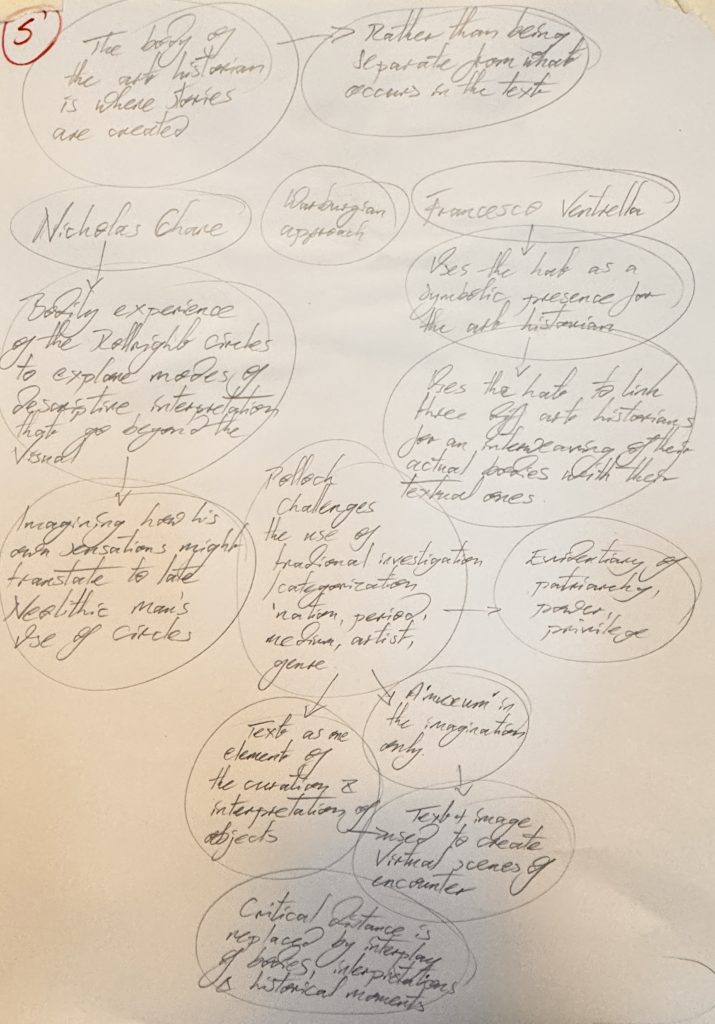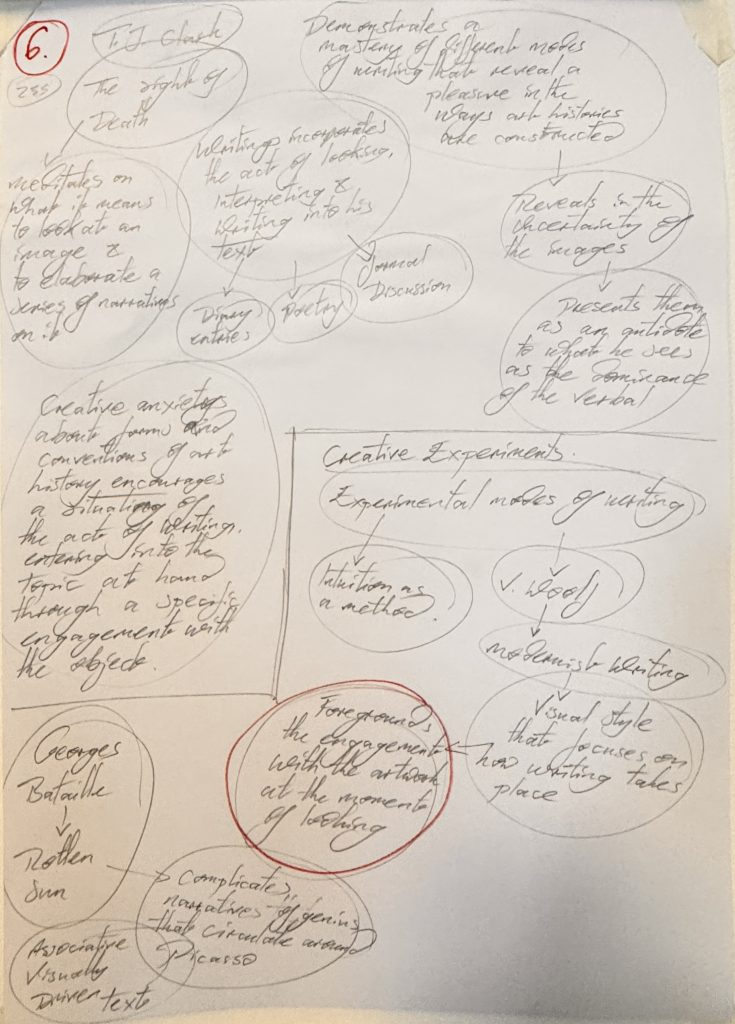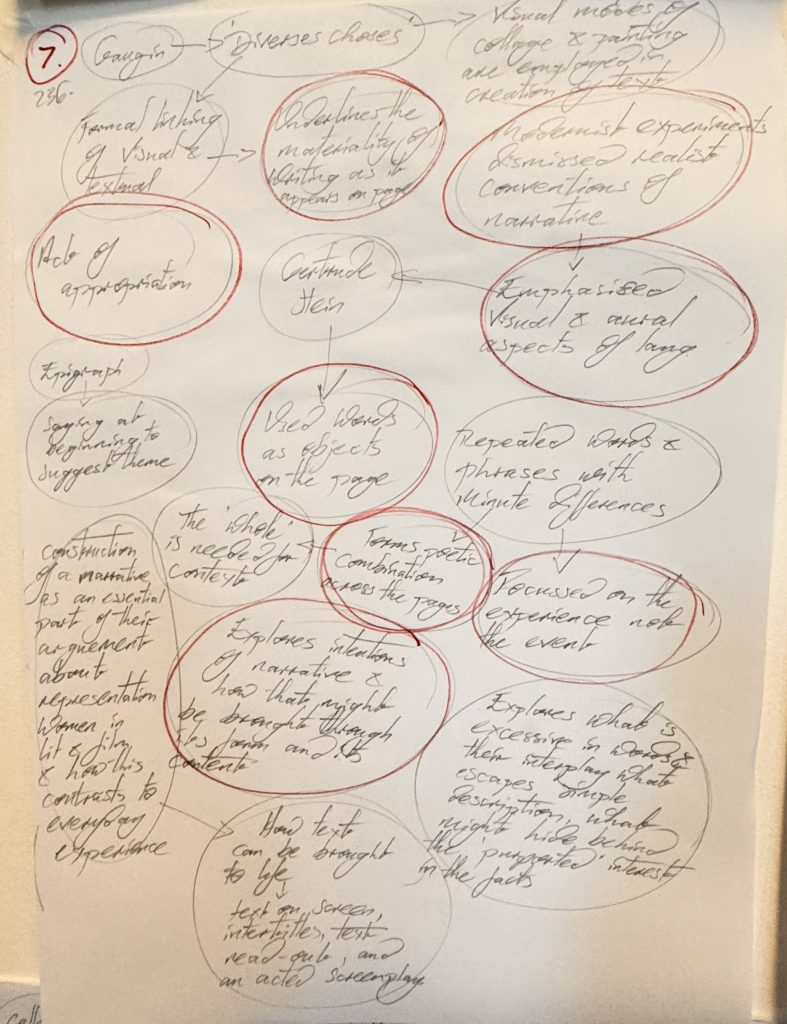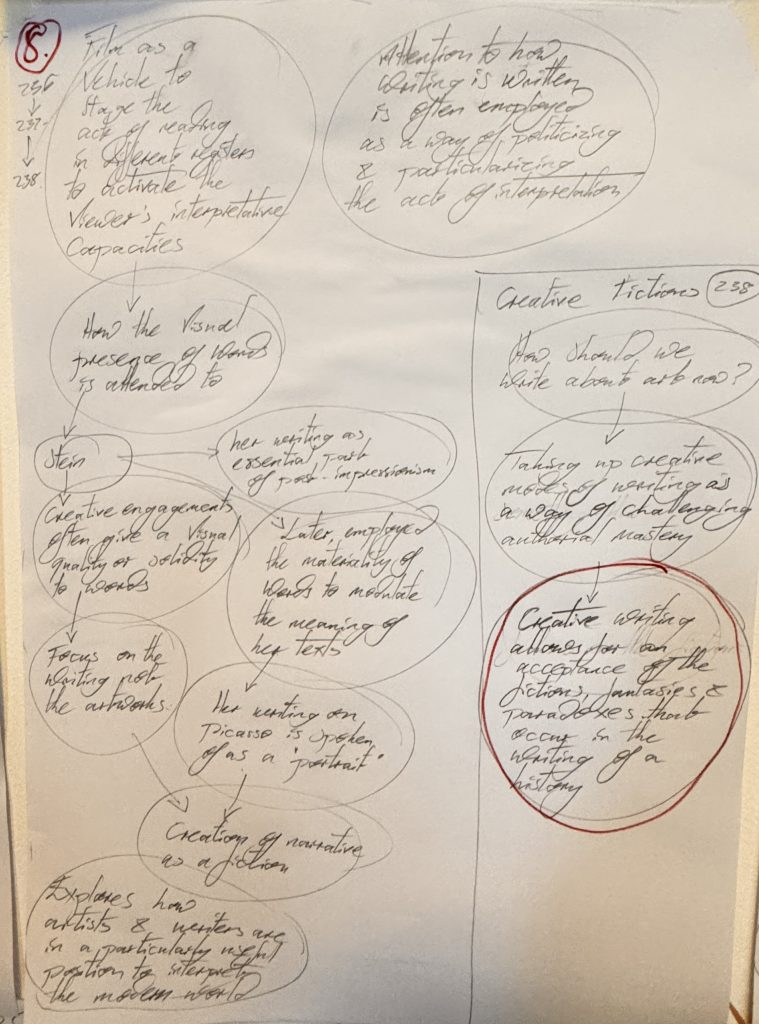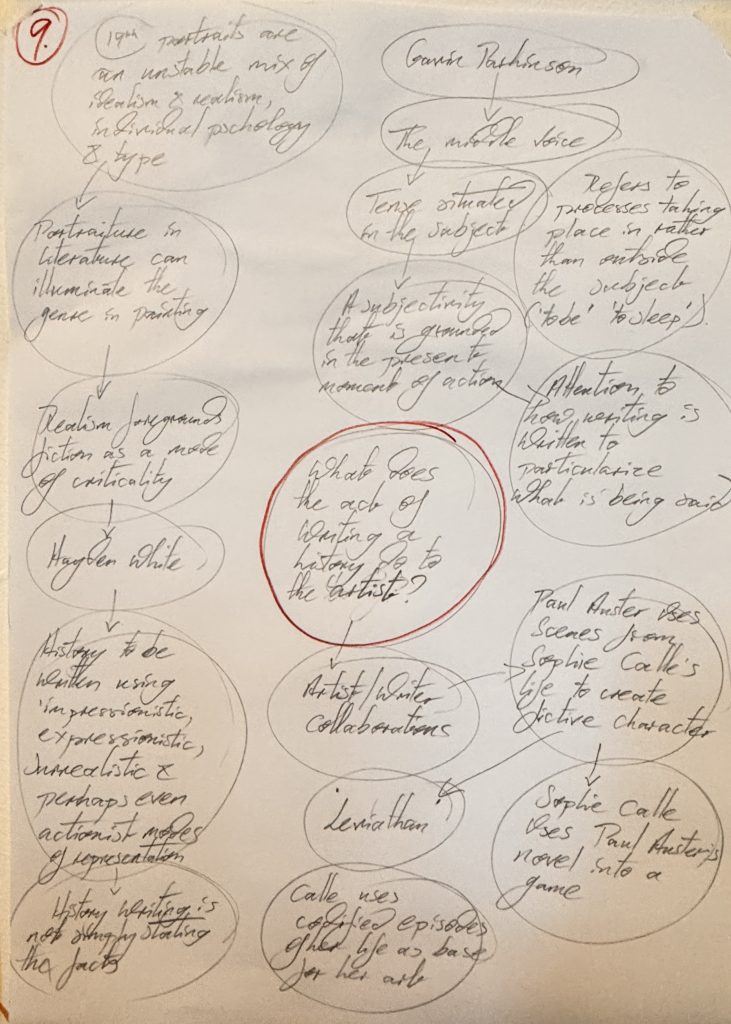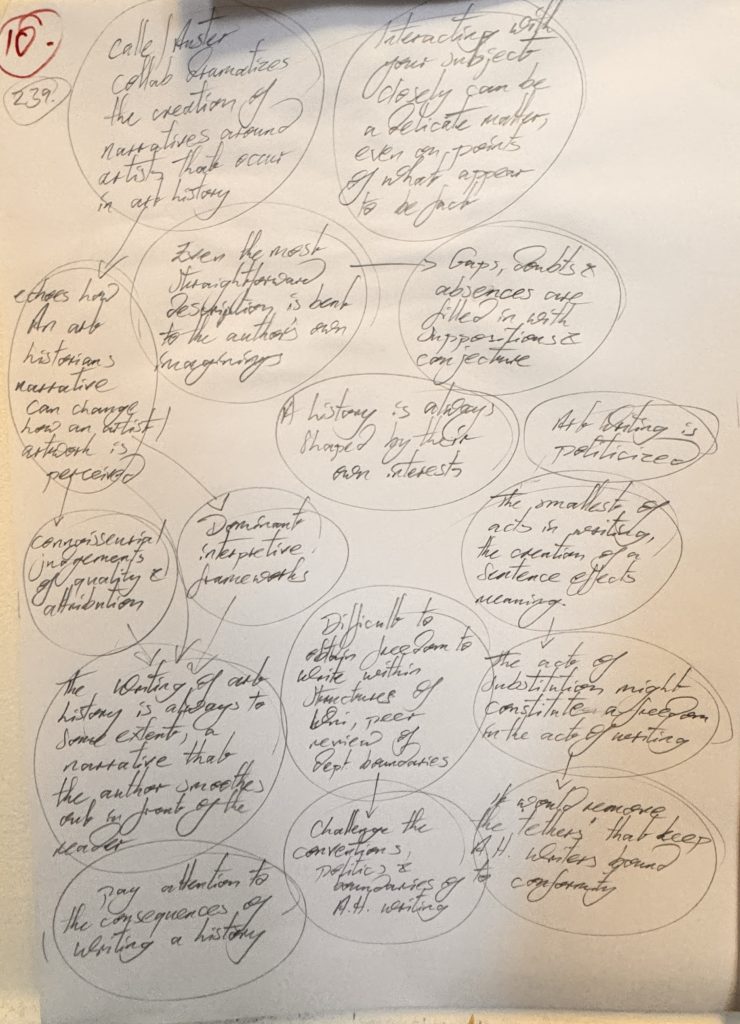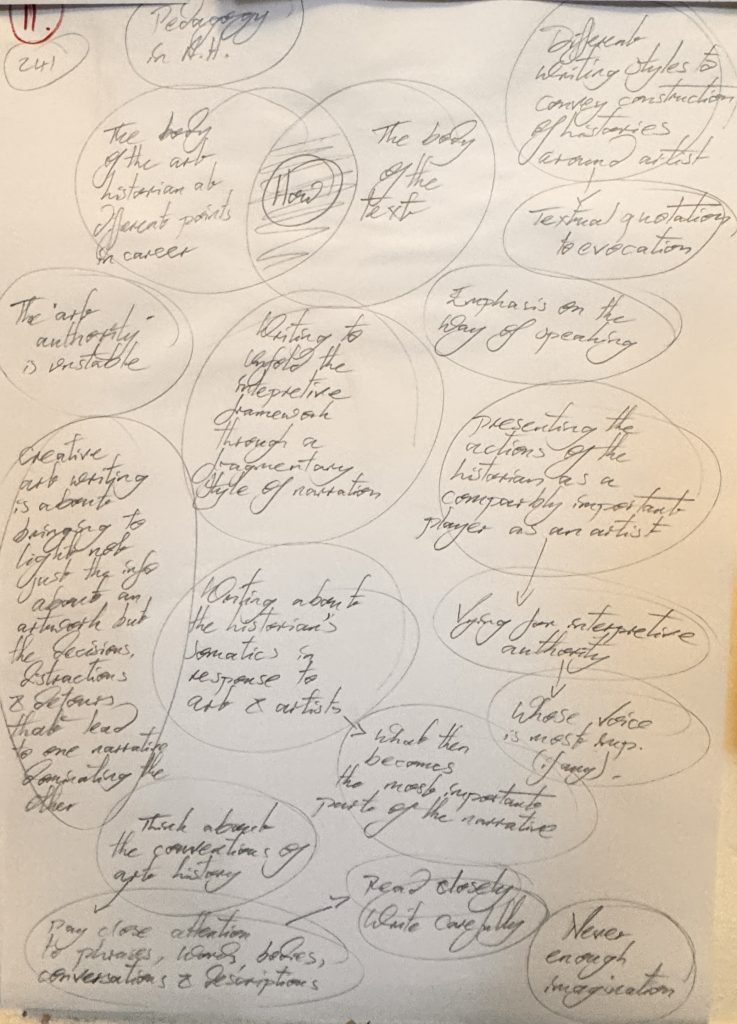
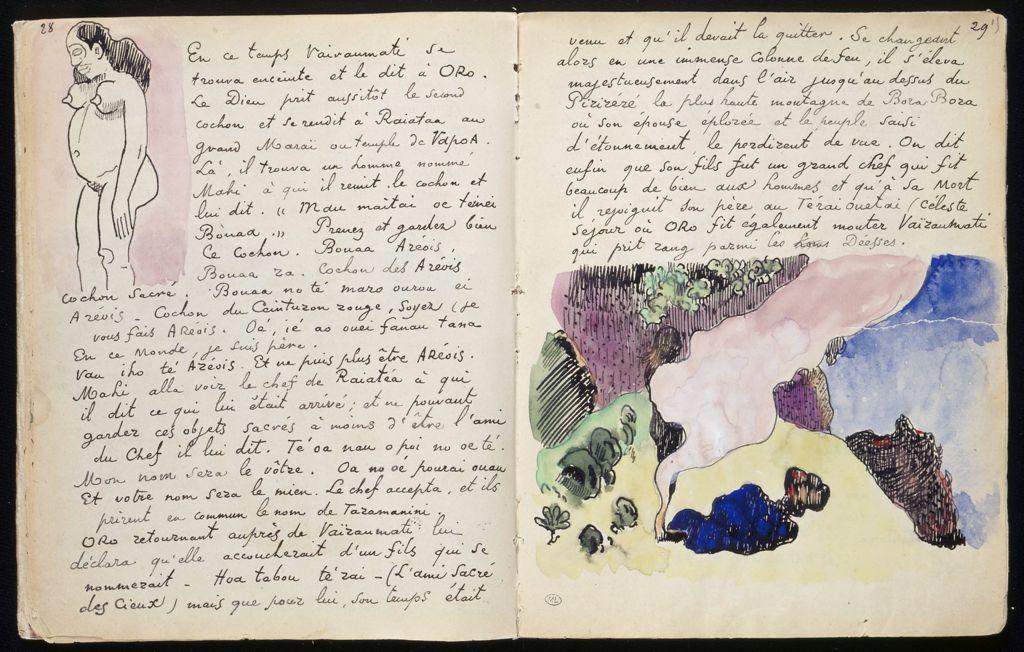
Fig.1. Ancien Culte Mahorie, folios 14 verso and 15 recto (19th Century – 20th Century.)
Summary of learnings
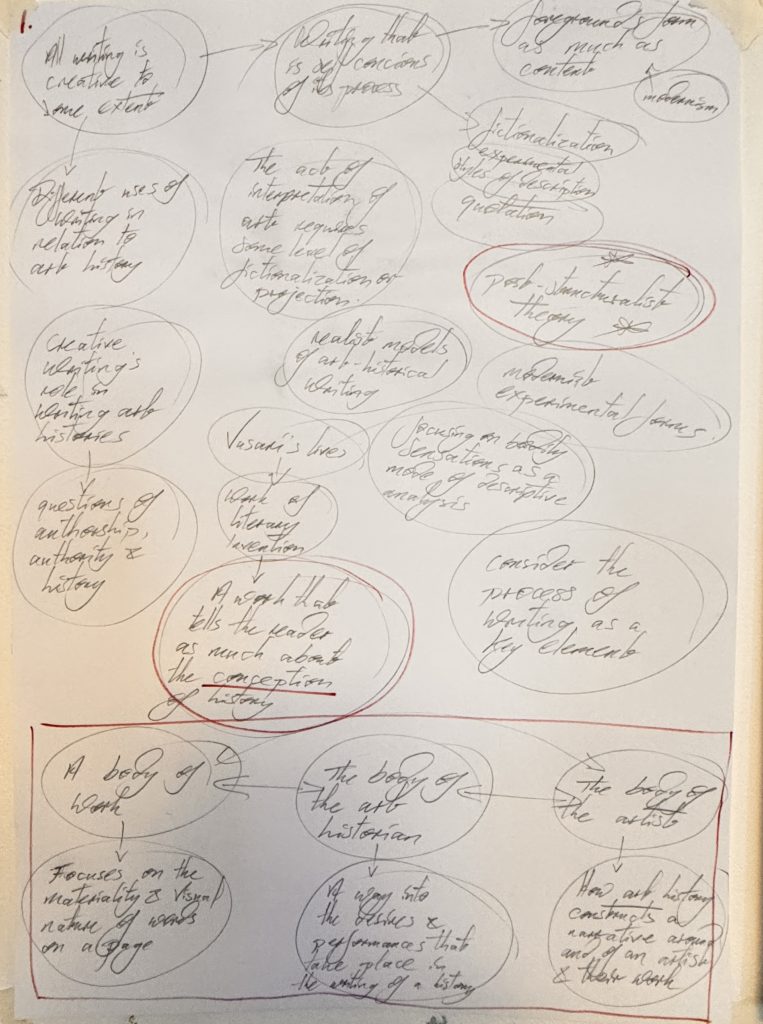
- The idea that all writing is creative to some extent…
- The act of interpreting art requires some level of fictionalisation or projection
- Vasari’s ‘Lives of the Artist’ is a work that tells us as much about how history is created as it does about the intended subject
- It’s another example with that old adage that ‘History is written by the victor’
- Art histories have been (in the past) written by the privileged, the powerful and the patriarchy
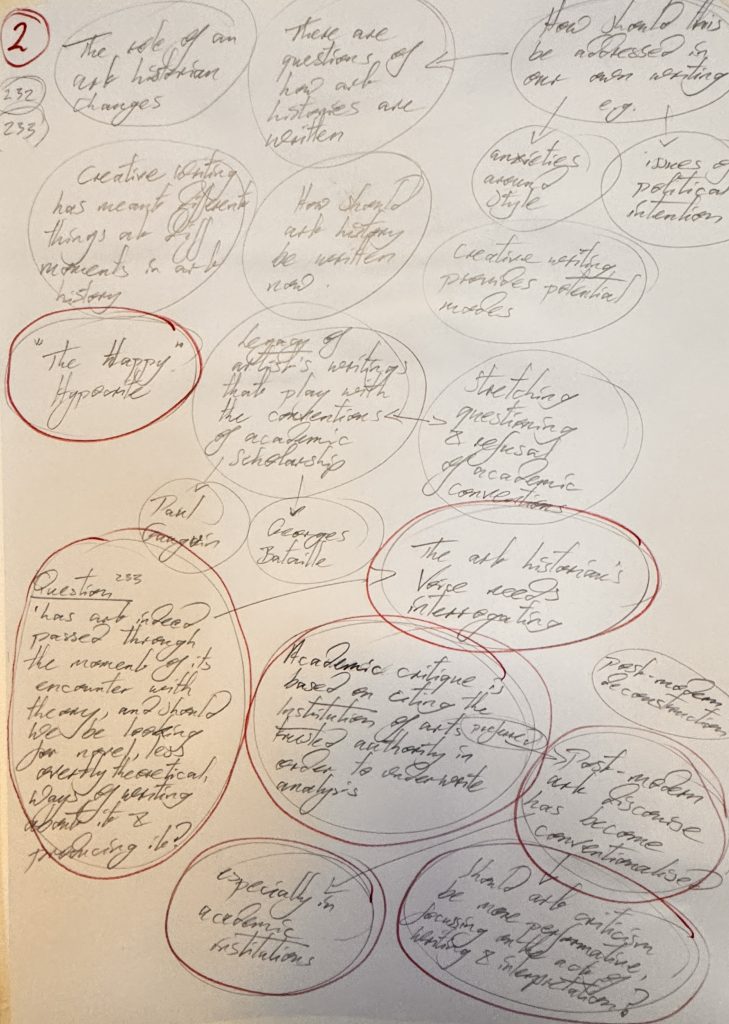
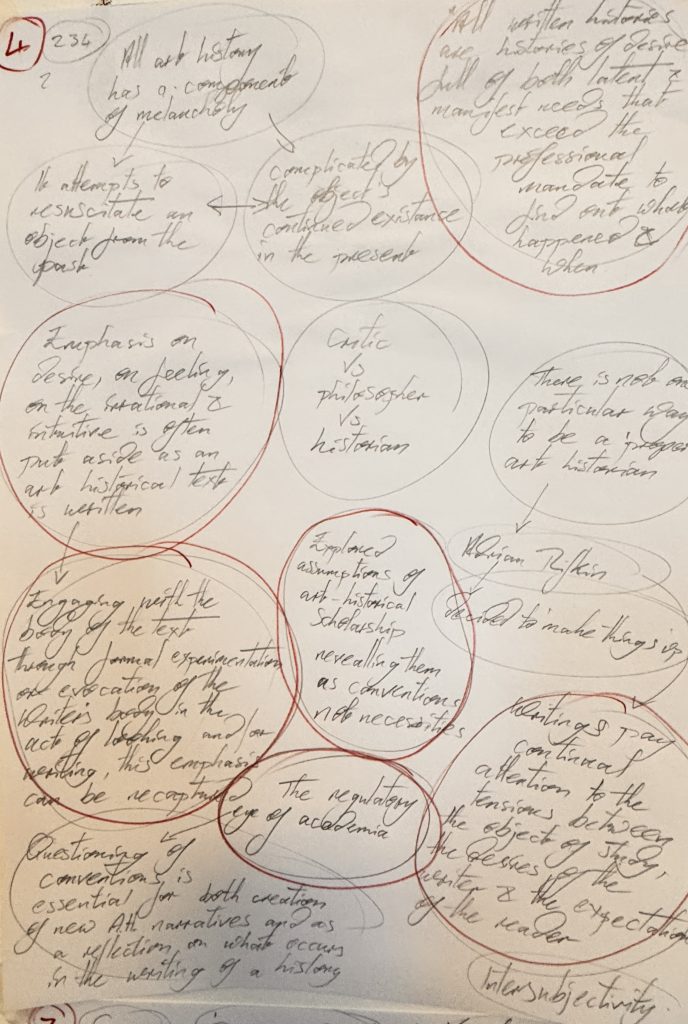
- I would suggest that there is the inference that academia has been dictating the model used for art writing –
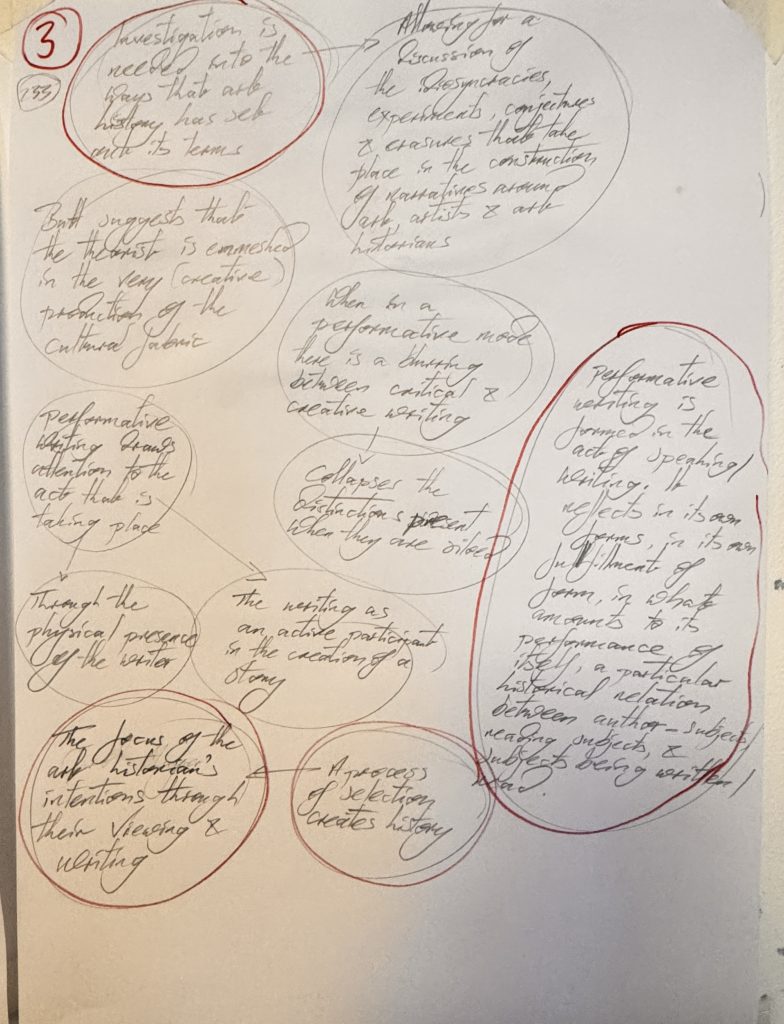
“regulatory eye of academia” (Grant, 2011: 234) - Traditional/ established art writing tends not to reflect on the ‘body of the writer’ as in their personal perspectives, politics, intentions, emotional state, likes dislikes – a process of selection writes history. As a result, the reader can be drawn into a ‘biased/ framed’ opinion and accept that as fact, hence the need to read extensively around a subject
- “The art historian’s voice needs interrogating” (Grant, 2011: 233)
- Thus it can said that the art historian’s (and critic’s, and artist’s, and dealer’s) voice has provided the frame that delineates the institution of art.
- This identifies why certain artists (Female, transgender, outsider are points in question), movements, materials, processes etc have been pushed outside the boundaries of the institution of art or disregarded completely.
- Consider the different modes of writing to how art history is constructed
- Post modern art writing until now has been based on convention which in turn has been determined by standards established in academia
- Academic critique is based on citing the institution of arts preferred, trusted authority
- Identifying a traditional art writing model as a preferred approach is a contributory method for establishing and controlling the borders of the institution of art
- Questioning those conventions though is essential for both creation of new art history narratives and as reflection (meditation – my word) on what occurs in the writing of a history (Grant, 2011: 234)
- As art writing focuses on “continual attention to the tensions between the object of study, the desires of the writer and the expectations of the reader.” – exploiting the intersubjectivity that exists in that space, it makes sense, both intellectually and somatically, to explore alternate, less academically driven/ traditional forms of art writing to communicate an effective response to a work of art
- Part of writing’s purpose is to enhance (and in some cases) replace the experience of physically viewing an artwork. Therefore it needs to capture a sense of the emotional, and not just the denotative or the connotative
- Text – wherever it exists in relation to a work of art – should be seen as an element of the curation and interpretation of an artwork/ object
- What will experimental forms of writing bring to art history and art practice?
- A divergence away from the purely academic or traditional forms of writing: a disruption of the conventions
- For instance Pollock challenging the traditional categorisation of work by ‘nation, period, medium, artist’ in ‘Encounters in a Virtual Feminist Museum’
- A recognition of the role that art writing plays in defining and manifesting the institution of art
- An acceptance of the role of fiction in creative histories and then a leveraging of that to create work
- A recognition and acceptance of subjectivity
- Acknowledgment of the processes taking place within and not outside a writer/viewer/ artist
- A reshaping of the institution of art to be more inclusive and less oppressive
- An clearer, multi-viewed appraisal of the historical circumstances surrounding a piece of art or a movement or an artist
- An acknowledgement of an assumptions or theories
- Inclusion of writing as an intrinsic part of the appreciation of art
- Recognition of Writing in art as an art form in its own right
- A formal linking of textual and visual
- Inclusion of hitherto forgotten/ discarded/ ignore elements of the creation/ viewing/ appreciation experience e.g. the bodily experience of viewing and the effects that has on emotions
- Employing a specific visual style of writing to foreground the engagement with an artwork at the time of looking
- A reappraisal of an artist and their oeuvre from different perspectives. I’m thinking of the 2023 “It’s Pablo-matic: Picasso According to Hannah Gadsby” exhibition at the Brooklyn Museum (https://www.brooklynmuseum.org/exhibitions/its_pablo_matic_picasso_according_to_hannah_gadsby) which reassessed Picasso’s legacy through a “contemporary, and feminist lens, even as it acknowledges his work’s transformative power and lasting influence.” (Brooklyn Museum, 2023)
- The materiality of words can be used to modulate the meaning of texts – for instance, compare the following:
- A divergence away from the purely academic or traditional forms of writing: a disruption of the conventions
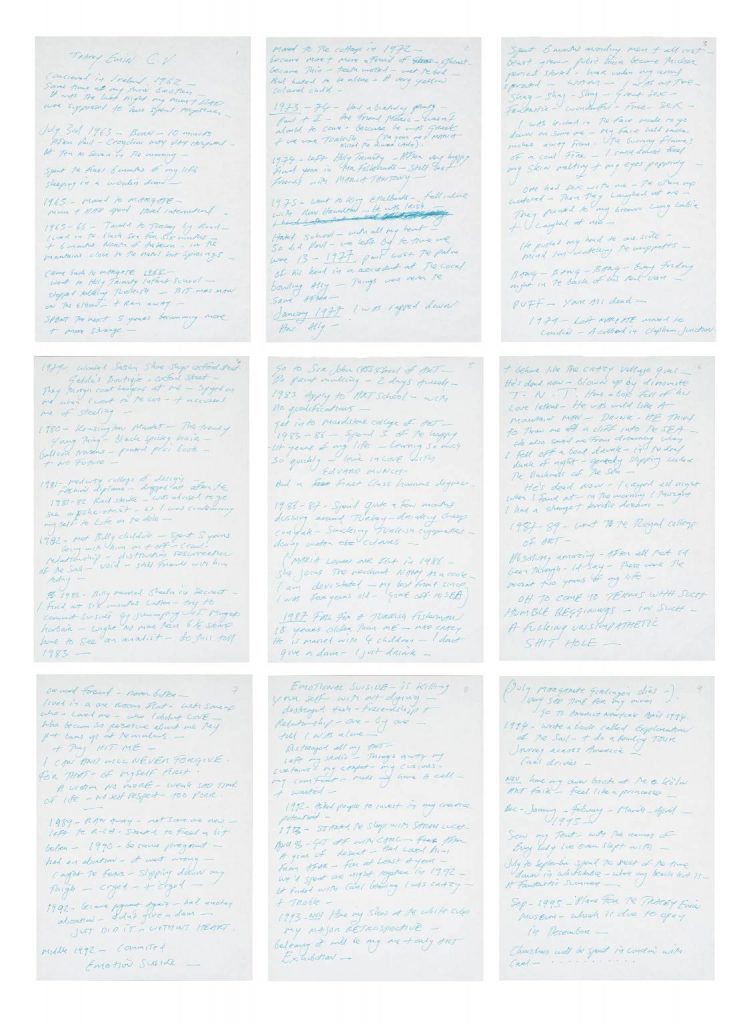
Fig.2. C.V (1995)
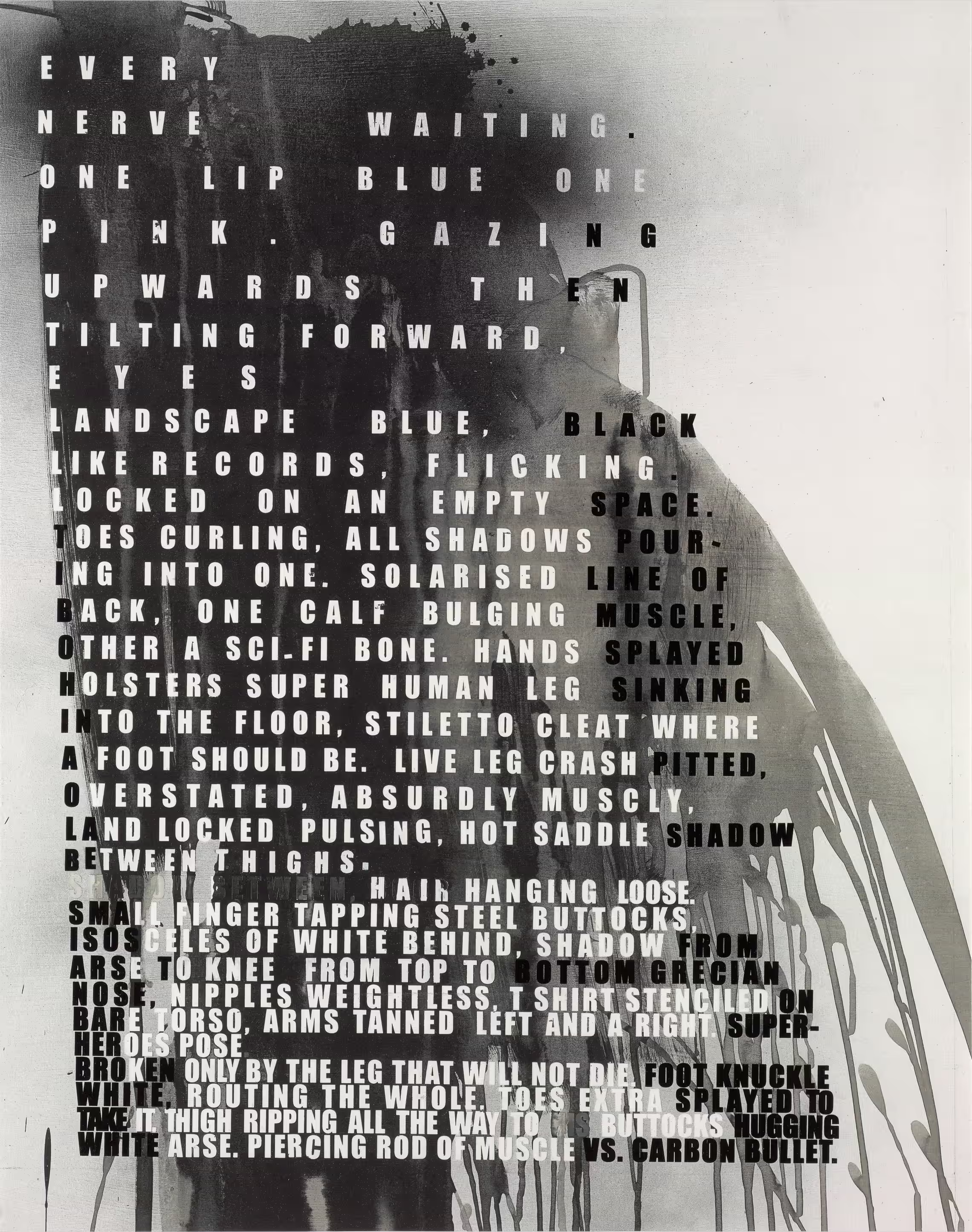
Fig.3. Superhuman Nude (2011)
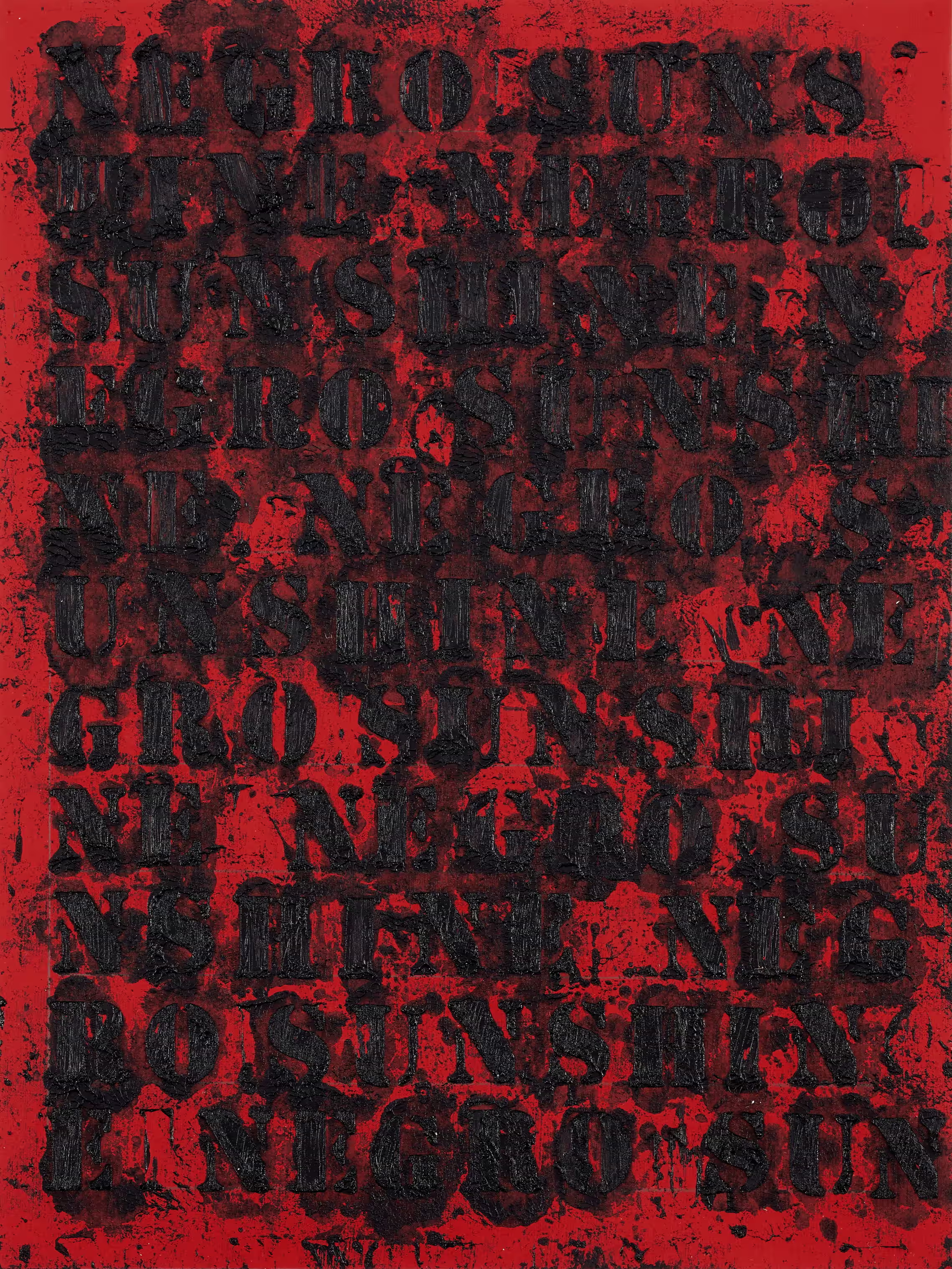
Fig.4 Study for Negro Sunshine (Red) #15 (2004)
- Questions to ask
- Should art writing be more performative in terms of the act of writing and interpretation?
Follow up research
- Primary
- Gavin Parkinson – ‘the middle voice’
- Adrian Rifkin – ‘making things up’/ archive
- Nicholas Chare
- Post structuralist theory
- Secondary
- T.J. Clark – ‘The sight of Death’
- Rosalind Krauss – The Optical Unconcious
- Charlotte de Mille – the role of intuition in art writing
- Performative writing
List of References
Grant, C. ‘A narrative of what wishes what it wishes it to be’ in Grant, C. and Rubin, P. eds (2011), Creative Writing and Art History special issue of Art History, Vol 34, Issue 2, Chichester: Wiley-Blackwell
Brooklyn Museum (2023) ‘It’s Pablo-matic: Picasso According to Hannah Gadsby‘ At: https://www.brooklynmuseum.org/exhibitions/its_pablo_matic_picasso_according_to_hannah_gadsby (Accessed 23/09/24)
List of Images
Fig.1. Gaugin, P (19th – 20th Century.) Ancien Culte Mahorie, folios 14 verso and 15 recto [Watercolour and Ink] At: https://www.artres.com/CS.aspx?VP3=DamView&VBID=2UN94S6UEU053&SMLS=1&RW=1680&RH=898#/DamView&VBID=2UN94S6UEUA8S&PN=1&WS=SearchResults (Accessed 23/09/24)
Fig.2. Emin, T (1995) C.V. (ink on paper) At: https://www.tate.org.uk/art/artworks/emin-tracey-emin-c-v-t07632 (Accessed 23/09/24)
Fig.3. Banner, F (2011) Superhuman Nude (Inkjet with one colour screen print and one glaze) At: https://www.countereditions.com/portfolios/olympics/fiona-banner-limited-edition-print-1249u.html (Accessed 23/09/24)
Fig.4. Ligon, G (2020) Study for Negro Sunshine (Red) #15 (oilstick, coal dust and acrylic on paper) At: https://www.theguardian.com/culture/article/2024/aug/28/van-gogh-rego-best-exhibitions-autumn-2024 (Accessed 23/09/24)
Research notes