Project 3, Research Task: How to Write About Contemporary Art
Table of Contents
Key Observations
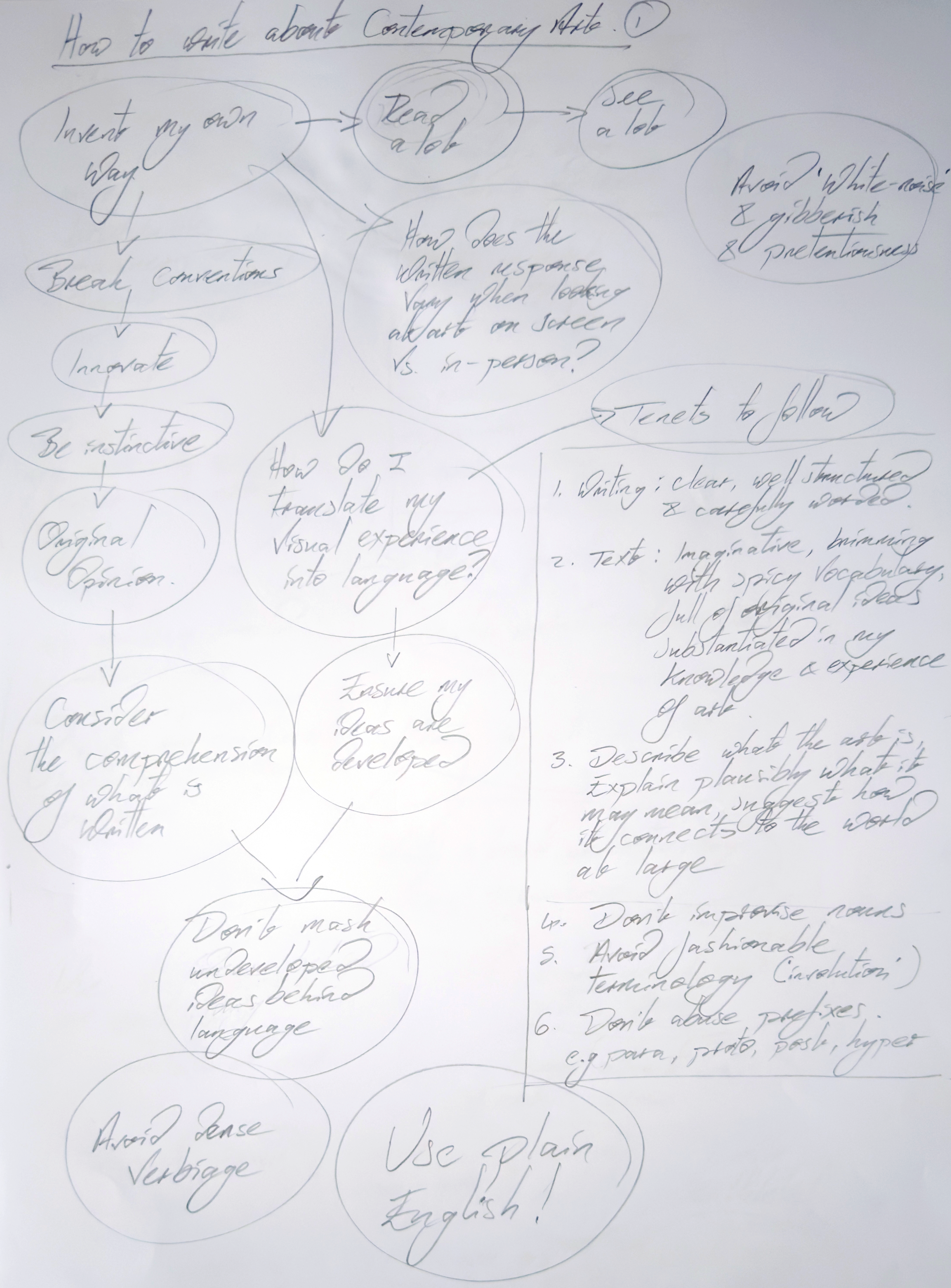
How do I translate my visual experience into language?
Invent my own way. Break conventions. Innovate. Be instinctive. Be original in my opinions
Use plain English. Avoid verbiage.
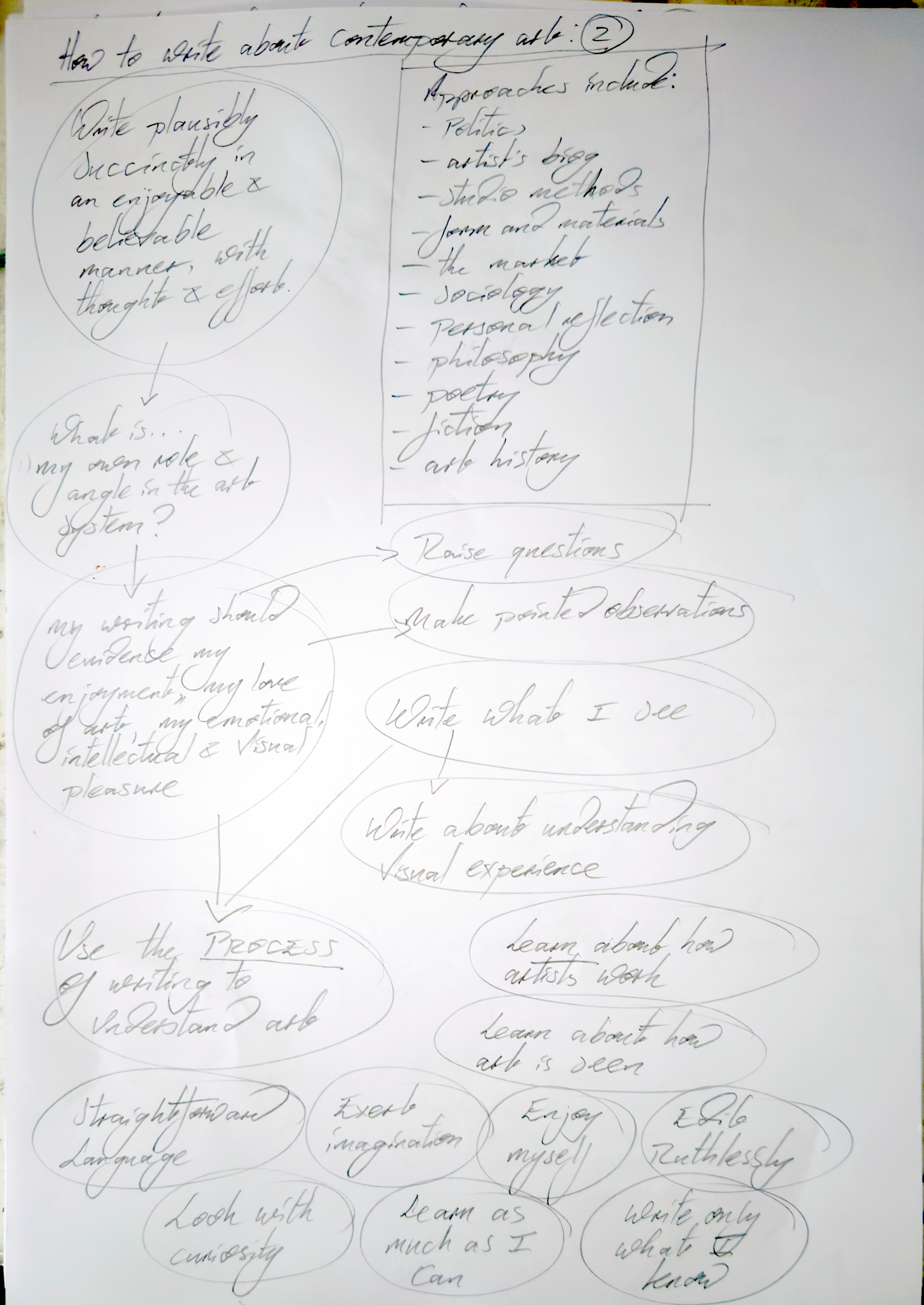
Write plausibly and succinctly
Consider my own role and angle within the art system
Raise questions, make pointed observations, write what I see, evidence my enjoyment, my love of art, my emotional, intellectual and visual pleasure
Use the process of writing to understand art
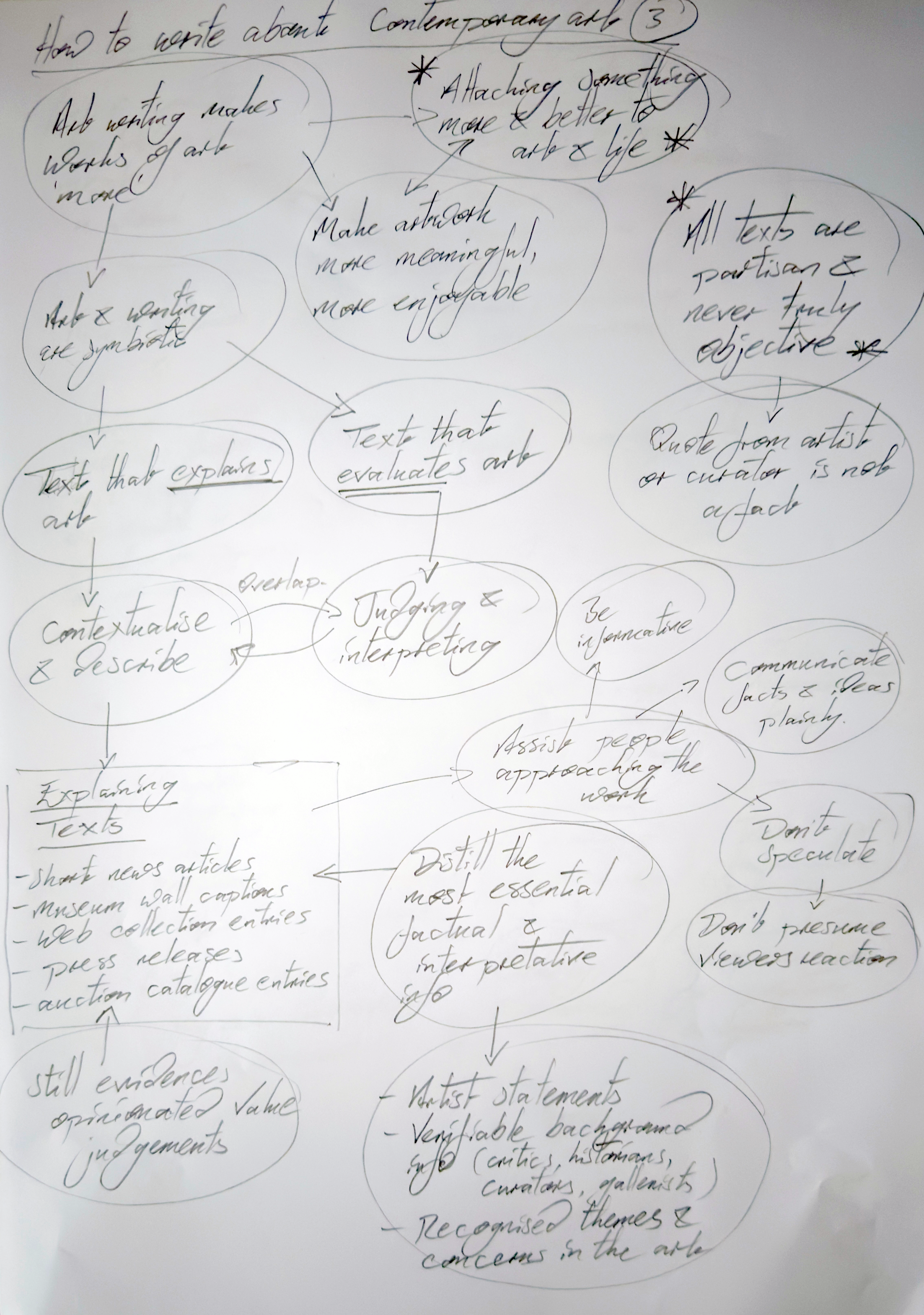
The writing is part of the artistic process and output: writing and art are symbiotic
Critics and historians written output are not just musings on work, they are contributors to the art, to the intersectionality
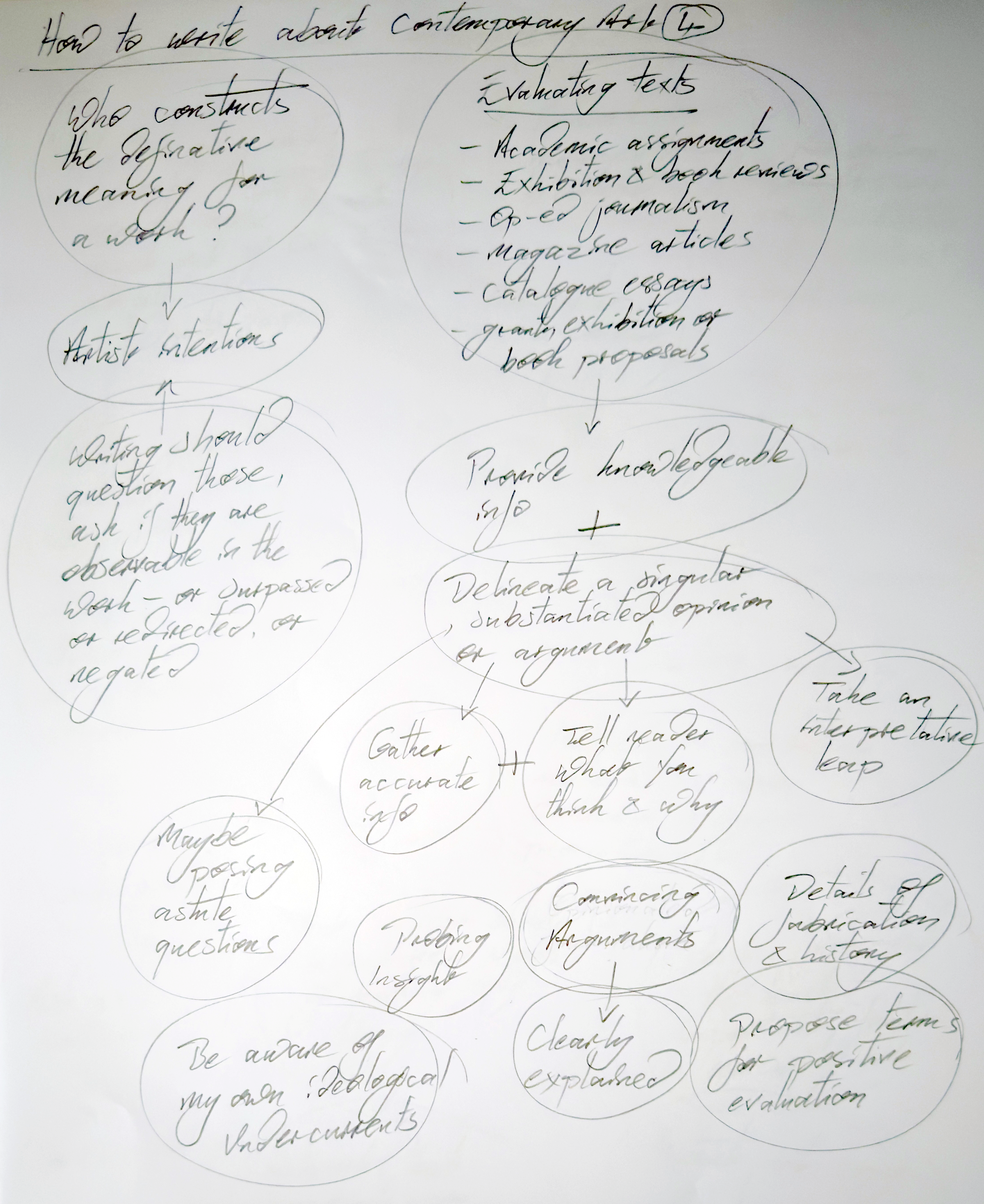
Writing explains and evaluates art
Writing assists people approaching the work
Who constructs the definitive meaning of the work? The writing should question the artists intentions, ask if they are observable, or surpassed, redirected or negated in the work
Delineate a singular substantial opinion or argument
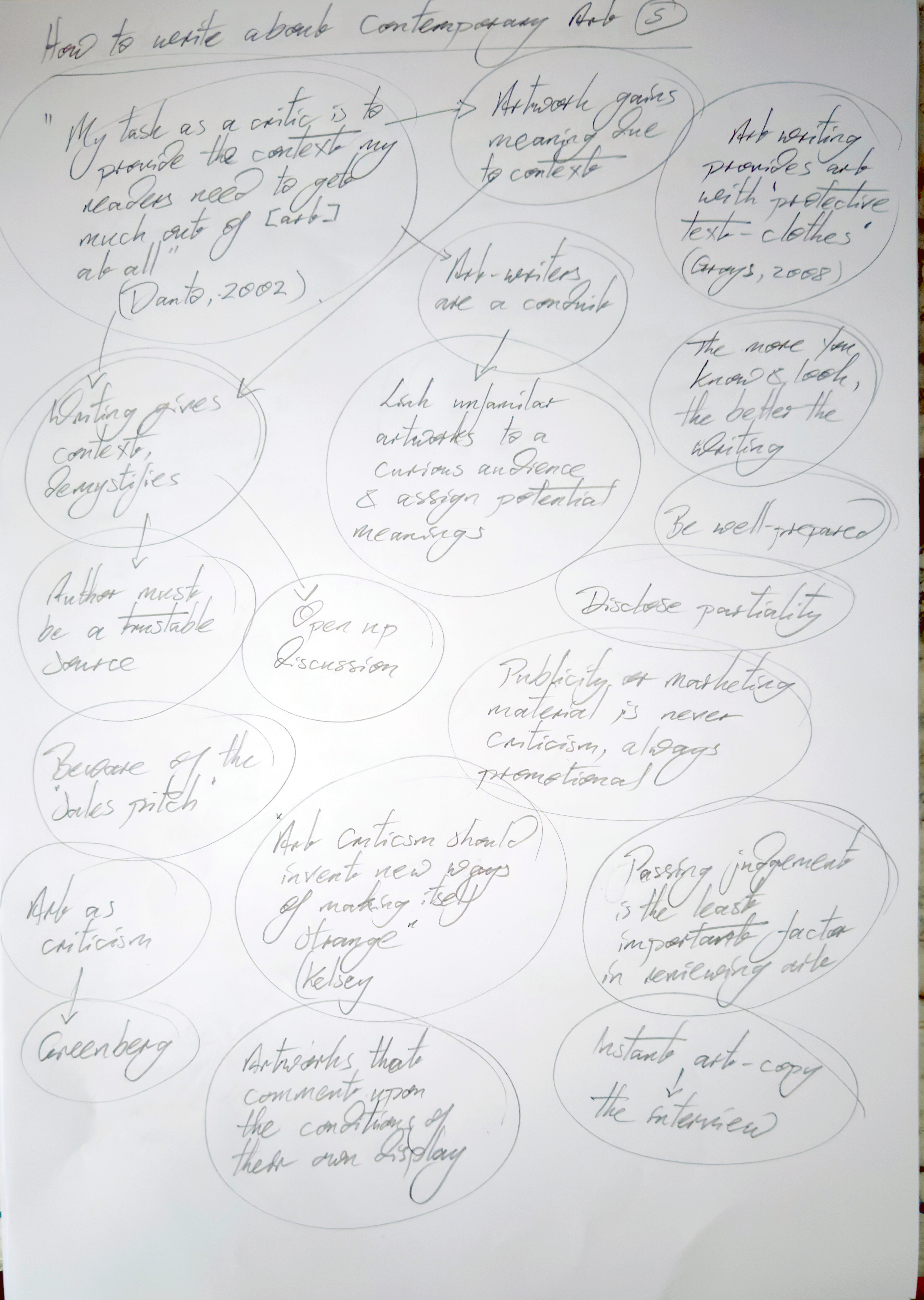
Art writing gives context, demystifies
‘Artworks that comment on the conditions of their own display’
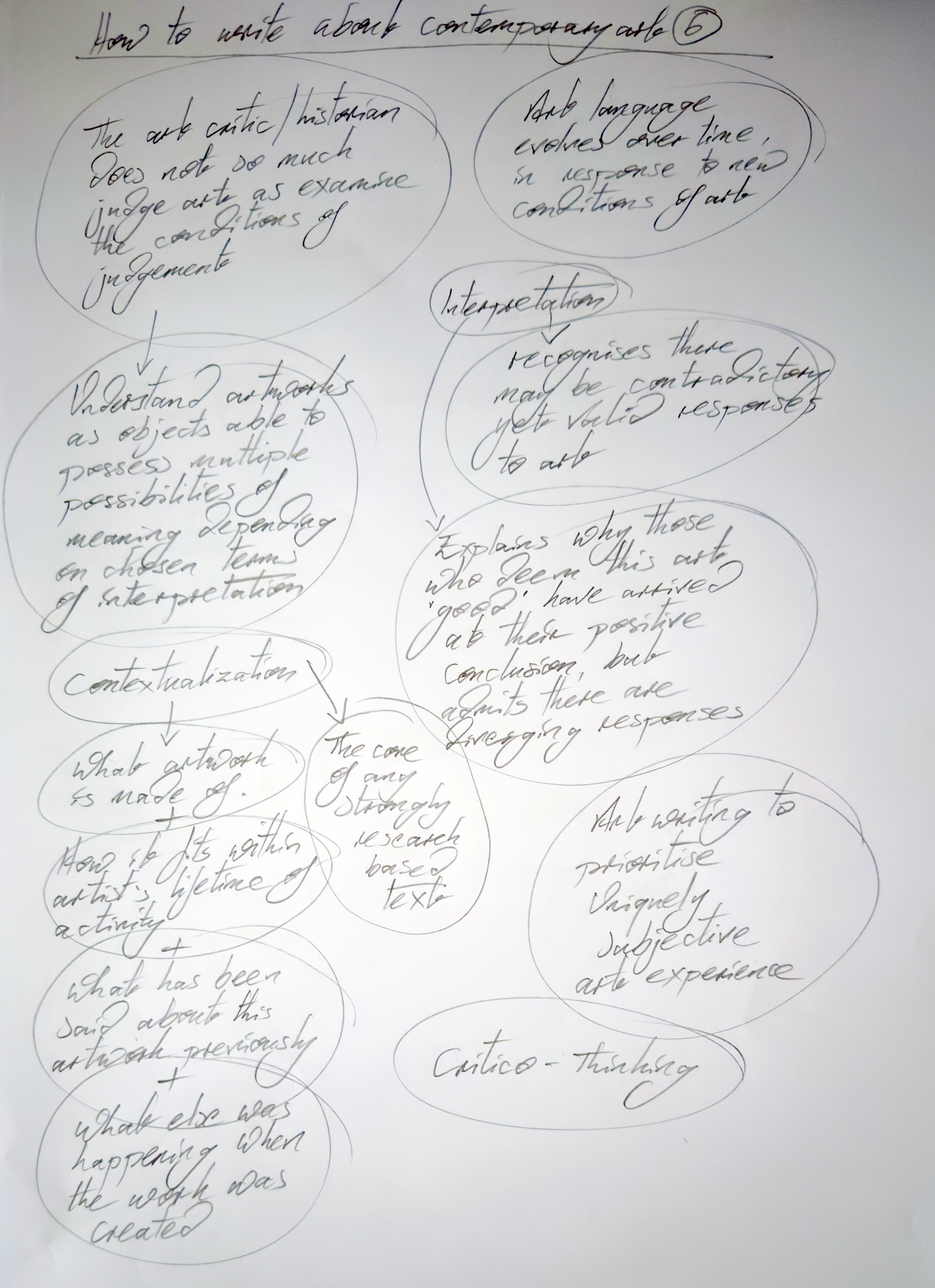
Art language evolves over time in response to new conditions of art
Artworks are objects that are able to possess multiple possibilities of meaning
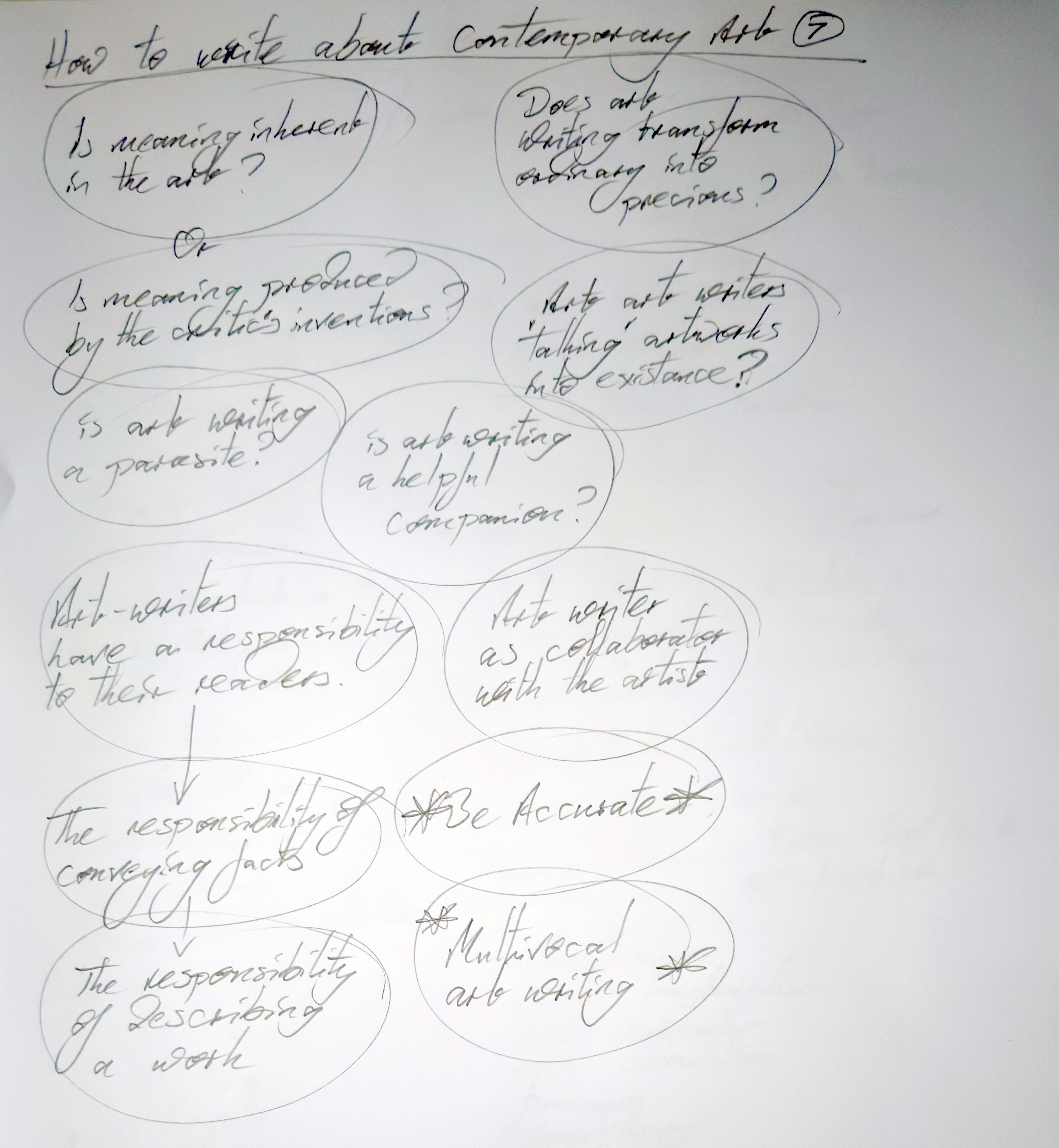
Is meaning inherent in the art or produced by the critics inventions?