Project 3, Ex.2, Part A: What is Artist-Led Publishing
Table of Contents
General Reflection
Artist-led publishing should be considered an important asset by the ‘institution of art’ – but would those publications then become part of the ‘Institution of Art’? Is it important that they remain independent? Are they independent of it? Do they actually exist under its umbrella?
It’s challenging the hegemony of the art establishment, the big galleries, the national institutions, the lauded artists, the auction houses etc
By giving voice to creative (and non) practitioners outside of the upper rarified echelons of the Art world, these publishers are bringing art back to what I feel its core purpose is – discourse about topics that matter, big and small, and exploring those from multiple, critical perspectives, through a myriad of creative lenses
By giving this voice back, they are bringing creative practice and artefacts back from point where they are regarded purely for their exchange value and decorative value, rather than their capabilities for inciting discourse
They are giving voice back to the practitioners at a grassroots level, allowing a more honest, aware, knowing perspective to be had on a subject, a perspective that is not increasingly obscured by the layers of detached exclusivity that the Institution of Art appears built upon
The plethora of artist-led publications allows discussion around specific focuses, or around a more open field of topics. Artists can pursue their own agendas, but invite discussion beyond their own boundaries as a challenge to their personal perspectives.
There is a lack of ‘fear’ in these publications – anything can be discussed, there is no censoring, the influence of societal ideologies is noticed, can be be put front-and-centre, then challenged and discussed – Cabinet being an obvious example where this occurs, often in a humorous or through a slightly off-kilter, abstract lens.
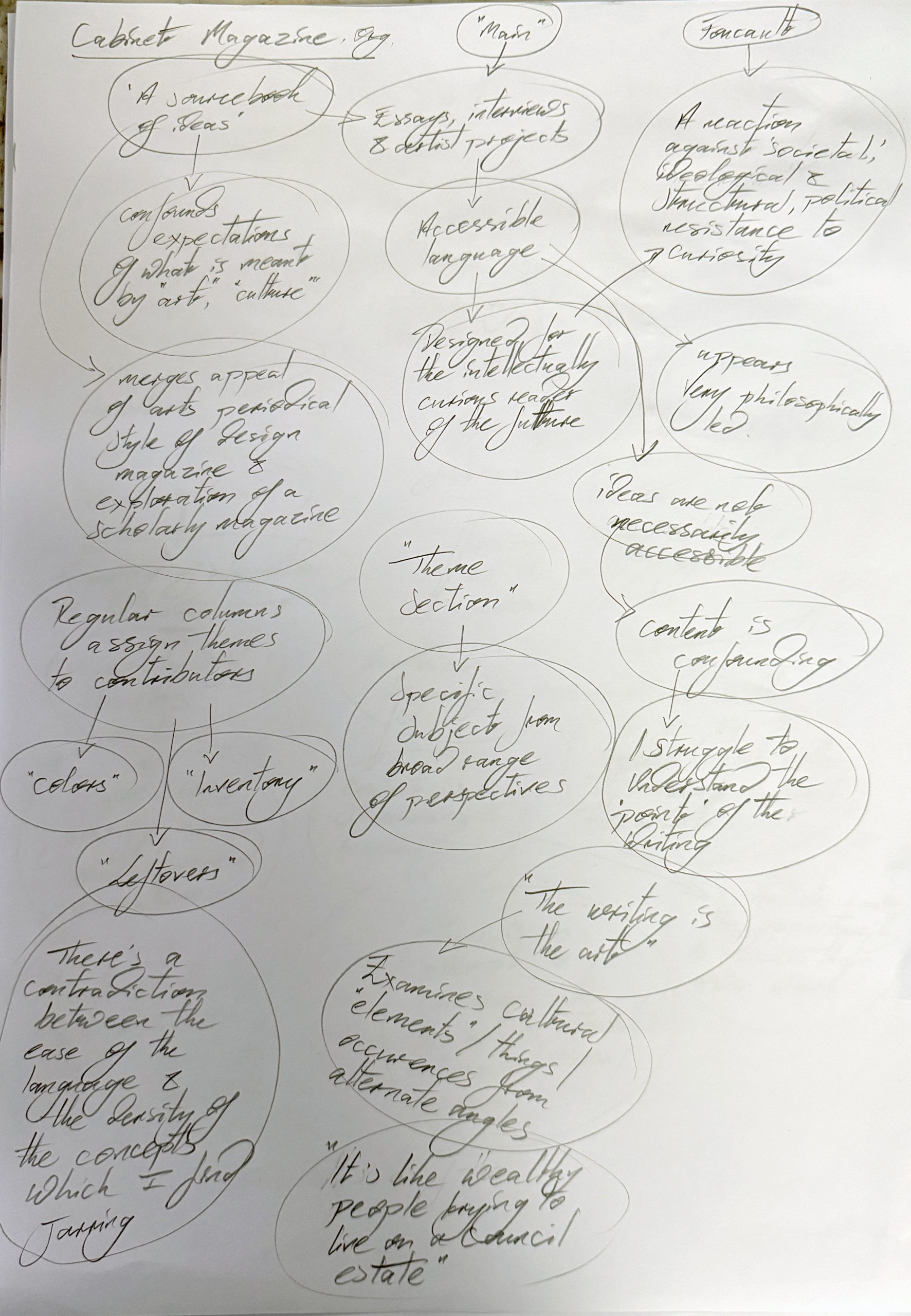
The accessibility, in terms of the writing, of the platforms I reviewed varied. Cabinet Magazine frustrated me. It speaks of presenting “a wide range of topics in language accessible to the non-specialist” (Cabinet, 2024), to “encourage a new culture of curiosity” (ibid), but I found the topics esoteric, and aimed at, as they state, an ‘intellectually curious reader (ibid): intellectual curiosity comes in various forms!
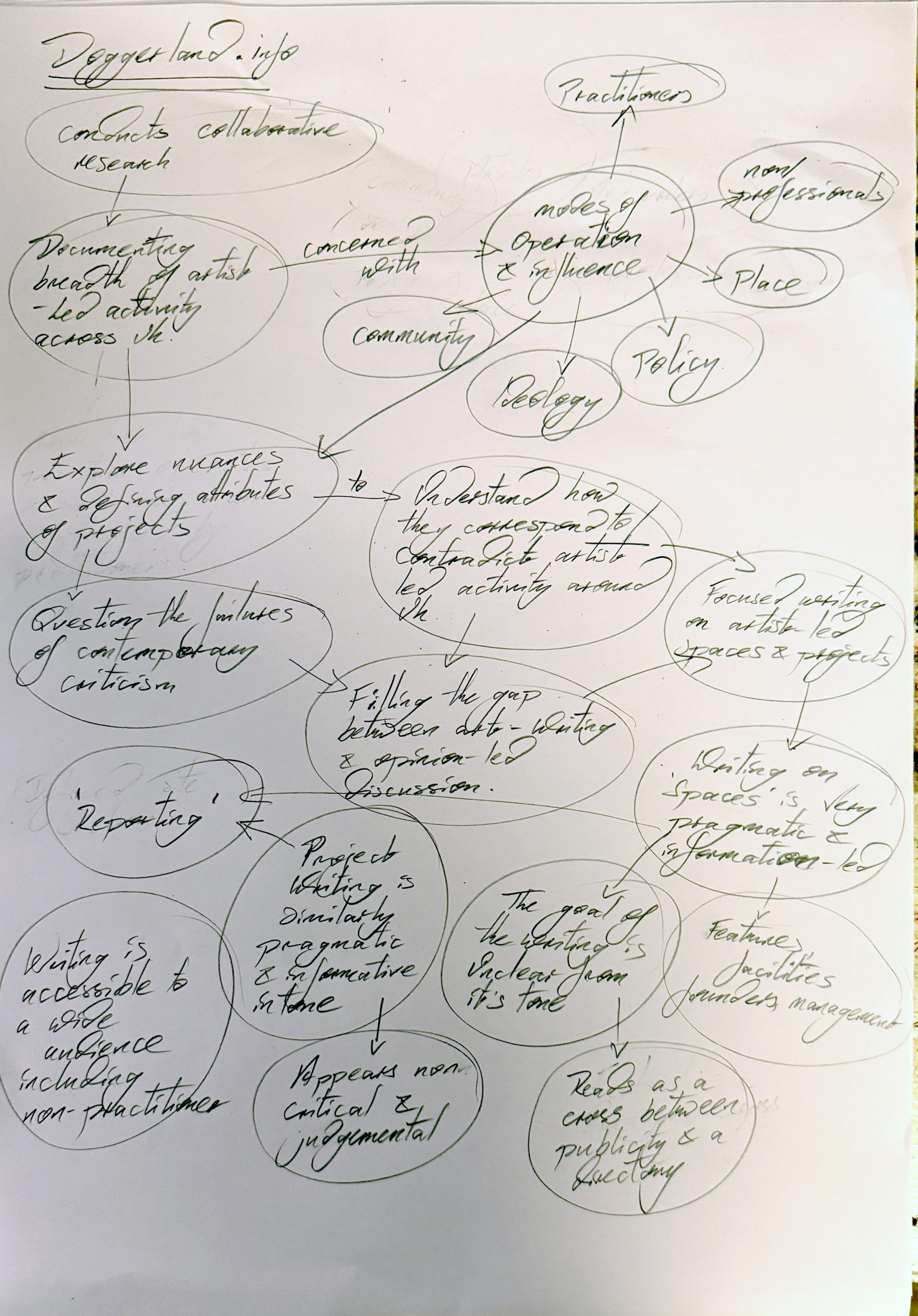
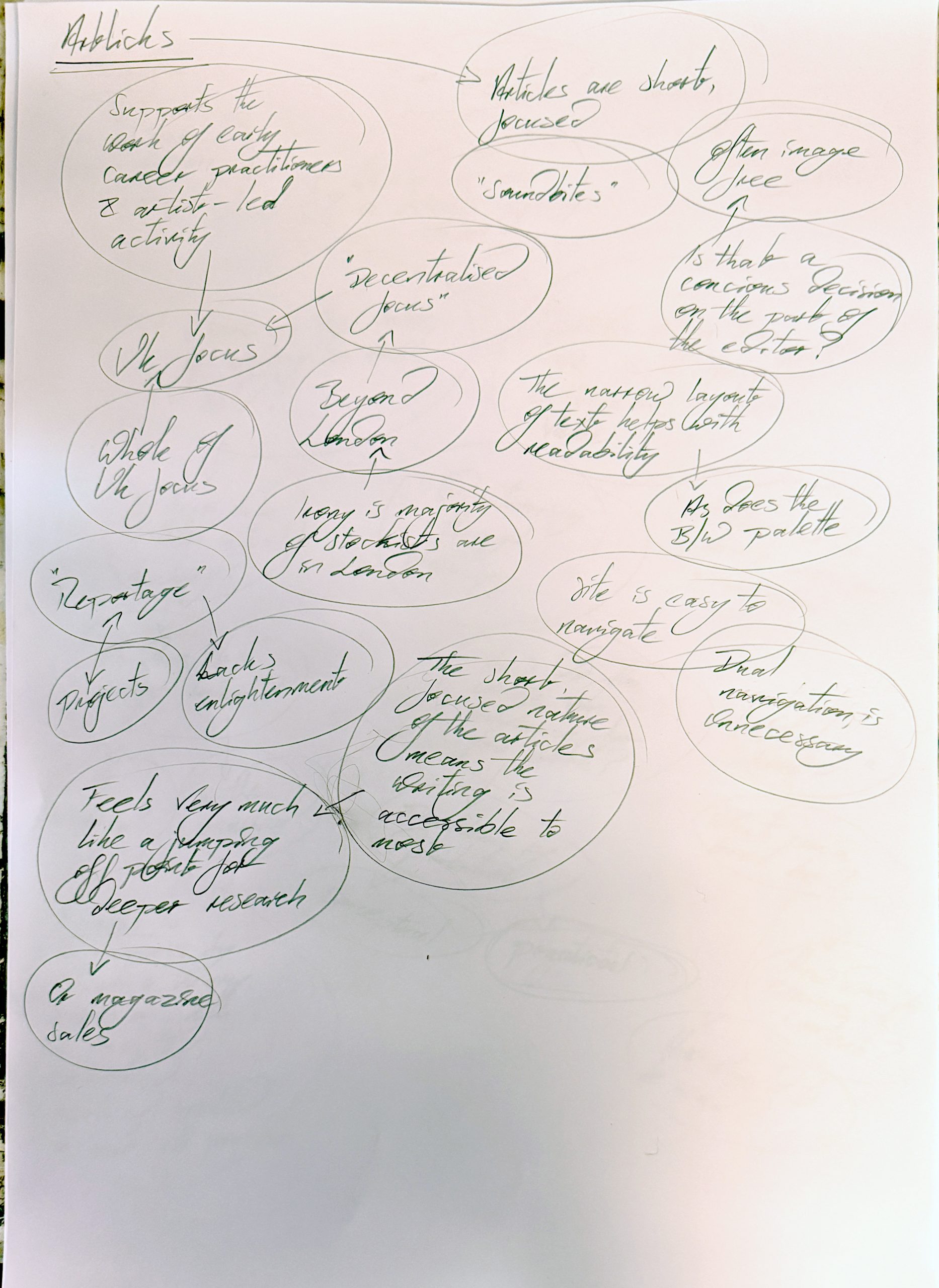
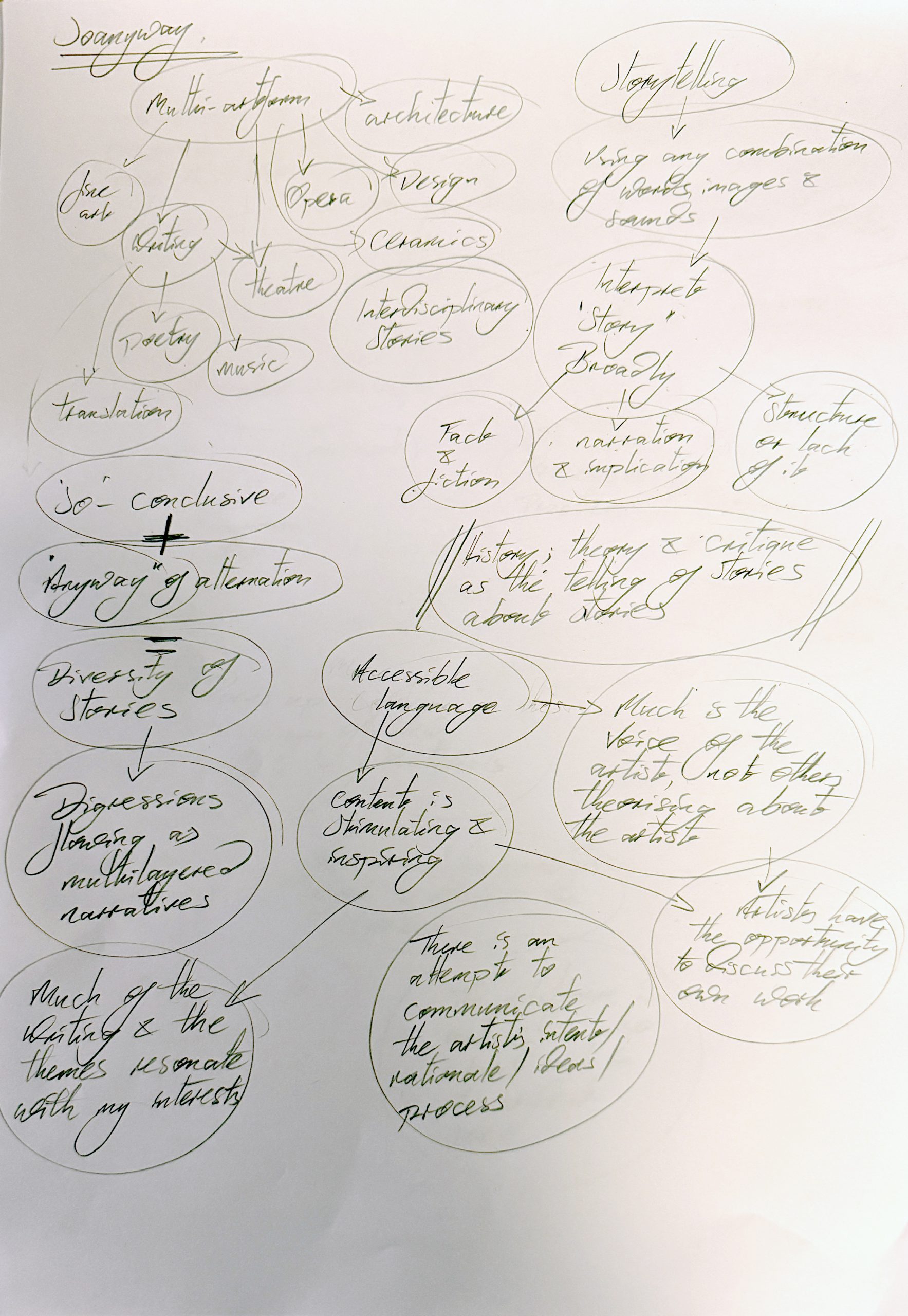
The platforms that resonated with me most were those that were more straightforward in approach, artist interviews, spotlights on work and process, getting inside an artist’s head e.g. Soanyway, Artlicks.
Artlicks though was ‘slight’ in terms of the depth of it’s content, though that’s the point of it, “a light coating or quick application of something” (Oxford Languages, 2024), to give the audience an entrance point to deeper discussion, to whet the appetite for more.
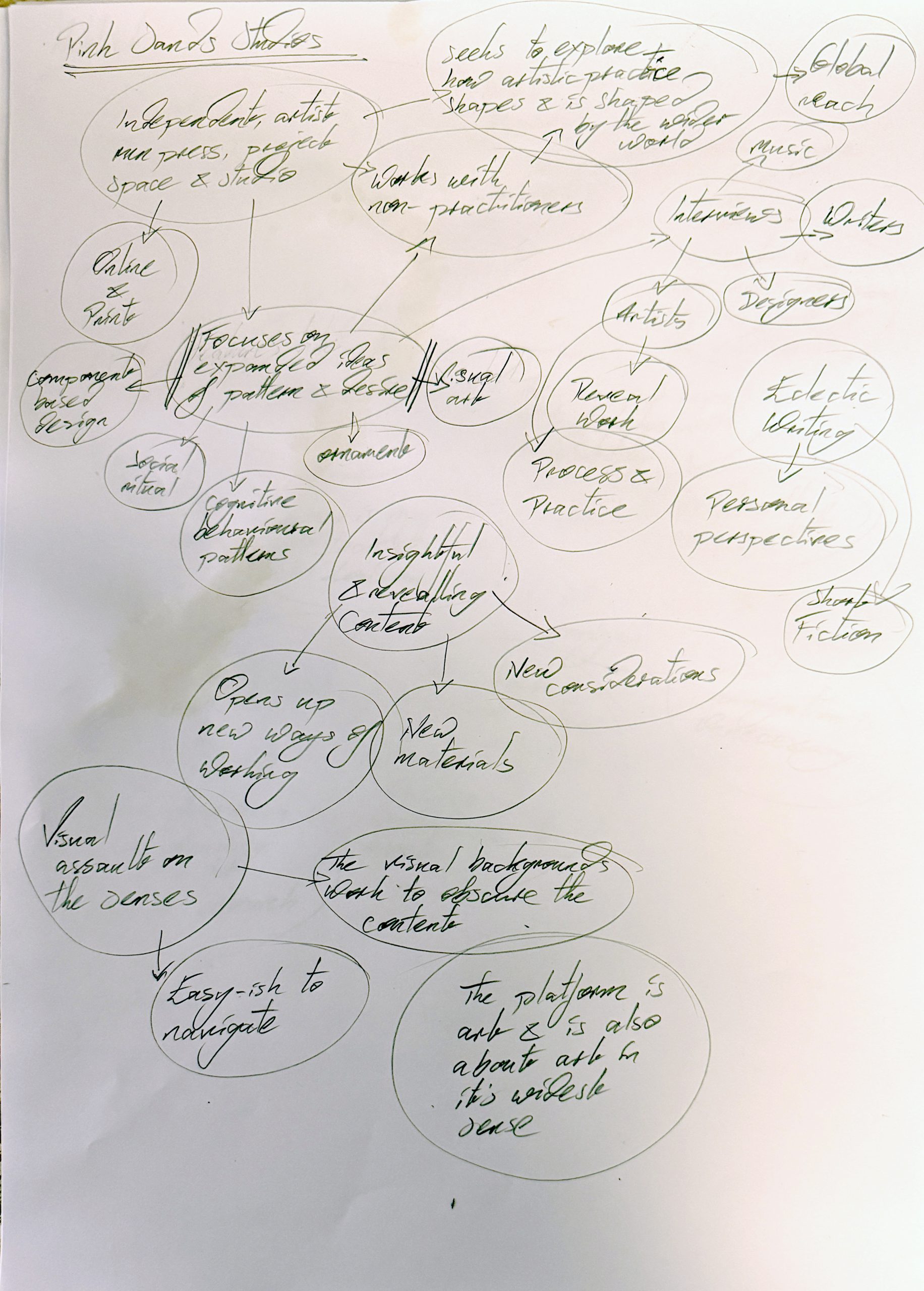
It was difficult to leave my professional hat on the hat stand: being a UX designer by day, it is difficult to not immediately focus on the experience and usability of a website. All displayed usability issues to varying degrees. Pinksandstudio contravened many usability and accessibility standards that, technically, legal action could be taken by someone with a neurodiverse or visual condition! Text can be difficult to read against the highly patterned backgrounds, navigation is not immediately noticeable (the centre alignment of its labelling an issue for readability) – I could go on. This is a site that is art in itself, but I’m not sure there is allowance in law for websites-as-art, that are not accessible to Users with various impairments or needs. MAP Magazine’s columnar structure with varying row heights, bounces Users eyes up and down the content. Soanyway’s navigation is antiquated by modern standards. As I said above, I could go on.
My main realisation from reviewing these platforms for creative communication, is that the ‘art-world’ is more expansive than I have had a view of. There are so many layers, nuances, tendrils that I have not been aware of (and still not aware of) due to my concentration on the ‘obvious’ the mainstream galleries and bodies: those are really only the top layer. That is being propped up by the grassroots layers, whose activities feed and nurture those upper echelons. Yet, like any hierarchically organised societal structure, those grass roots layers are deliberately obscured, ignored, oppressed even, by those power and privilege soaked upper layers. These artist led platforms and publications allow voices to be heard, subjects to be tackled and audiences of all demographics to be reached and included.