

Gayatri Chakravorty Spivak is an Indian scholar, literary theorist and feminist critic. She “has been instrumental in introducing a feminist agenda to the field of postcolonial studies and, in doing so, forcing women’s studies to interrogate the underlying principles traditionally relied on for gender analysis”. (Sharpe and Spivak: 2003). Her work, like the seminal essay “Can the Subaltern Speak”, focuses on the ways that historical and current Western ideologies exclude marginalised populations from hierarchies of power, both within their own countries and at a global level.
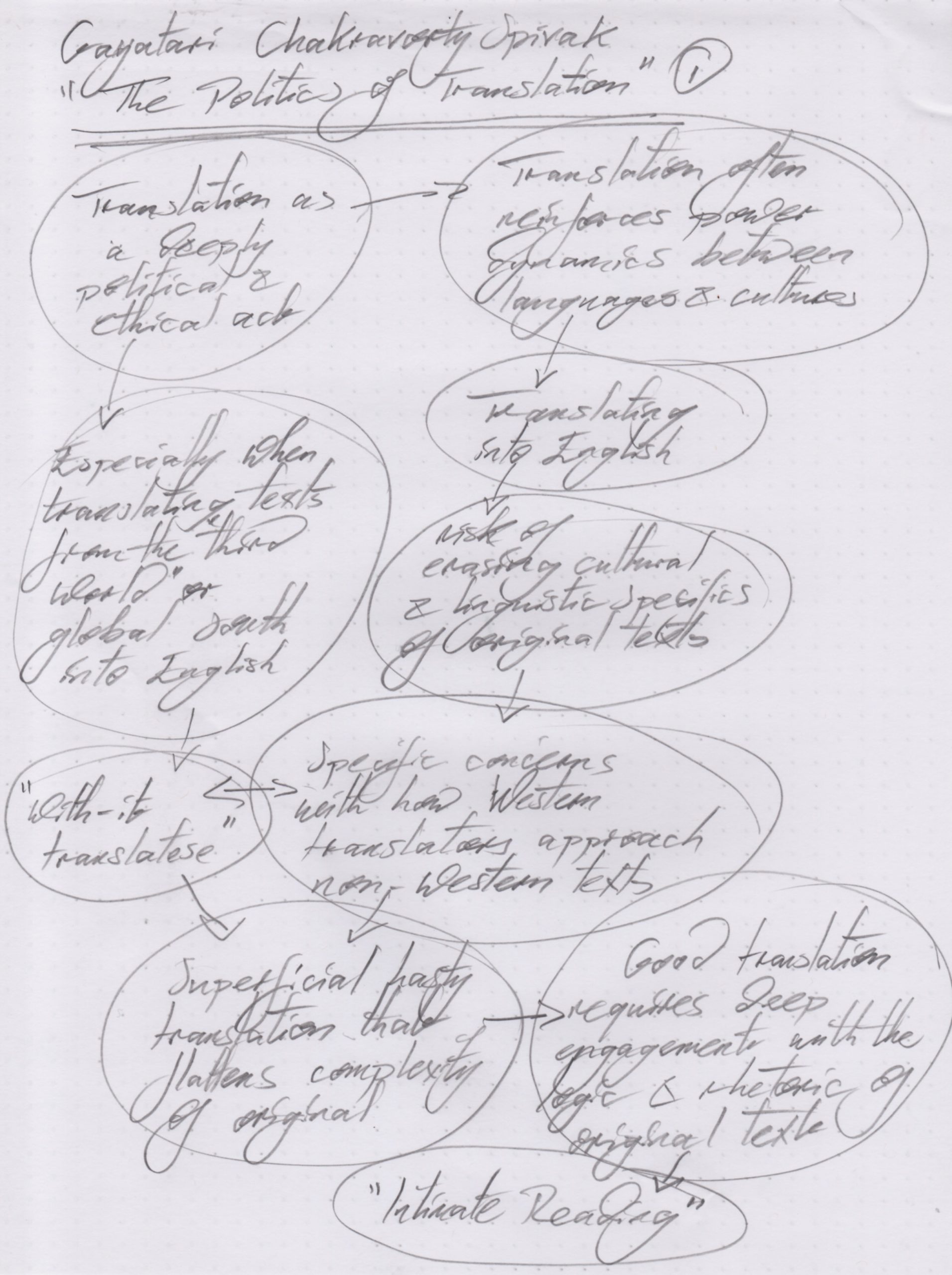
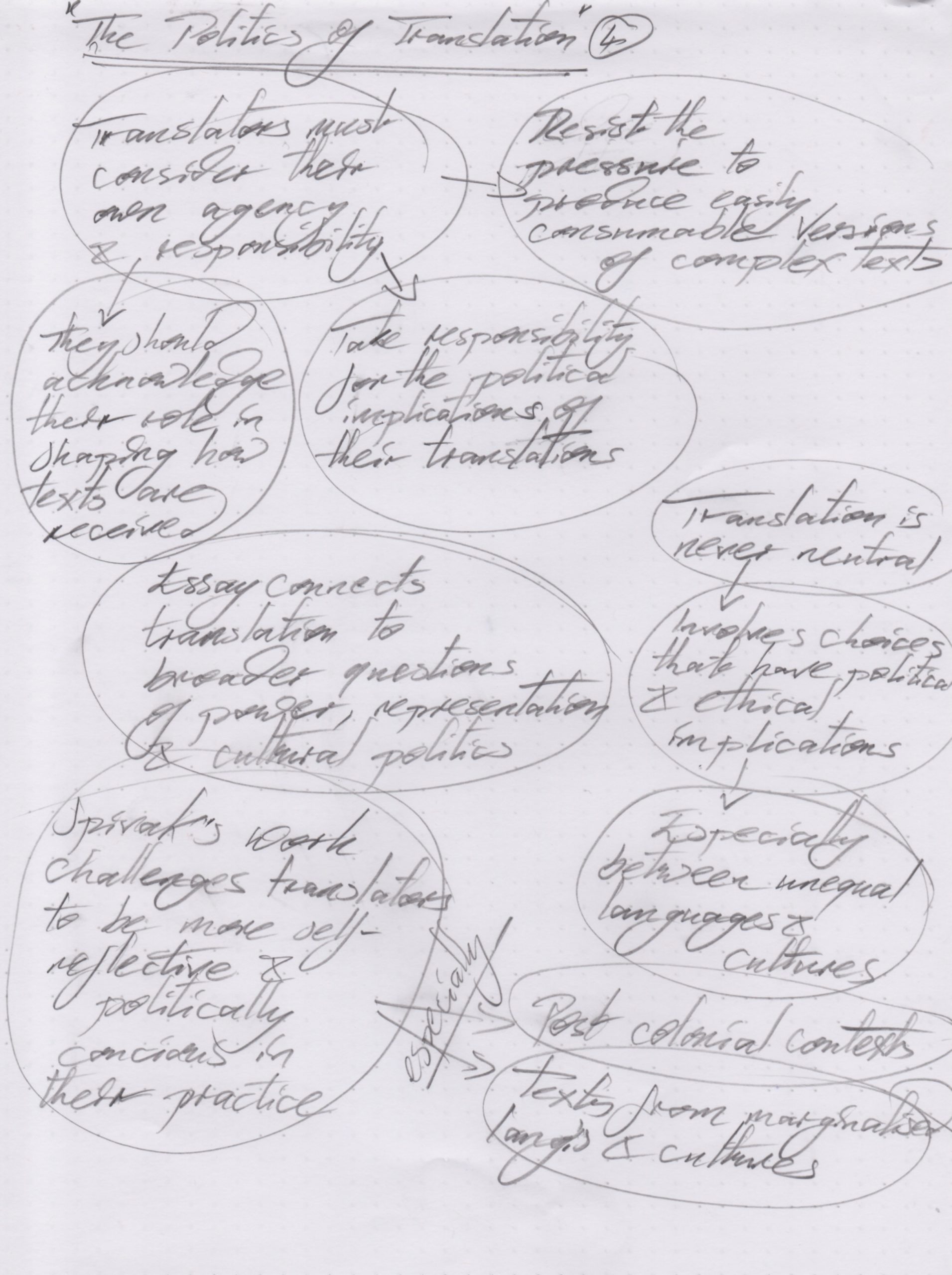
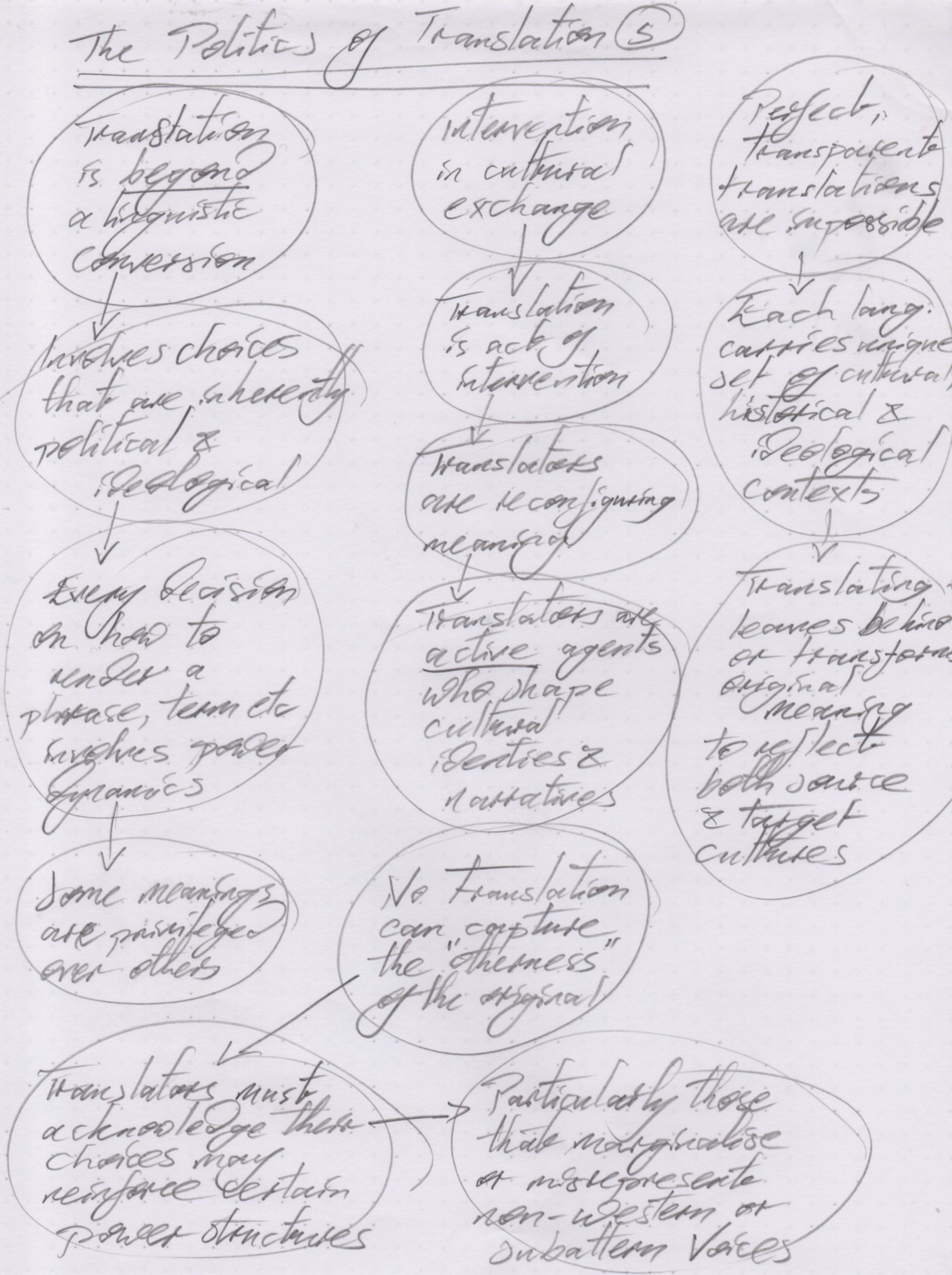
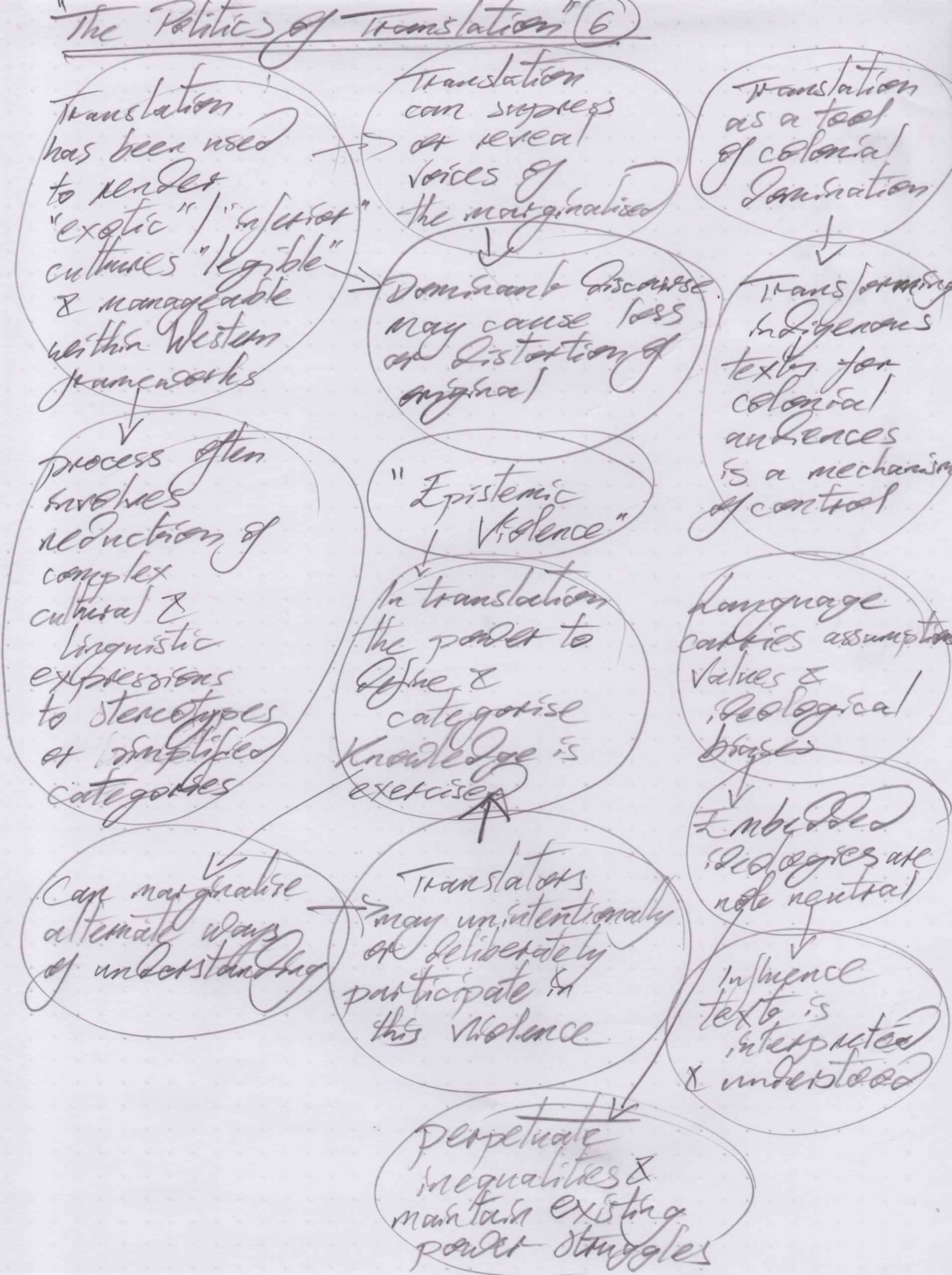
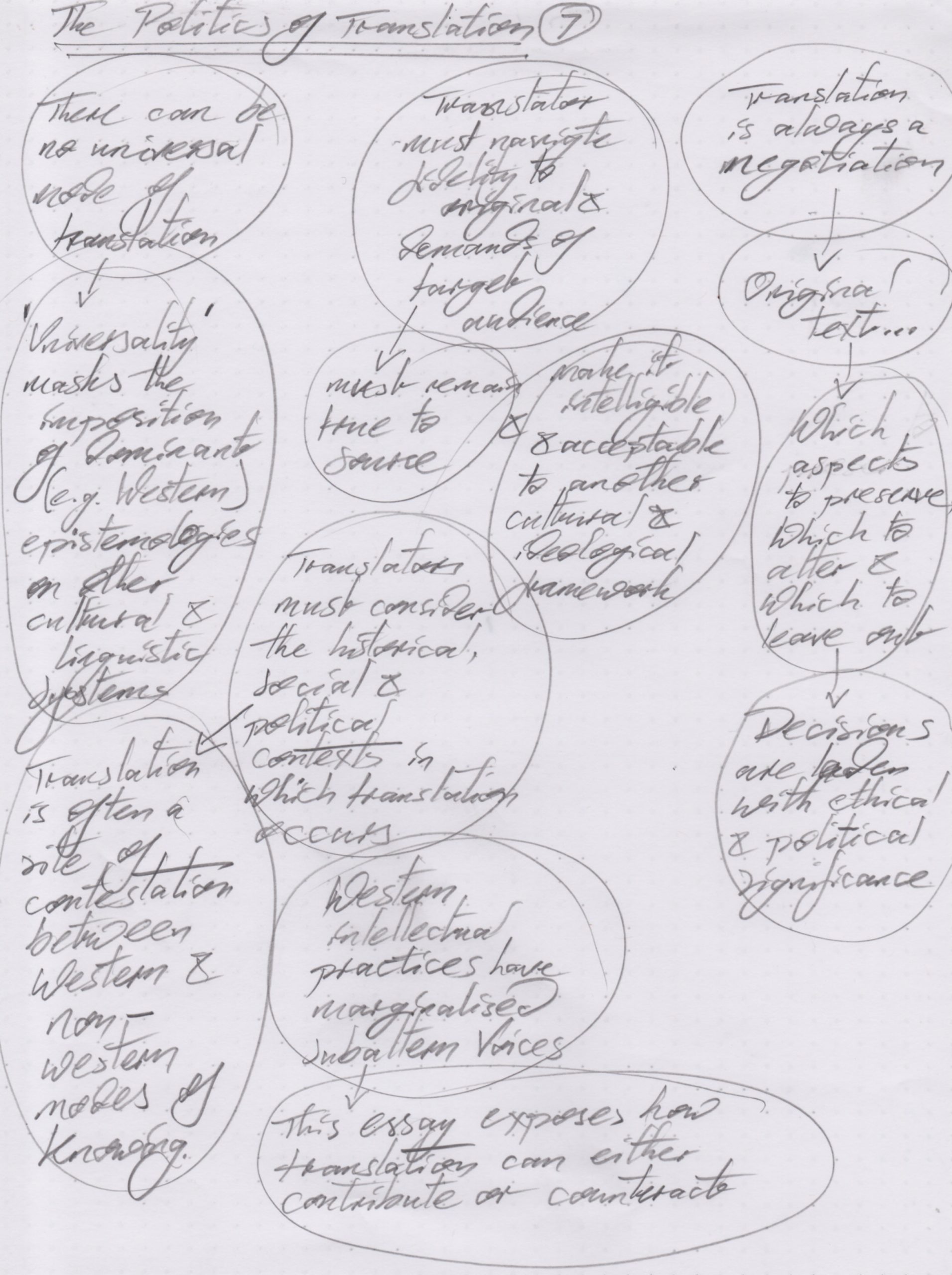
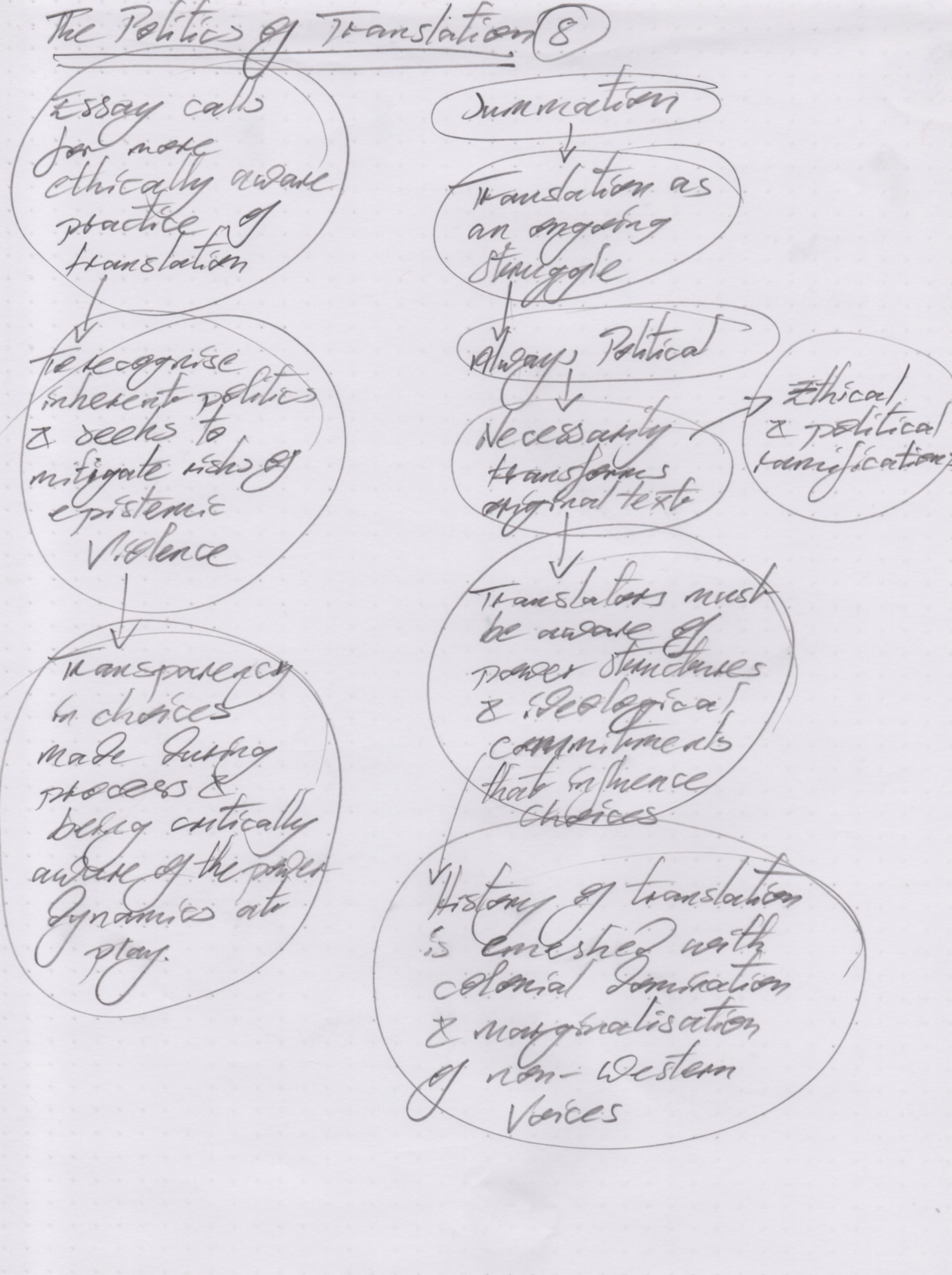
In the extracts from her 1993 essay ‘The Politics of Translation’ contained in Documents of Contemporary Art: Translation, Spivak discusses how translation is a political and ethical act rather than a mere linguistic conversion. She challenges the notion of neutrality by arguing that every translation embeds cultural power dynamics. Drawing on histories of colonialism and personal cultural memories, she shows how translating texts from the global South into English often erases the original’s rich, contextual subtleties. Her critique of superficial “with-it translatese” exposes how dominant languages, particularly English, can oversimplify and distort non-Western voices, reinforcing long-standing inequities.
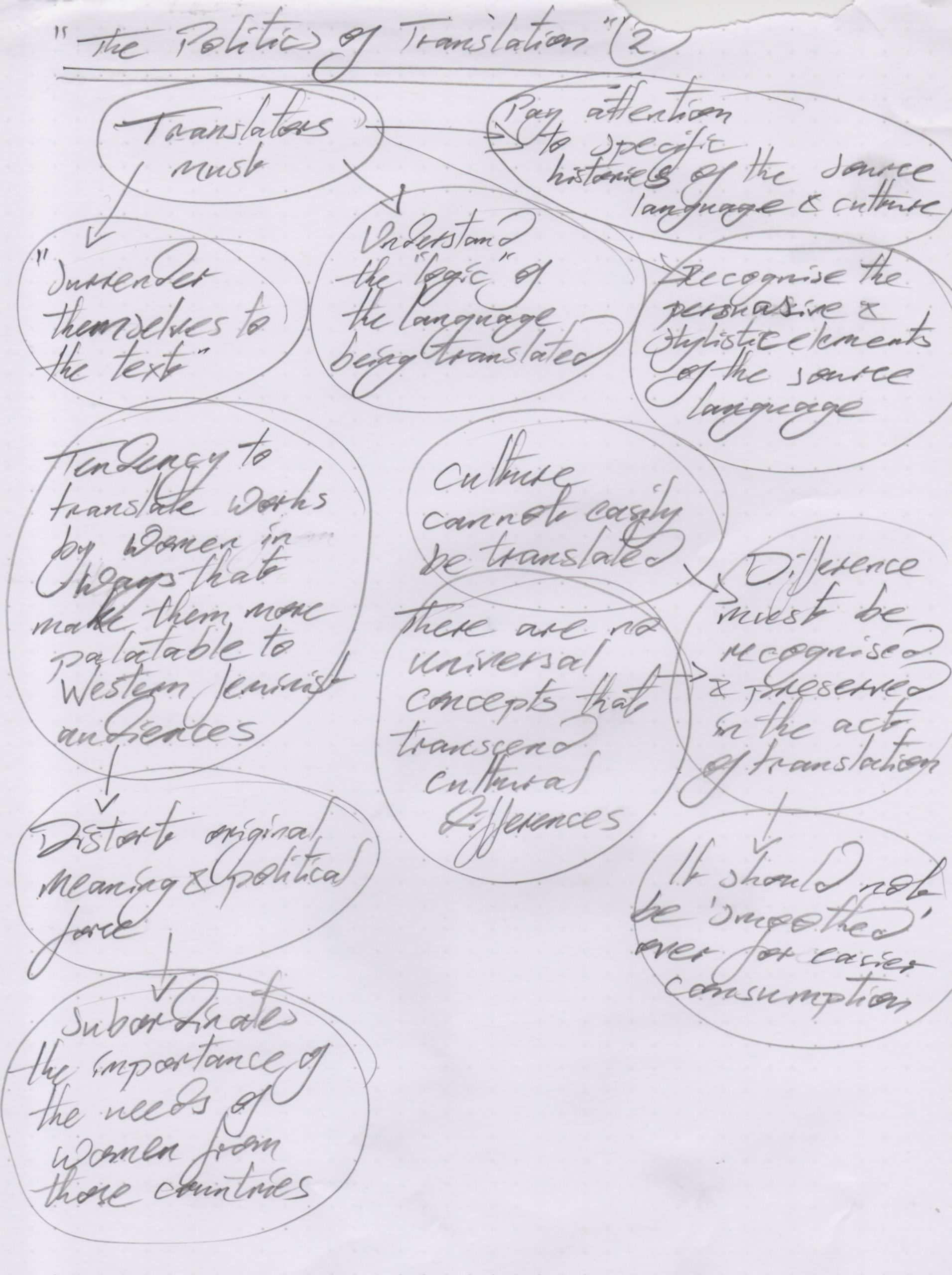
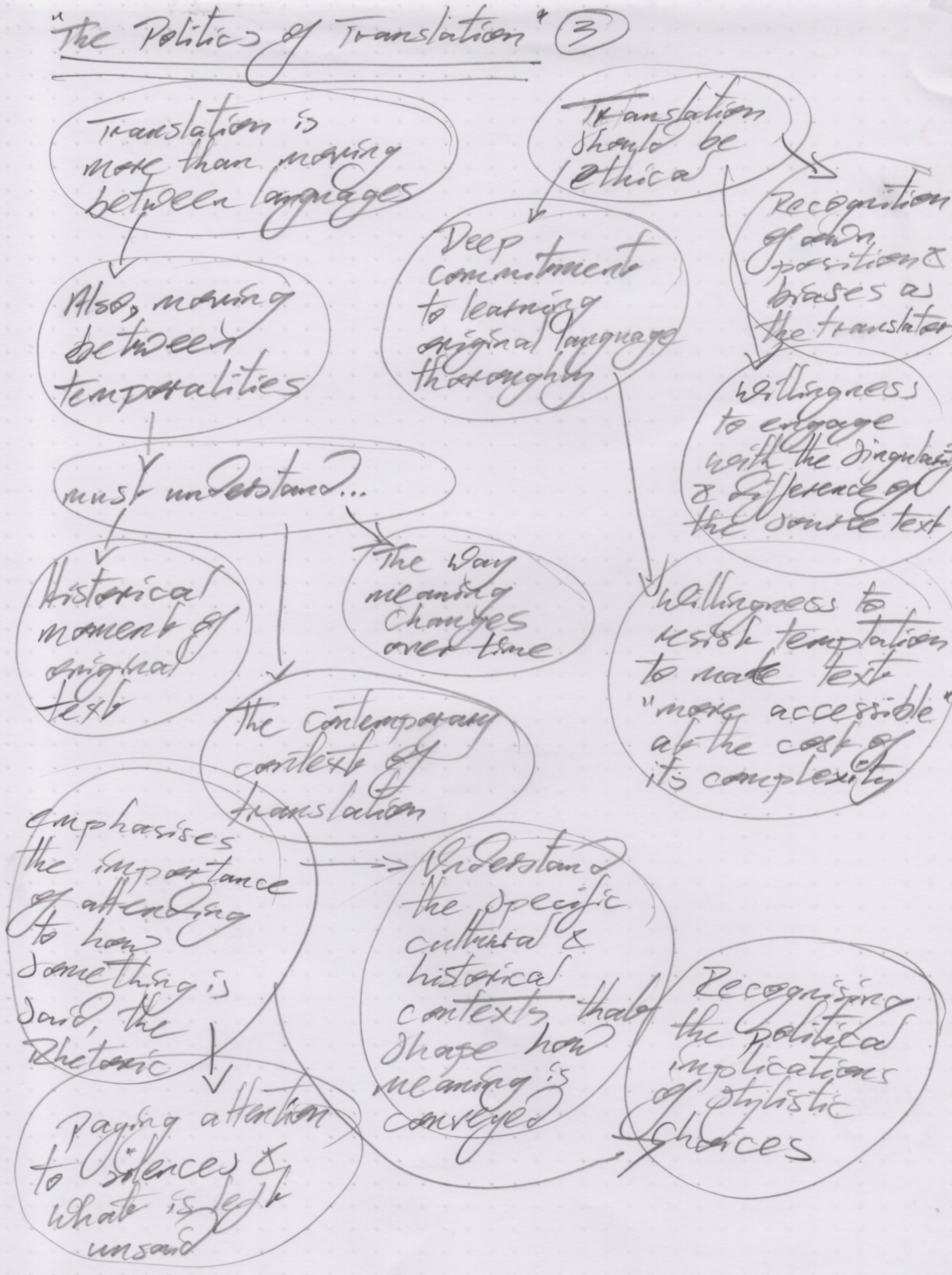
Central to her argument is the idea of “intimate reading,” which demands that translators engage deeply with both the logic and rhetoric of the original text. Spivak insists that translators must surrender to the nuances of language—its historical depth, cultural context, and persuasive style. This approach requires a personal commitment, drawing upon one’s own experiences and memories of language to truly understand the text’s essence. In doing so, translation becomes a reflective, ethical practice rather than a mechanical process.
Spivak also interrogates how feminist texts and writings by women from the global South are often reinterpreted to suit Western expectations. She reveals that such translations can dilute the political force and unique identity of these works. By referencing specific cultural and historical experiences, Spivak shows how language and translation can either preserve or erase the lived realities of marginalised groups. This focus on gender and subaltern voices highlights the ethical responsibility of translators to honour the original context instead of sanitising it for broader consumption.
The essay’s format itself reinforces these themes by embracing a dense, intertextual style that mirrors the complexities of translation. Spivak’s layered narrative challenges the reader to recognise how historical memories, cultural experiences, and language intertwine in every act of translation. Her writing not only supports but also questions traditional academic approaches by revealing that translation is an active, politically charged process. Ultimately, her work calls on translators to acknowledge their role in shaping cultural narratives and to resist the temptation of reducing rich, diverse texts to easily consumable forms.
Research Notes
List of References
Sharpe, J., Spivak, G.C. (2003) ‘A Conversation with Gayatri Chakravorty Spivak: Politics and the Imagination’ In: Signs 28 (2) pp.609-624
Bibliography
Danius, S., Jonnson, S., Spivak, G.C. (1993) ‘An Interview with Gayatri Chakravorty Spivak’ In: boundary 2. 20 (2) pp.24-50
Maggio, J. (2007) ‘”Can the Subaltern Be Heard?”: Political Theory, Translation, Representation, and Gayatri Chakravorty Spivak’ In: Alternatives: Global, Local, Political 32 (4) pp. 419-443
Spivak, G C. (1993) ‘The Politics of Translation’ In: Williamson, S (ed.) Documents of Contemporary Art: Translation: London: Whitechapel Gallery. pp. 26 – 31