
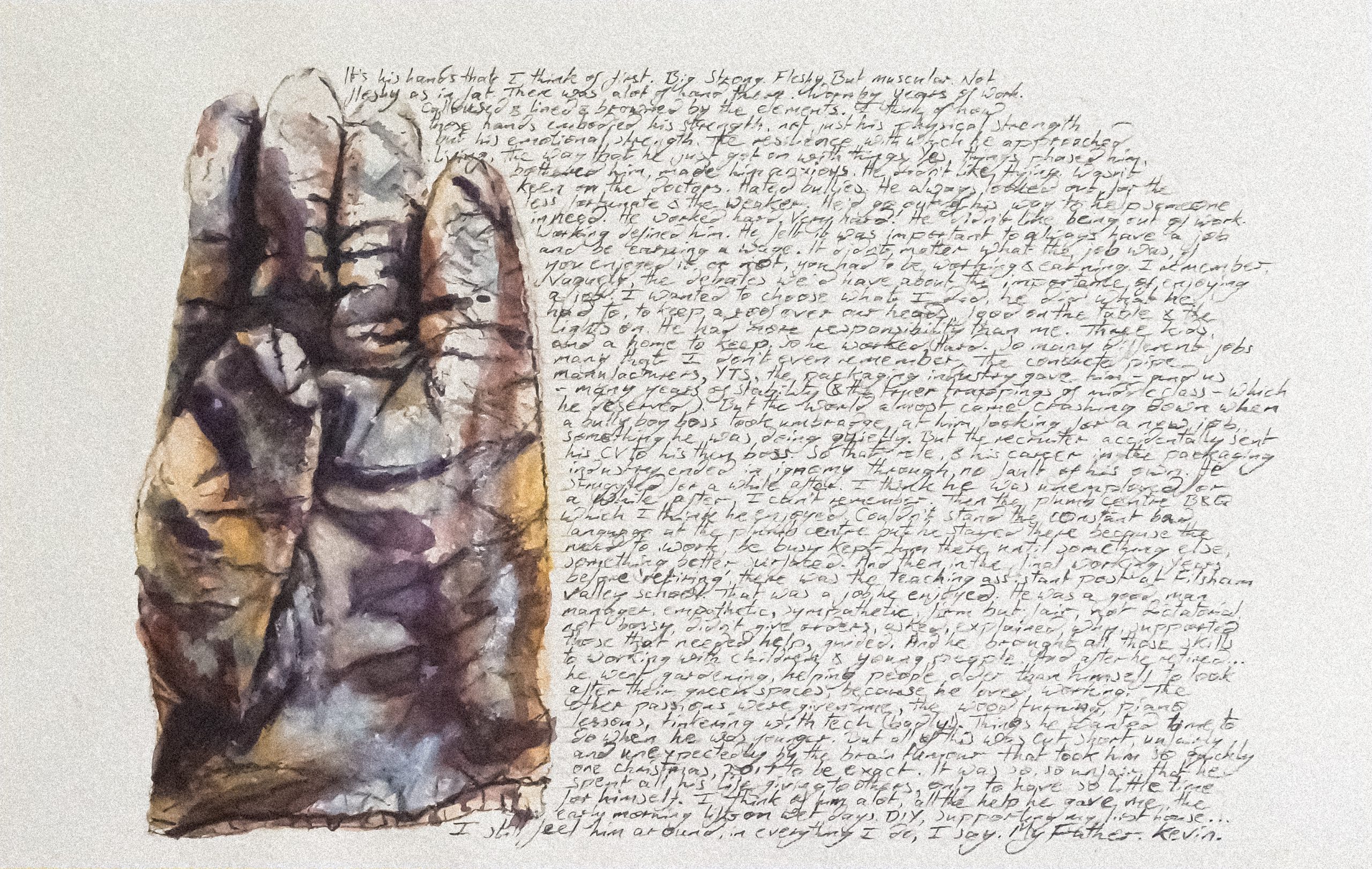
The Glove
(Graphite, Watercolour and Gouache on Rough Watercolour Paper: 45.5cm x 30.5cm)
Influences: Tracey Emin, Jade Montserrat, Martina Mullaney, Evidentiary and Diagrammatic Art
I briefly found myself with a creative block at the beginning of project 8 as I ruminated on my themes for a body of work and a curation proposal, so I drew on the underlying idea behind ‘The Scar’, that of recording memories as a means to stimulating making.
I have, stuffed in a box in my loft, a pair of my late Dad’s leather gloves, that he initially used for winter warmth, but then elevated to outdoor work gloves. They are now much older, stippled with paint from his use and covered with the bloom of damp and mildew from being forgotten in the loft, though I discovered them a few weeks ago in a sort-out.
They resonate in my consciousness, not merely because they were my Dad’s, but because their size and wear are signifiers of the size and strength of his hands. Strong, capable, resilient, adaptable, worn hands. Just like him.
I have realised that in objects I find memories, remembrances of people and past events, and that I can create memorials to these by combining a representation of the object with a written narrative. It is important though that the narrative is more than just a record of facts, but a story driven by my emotions and perceptions. So, here, is the beginning of a record of how I remember my Dad, what I know about him, some of my feelings about and for him. It is just the beginning – I can be braver with the narrative, but that will come as I detach myself from concerns with the audience’s reaction.
It’s important that the copy and the visual coexist in close proximity on the page. They are part of a whole. The text complements the image and vice versa. Both elements form a single aesthetic, each giving the other both narrative and visual context, removing one or the other would render the work meaningless.
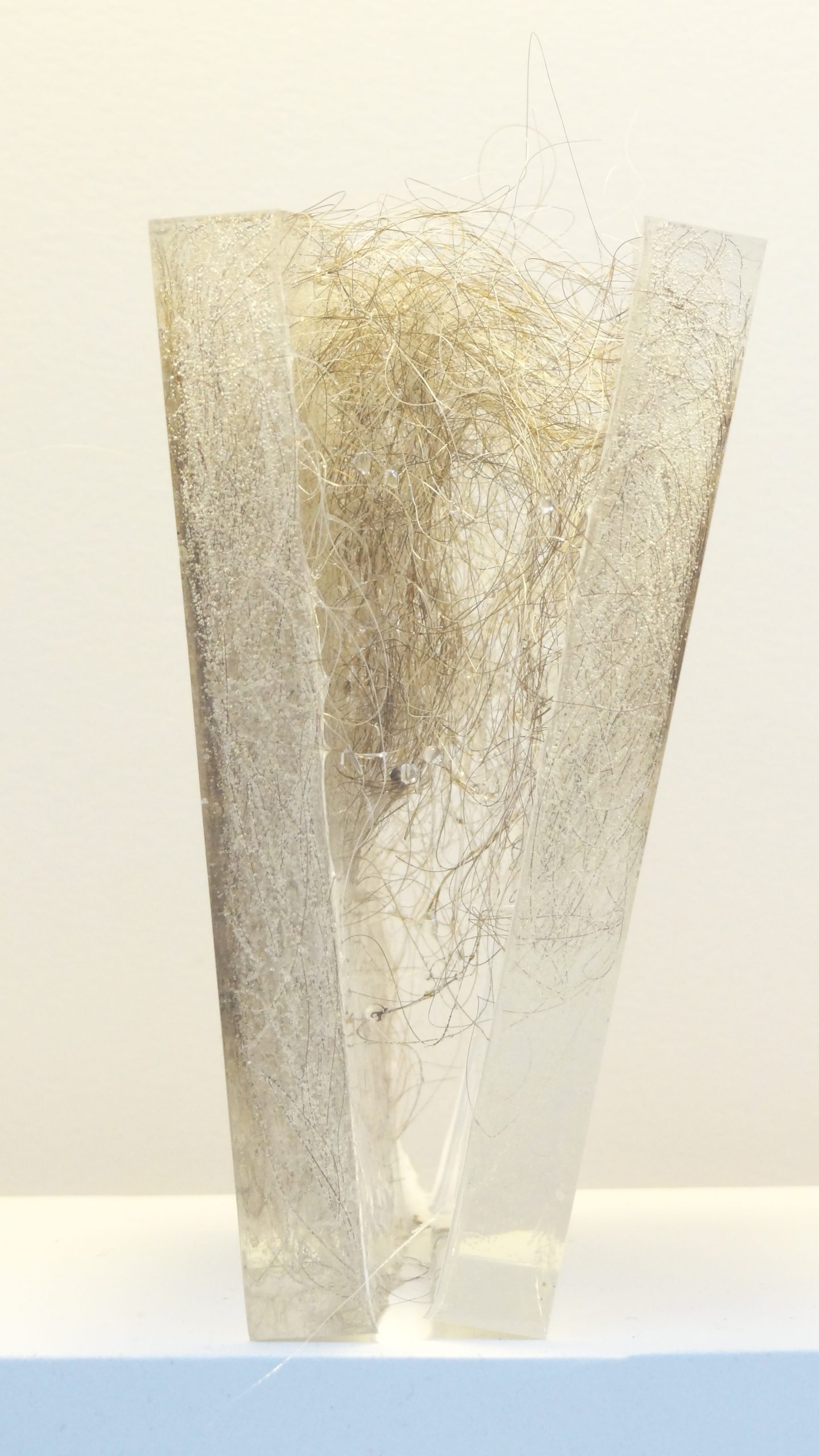
The Collapse of the Temple
(Human hair and clear resin: 5 x 10 x 6cm)
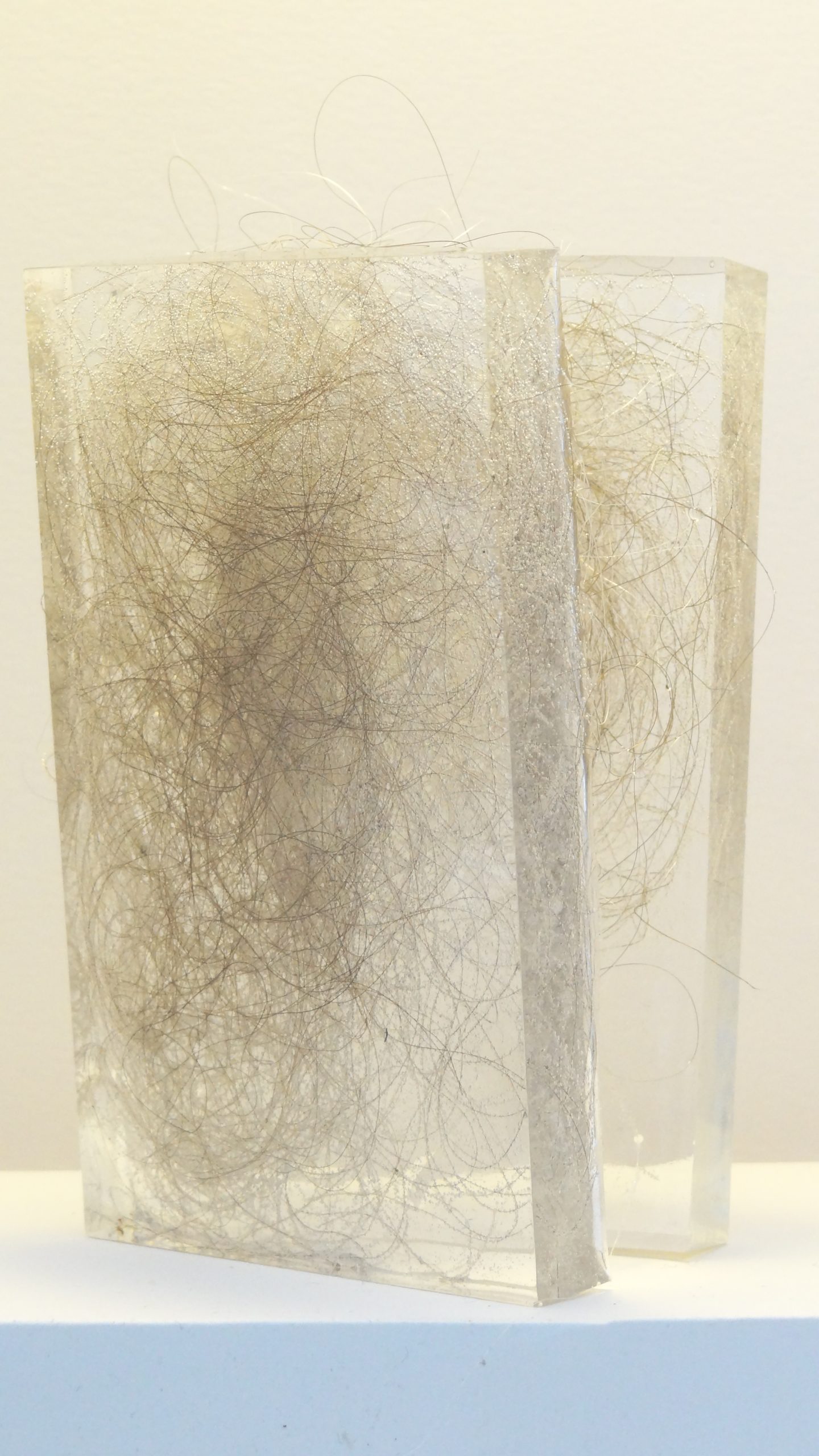
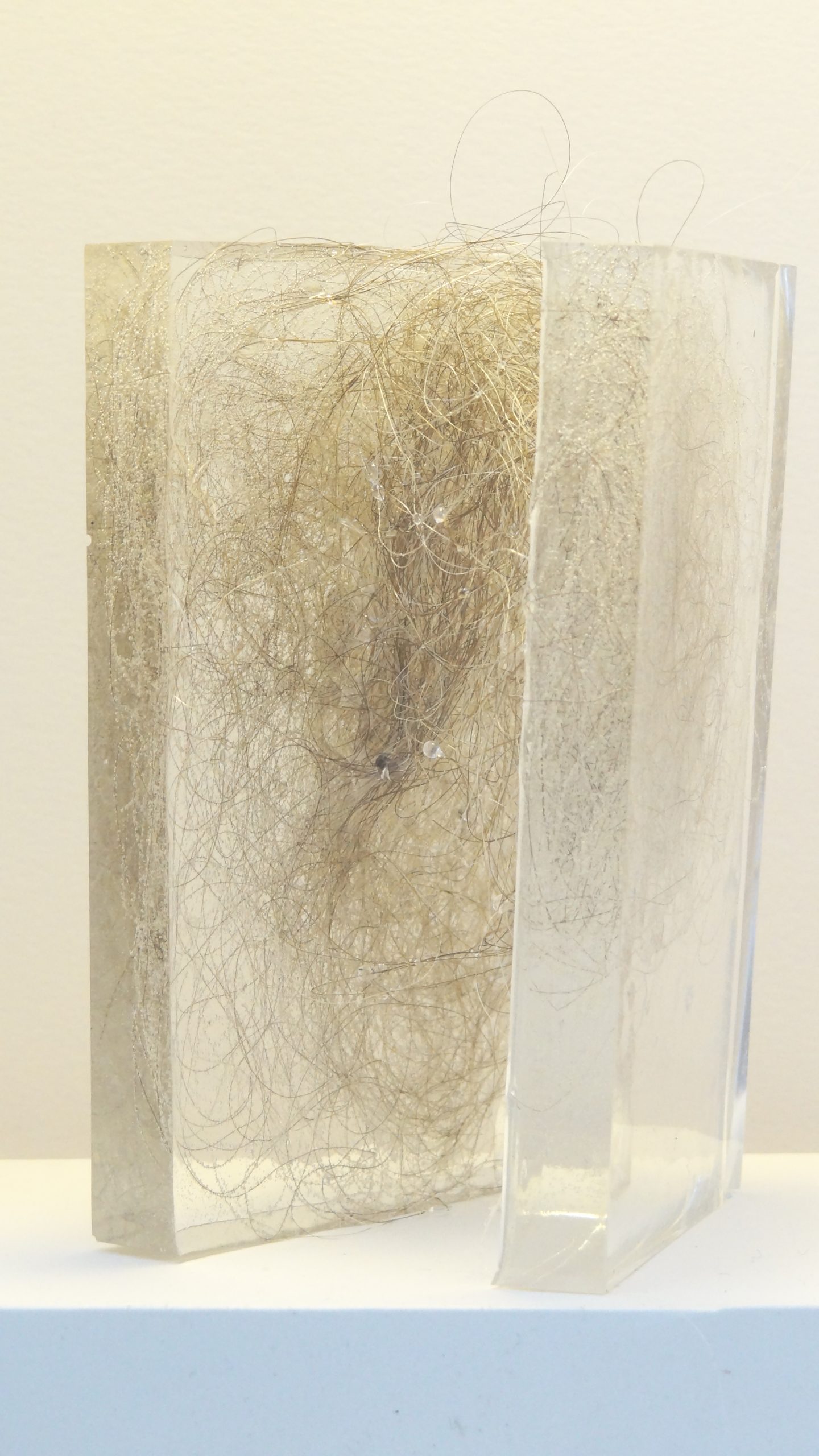
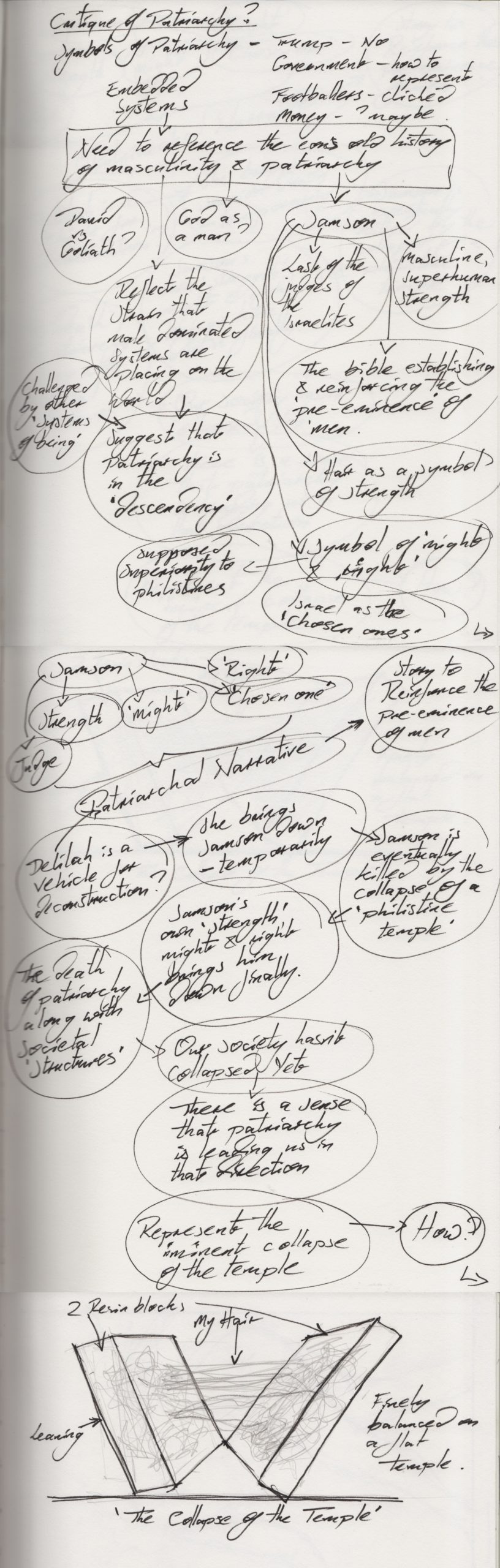
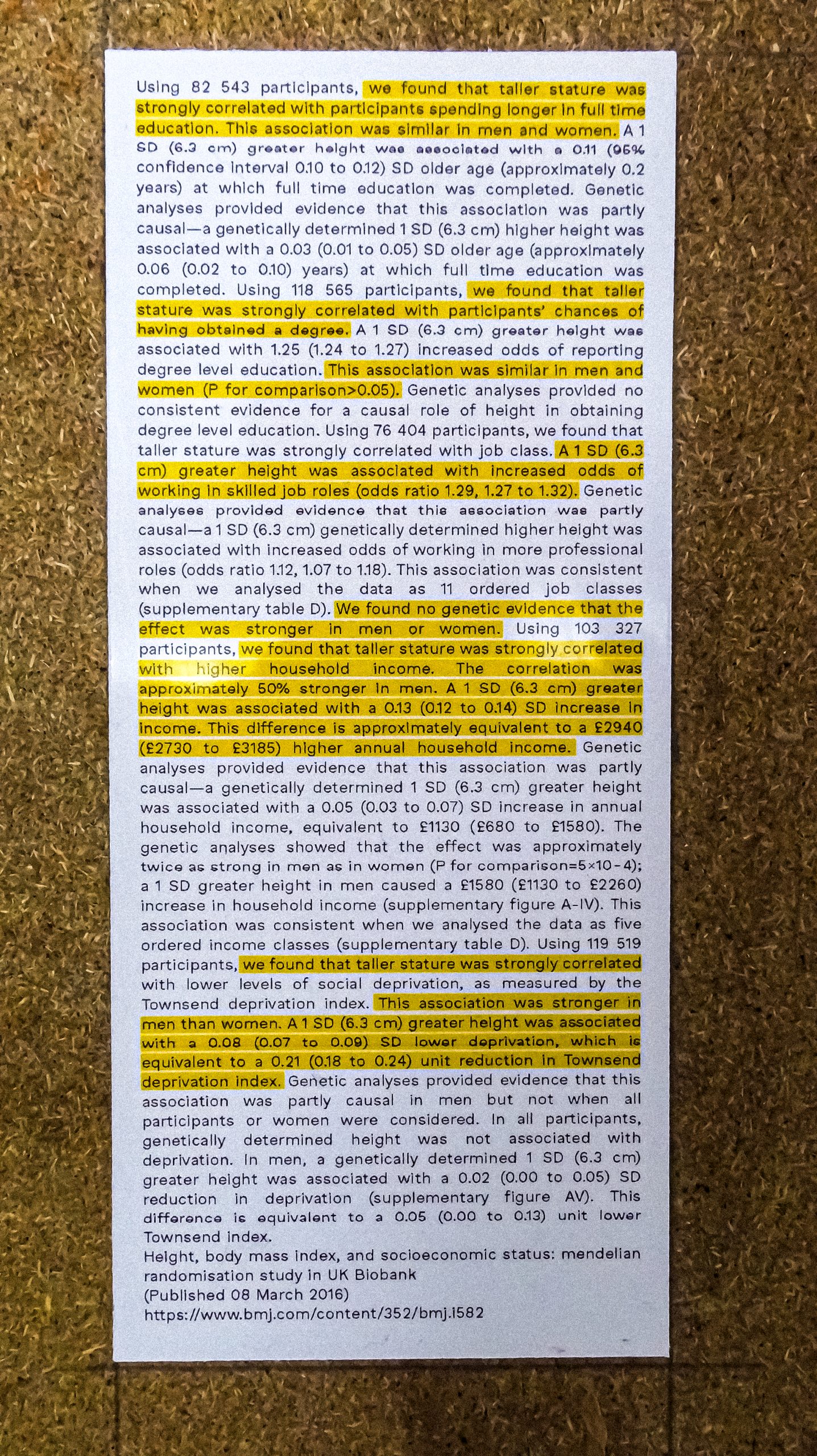
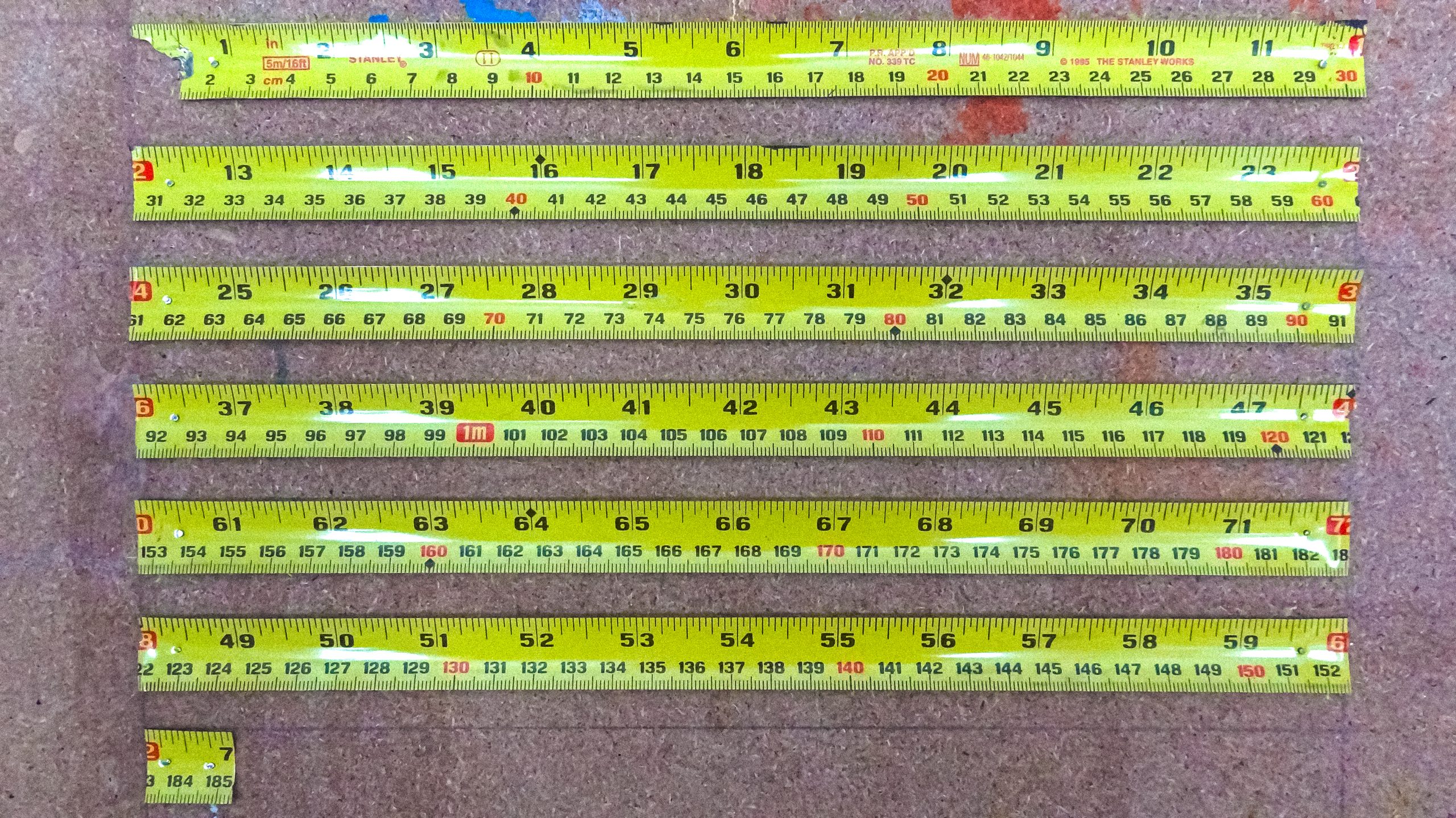
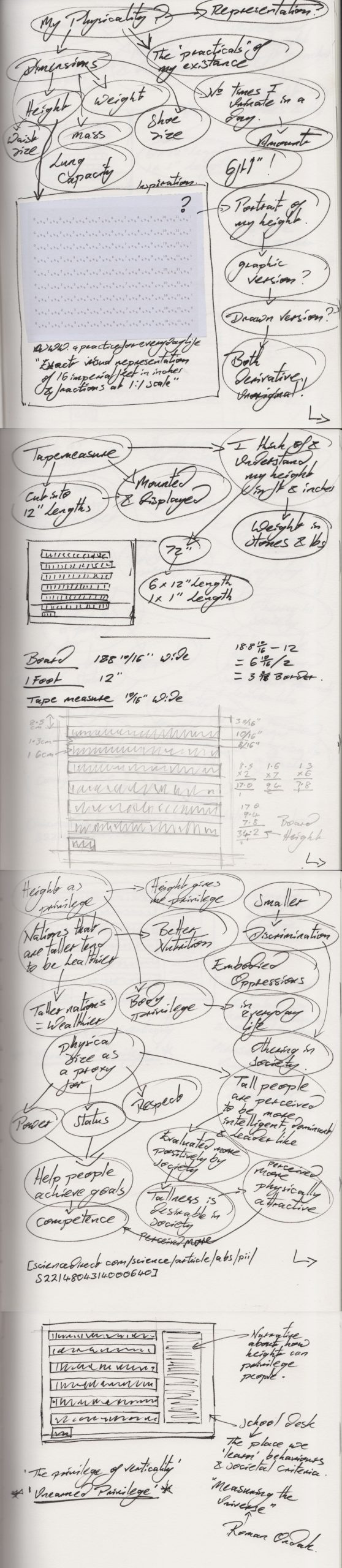
Unearned Privileges 1
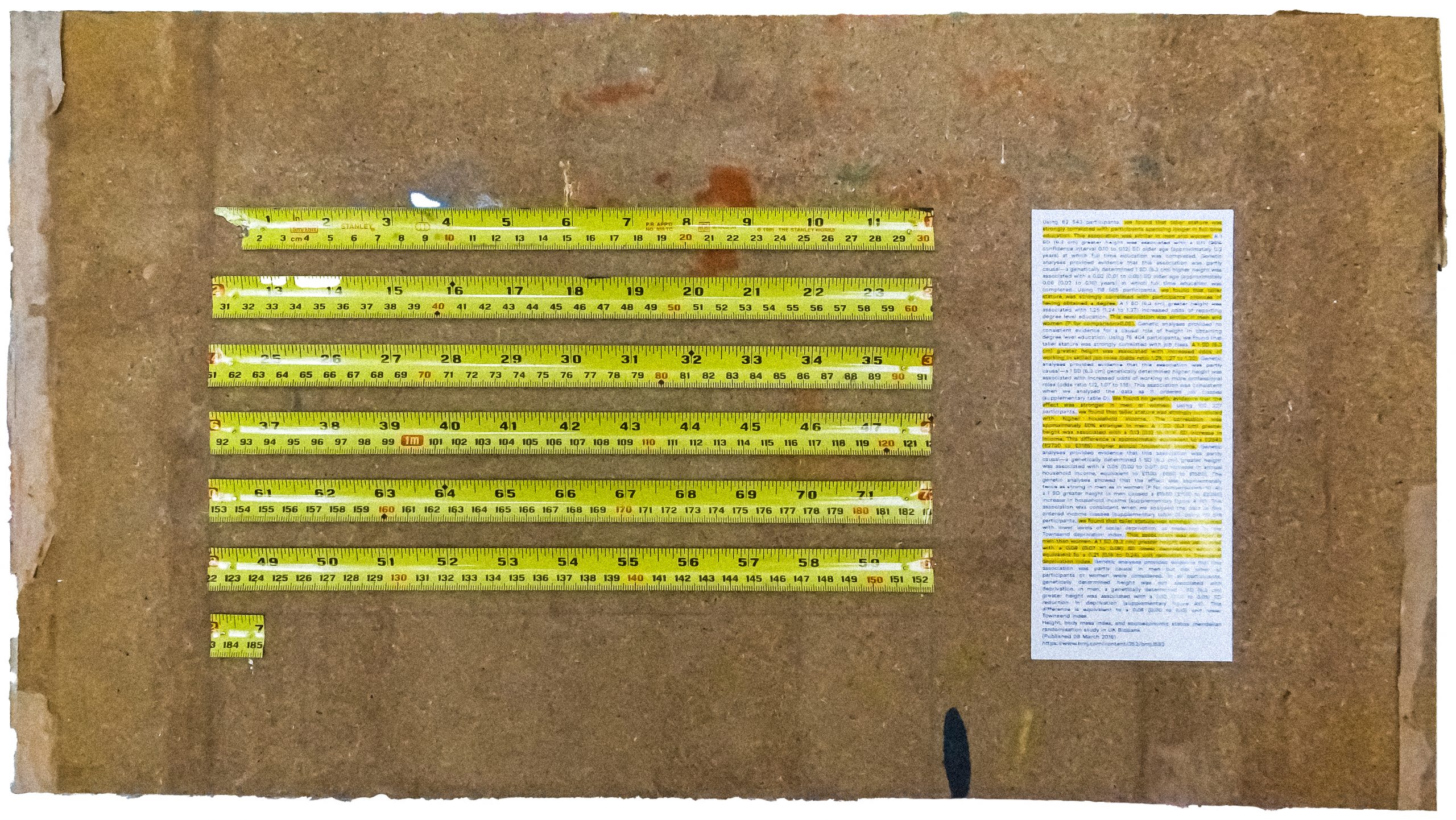
(Tapemeasure, data printout and school desk: 60 x 34.5cm)
Unearned Privileges 2
(Data printout and plaster: 21 x 29.7cm)
“I was taught to see racism only in individual acts of meanness, not in invisible systems conferring dominance on my group.”
Peggy McIntosh, 1989
White people tacitly experience privilege in their everyday lives. There are ‘invisible systems at work that afford them a package of unearned assets that ‘grease’ their lives in ways not experienced by people of colour. This piece reflects on the disadvantages faced by people of colour because of white privilege, and white people’s lack of awareness that it exists. It also reflects on white peoples general habit of trying to ignoring or not even being aware of the problem, instead of addressing the root cause of it – their own white privilege.
The data in the printout evidences how people of minorities and colour are implicitly discriminated against by systems that are patriarchal and white. The plaster in the centre references an obvious implied discriminations – the colour of medical plasters being almost predominately tailored for white skin. It also references how white people apply a ‘sticking plaster’ to the problem by denying existence of their own privilege or that by just being white they can be contributing to the continuation of structural oppression and discrimination.
And Jacob Wrestled the Angel
(Oil paint on cardboard: 55 x 40.3cm)
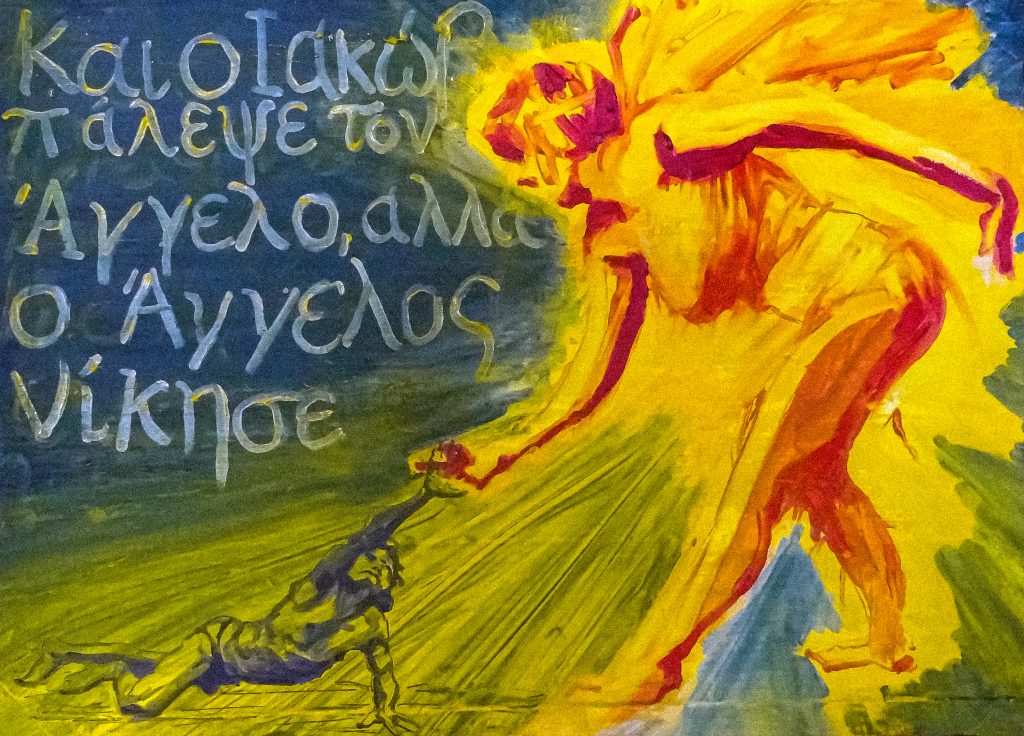
When I was 19 and studying on an Art Foundation course, I completed an a large painting entitled ‘When Jacob Wrestled the Angel and the Angel was Overcome’ At that time, there was no political or social stimulus, it was purely a response to a line from the U2 song “Bullet the Blue Sky”. There was a vicariousness to my thinking: execute a painting in response to a political song…you catch my drift.
Fast forwarding to now and I construed an alternate perspective from that original painting, one that would carry it’s own socio-political narrative. The Bible is the ultimate patriarchal document, its contents decided upon purely by men over the centuries, and used by Christian-orientated societies worldwide to dictate normative standards for societies. Its contents, or maybe I should say the interpretation of its contents (I am not religious, nor am I a biblical scholar) have been used as a tool for othering, discrimination and oppression – contrary to the supposed tenets of Christianity. But what if a Feminist lens were used to re-present the bible? How would it read? How would societies be now if Feminism was more prevalant?
I reoriented the story of Jacob wrestling the Angel in my mind so the Angel was female and the ‘wrestling’ was psychological on Jacob’s part: he wrestled with his own entrenched patriarchal ways and the alternate possibilities presented by Feminist thinking. The Angel appears to Jacob as his he discards his patriarchal thinking, and holds a hand out to lift him from the mire of masculine thinking, power and privilege.
This work was also an entry point back into oil painting, part of my practice that I hadn’t engaged with during this Unit. It was a way to remind myself of the somatic qualities of painting in oils and to try and find a looseness in the execution at a smaller scale. The composition came from collaging together web-found images of the figures in Photoshop, and this foundational image was then projected onto the cardboard surface for loose tracing. I then allowed the paint to lead me, the marks becoming responses to the materiality of the oil, rather than an attempt to copy the images. Fingers and rag to scratch, drag and rub the paint were used alongside brushes to address a need for energy and fluidity. The colour palette was kept limited as both a nod to the work of Jennifer Packer who is currently influencing me, and as I felt it connected with the subject matter of an ethereal figure lifting a mortal from a ‘grubby’ existence.
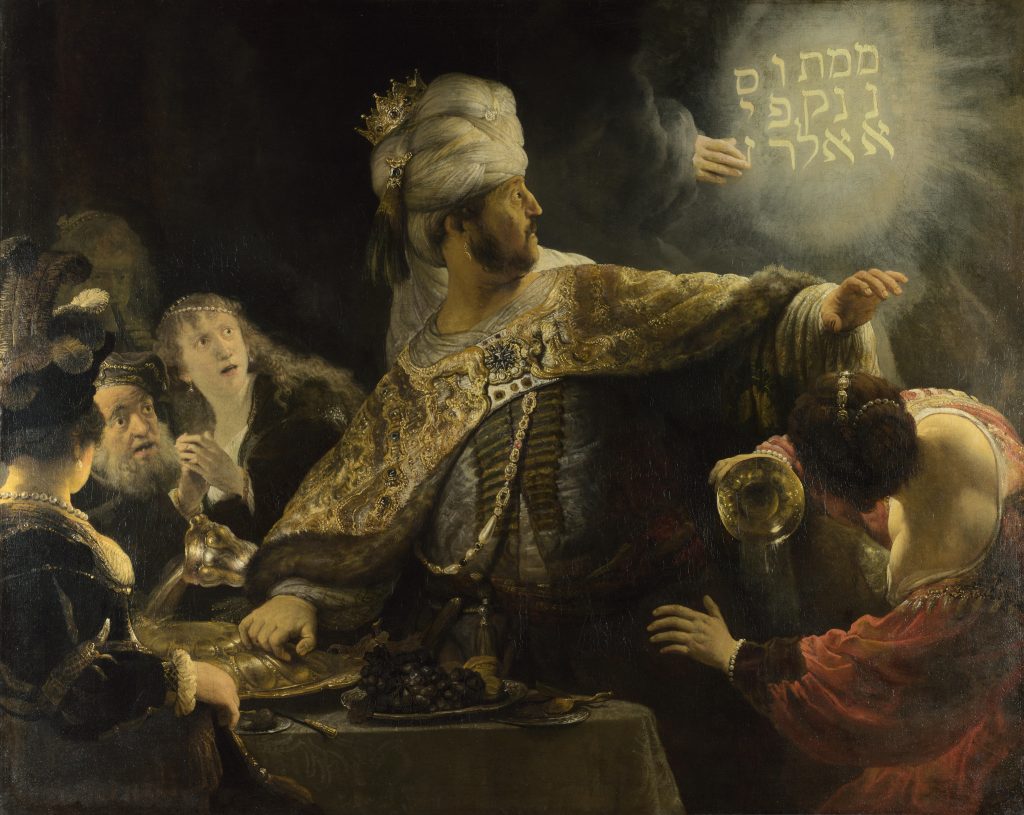
Fig.1. Belshazzar’s Feast (Circa 1636-8)
The decision to transpose the text “And Jacob wrestled the Angel but the Angel overcame” in Greek was a decision made for aesthetic and historical narrative reasons. I had tried several versions in English but the modernity of the language and character set didn’t fit with the historical nature of the reference. I thought of Rembrandt’s painting ‘Belshazzar’s Feast’ and how the artist used Hebrew text in the upper right quadrant of the painting and not his native Dutch. This prompted the decision to use Greek (translation from Google Translate, so unsure of accuracy) as this was the language of the first Bible, the Septuagint, and the source text for most modern versions. There is also a decorative quality to it that references the use of copy in the work of Shirin Neshat and Parviz Tanavoli.
Anxiety 2
(Oil paint, oil stick and graffiti spray paint: 100 x 150cm)
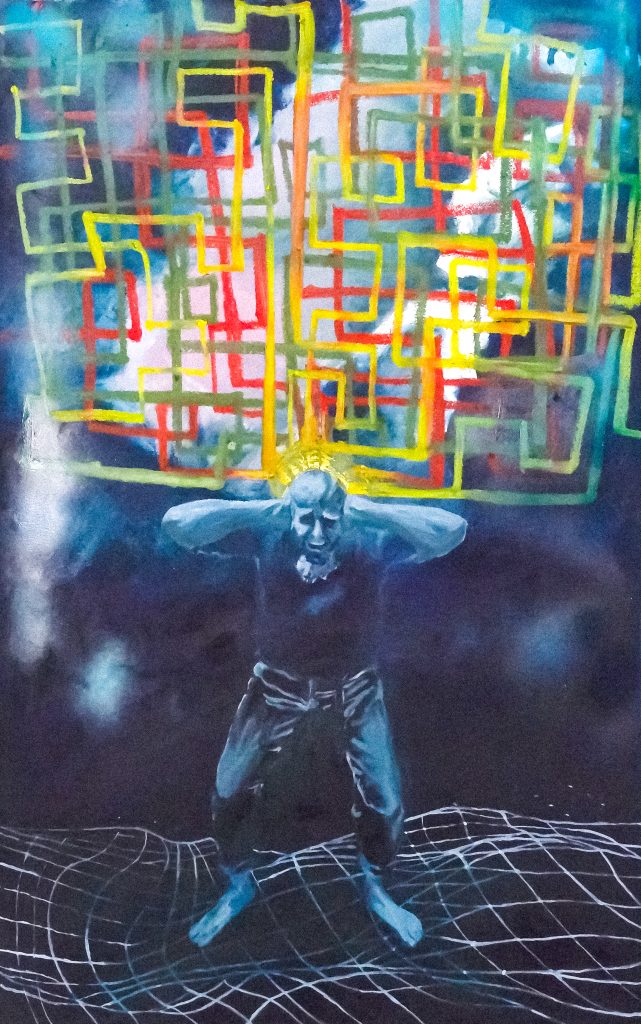
This painting is a continuation of the research I had carried out in Project 5. With tutor encouragement, I approached this at a much larger scale and with materials I had never before used (oil stick). Editorial decisions were made before beginning – which elements to include, which to discard. The ‘code’ background and the oppressive Zoom faces were discounted as they could potentially visually overload the painting. Again, a projector was used to transcribe the composition elements in stages onto the larger surface, with the background laid first. The ‘thinking-lines’ were last to be added and there was some trepidation about committing those to the composition, especially as I was very happy with the execution of the figure.
The end result…? A painting of two halves and two different styles of execution that don’t quite coalesce into a singular narrative composition. Though I am very happy at its outcome, there is a tightness to the figure work, which needs loosening in future versions. The cloudscape background again is a piece of painting that I am satisfied with, but fails to support the intended narrative of the work. Oil sticks need more experimentation and practice with – I am more used to applying/ removing oil paint with brushes and rag – but the possibilities of these ‘giant pure-oil-paint pastels’ excite me.
List of References
McIntosh, P (1989) ‘White Privilege: Unpacking the Invisible Knapsack’ in: Peace and Freedom July/ August 1989 pp.10-12
List of Illustrations
Fig.1. van Rijn, R (Circa 1636-8) Belshazzar’s Feast [Oil on Canvas] At: https://www.nationalgallery.org.uk/paintings/rembrandt-belshazzar-s-feast (Accessed 01/06/25)