
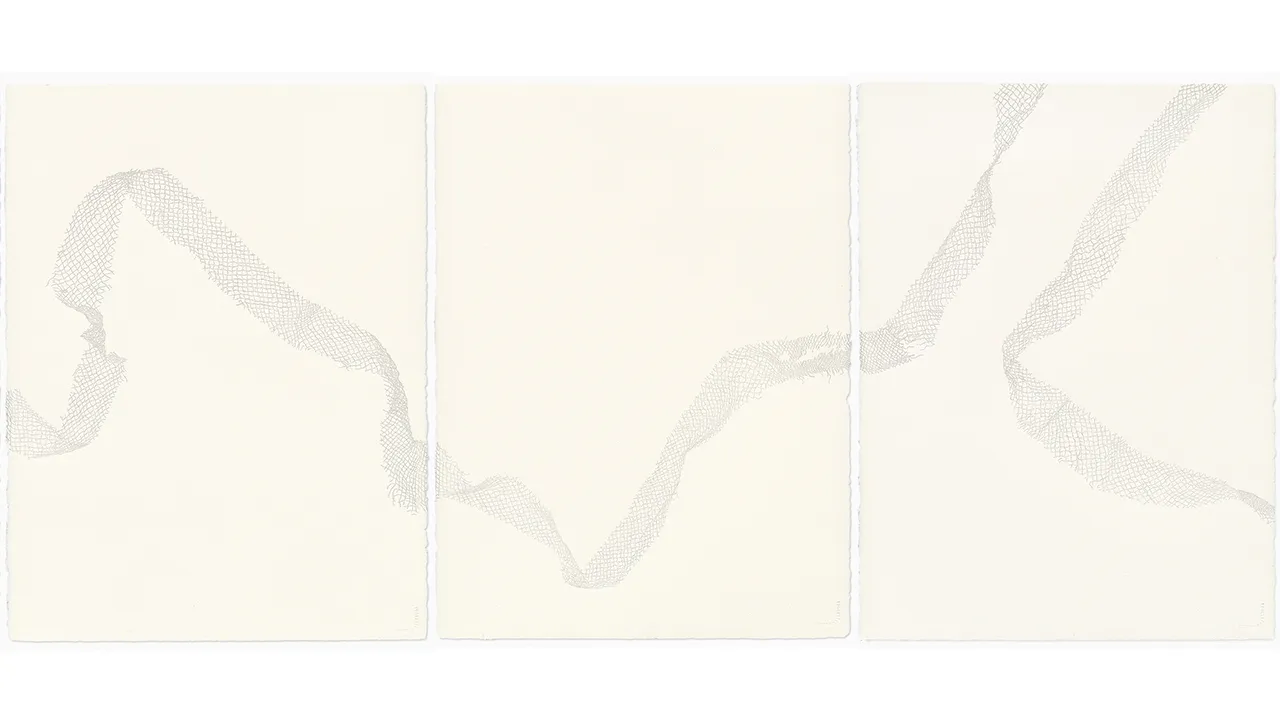
Fig.1. Calais ‘Jungle’ Topographic Data Map II-IV (2018)
Stanislava Pinchuk, also known as MISO, is a Ukrainian-born, Melbourne-based artist who intricately weaves speculative fiction and complex narrative elements into her multidisciplinary artistic practice. Her work stands out for its profound engagement with storytelling, particularly in exploring themes of displacement, memory, and geopolitical transformation through a speculative lens.
Pinchuk’s approach to art is deeply rooted in narrative construction, often using data mapping, cartography, and conceptual documentation as her primary mediums. Her work frequently explores imagined futures and alternative historical trajectories, particularly in relation to conflict zones, migration, and urban transformation. She approaches speculative fiction not just as a narrative technique, but as a method of spatial and political analysis.
In her most compelling projects, Pinchuk uses cartographic techniques to create intricate mappings that blur the lines between documentary evidence and imaginative projection. Her work often involves precise dot work and delicate pinhole mappings that transform geographical data into poetic visual representations. These pieces read like speculative narratives themselves – each puncture and line suggesting alternative histories and potential futures.
Her series on conflict zones, particularly those exploring the geopolitical landscapes of Ukraine and other regions experiencing political instability, demonstrates her unique approach to speculative narrative. She doesn’t simply document existing conditions but creates visual narratives that suggest multiple potential trajectories of place and memory. Her works become a form of speculative cartography, where geographic data is reimagined through an artistic lens that is both analytical and deeply emotional.
The influence of speculative fiction is particularly evident in how Pinchuk conceptualizes space and transformation. She treats geographical locations as living, breathing narratives – spaces that are constantly being rewritten, reimagined, and reconstructed. Her art becomes a form of storytelling that challenges traditional documentary approaches, introducing elements of imagination and potential into seemingly fixed historical and geographical contexts.

Fig.2. ‘Calais ‘Jungle’ Terrazo V’ (2018)
Among the exhibited works is the series Borders (2018), including nine terrazzo sculptures which preserve the survival objects trampled into the ground during the traumatic dismantlement of the Calais Jungle migrant camp.
Fremantle Arts Centre (2021)


Fig.3. Sarcophogus (2017)


Fig.4. ‘Chornobyl Reactor 4 { Data Map : Topographic Radioactivity }, Concrete Ground Laid Post-1986 II’. (2017)
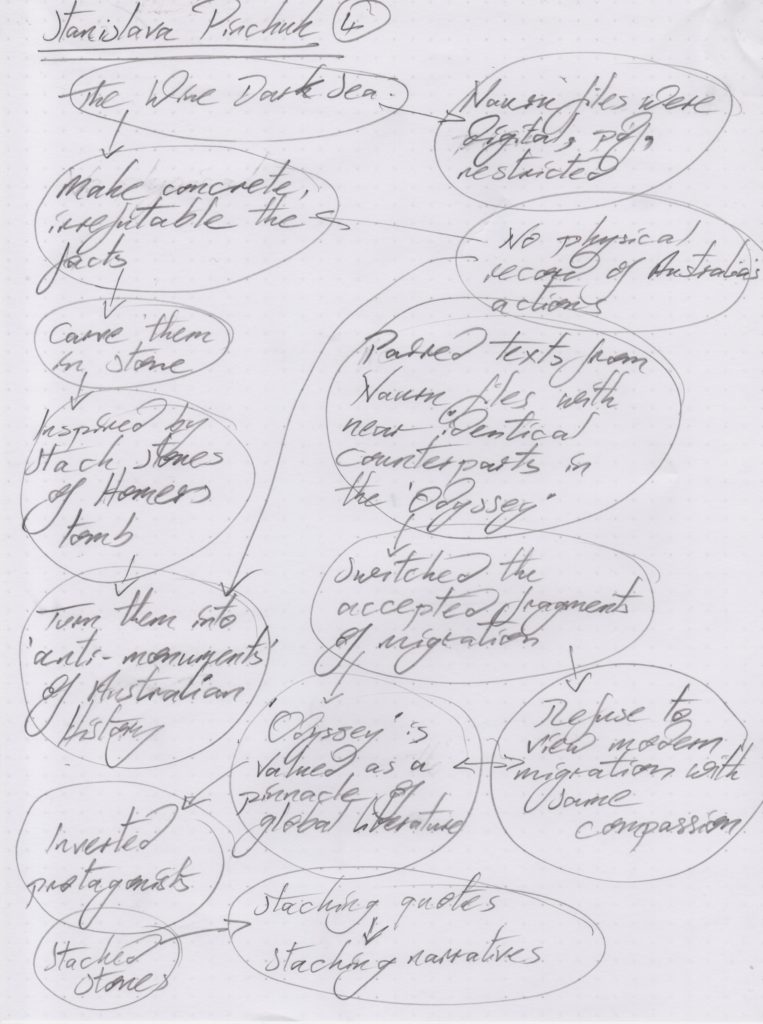
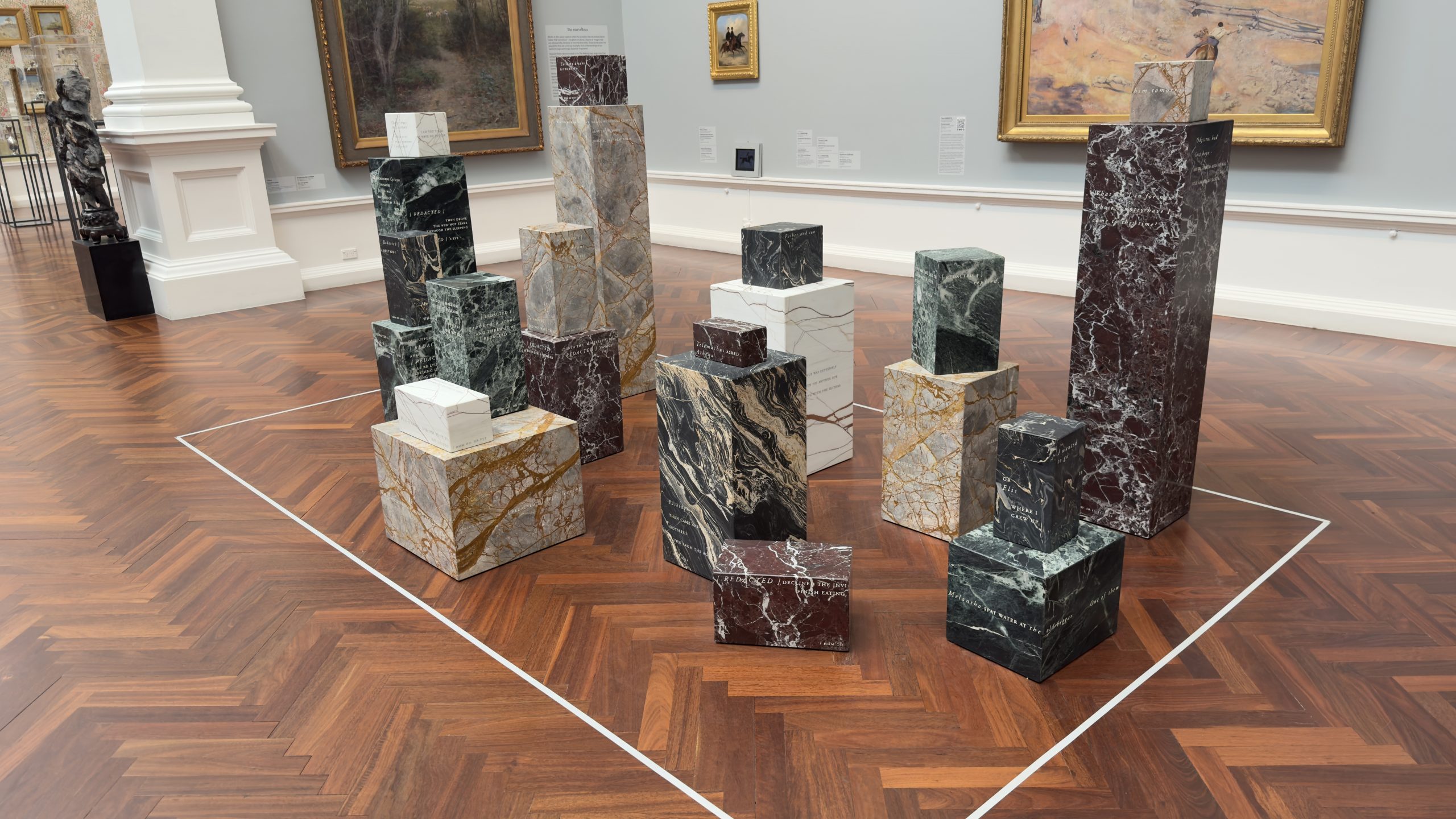
Fig.5. Stanislava Pinchuk’s ‘The Wine Dark Sea’ at AGSA (2022)
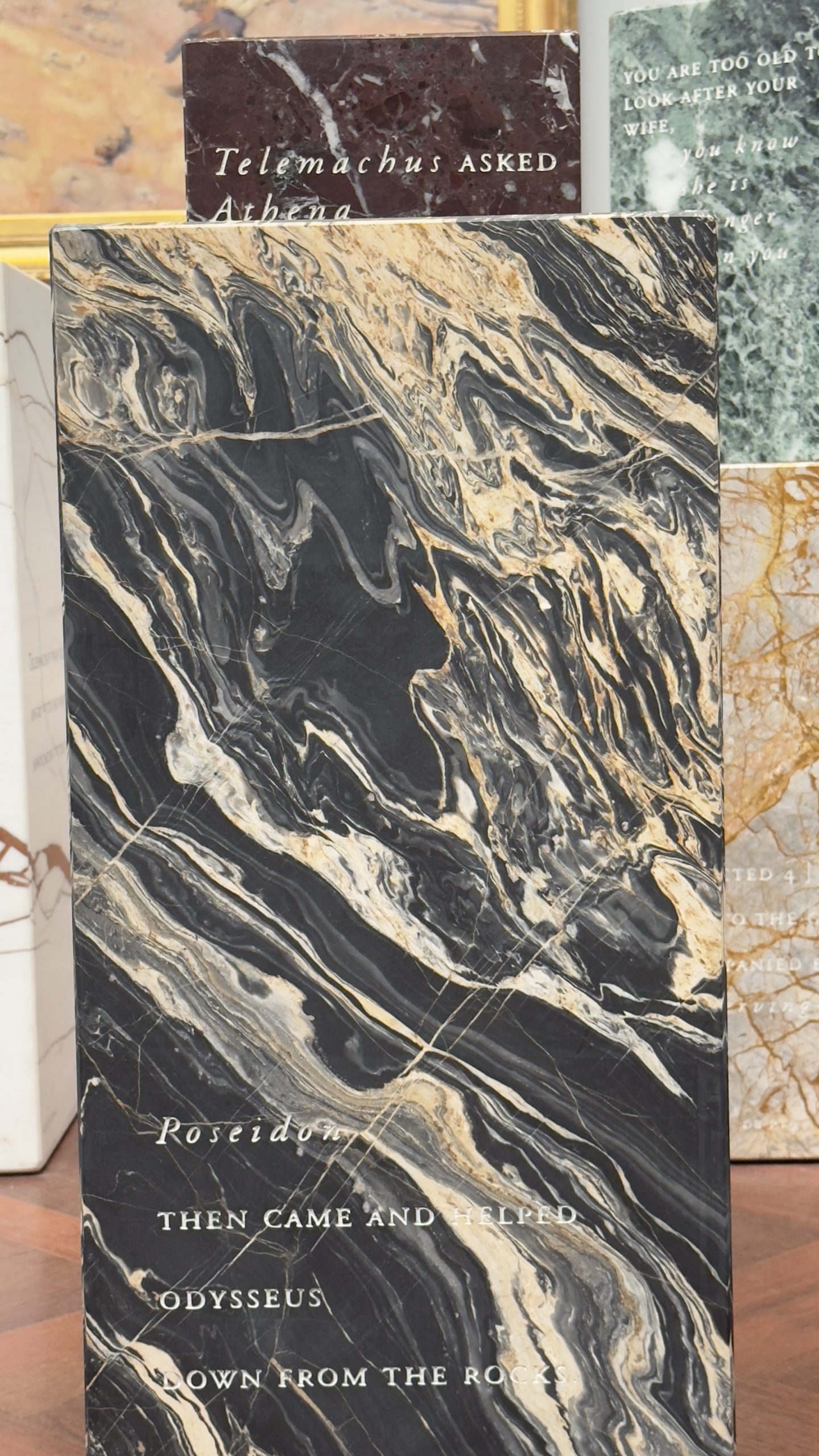
Fig.6. Detail of Stanislava Pinchuk’s ‘The Wine Dark Sea’ at AGSA (2022)
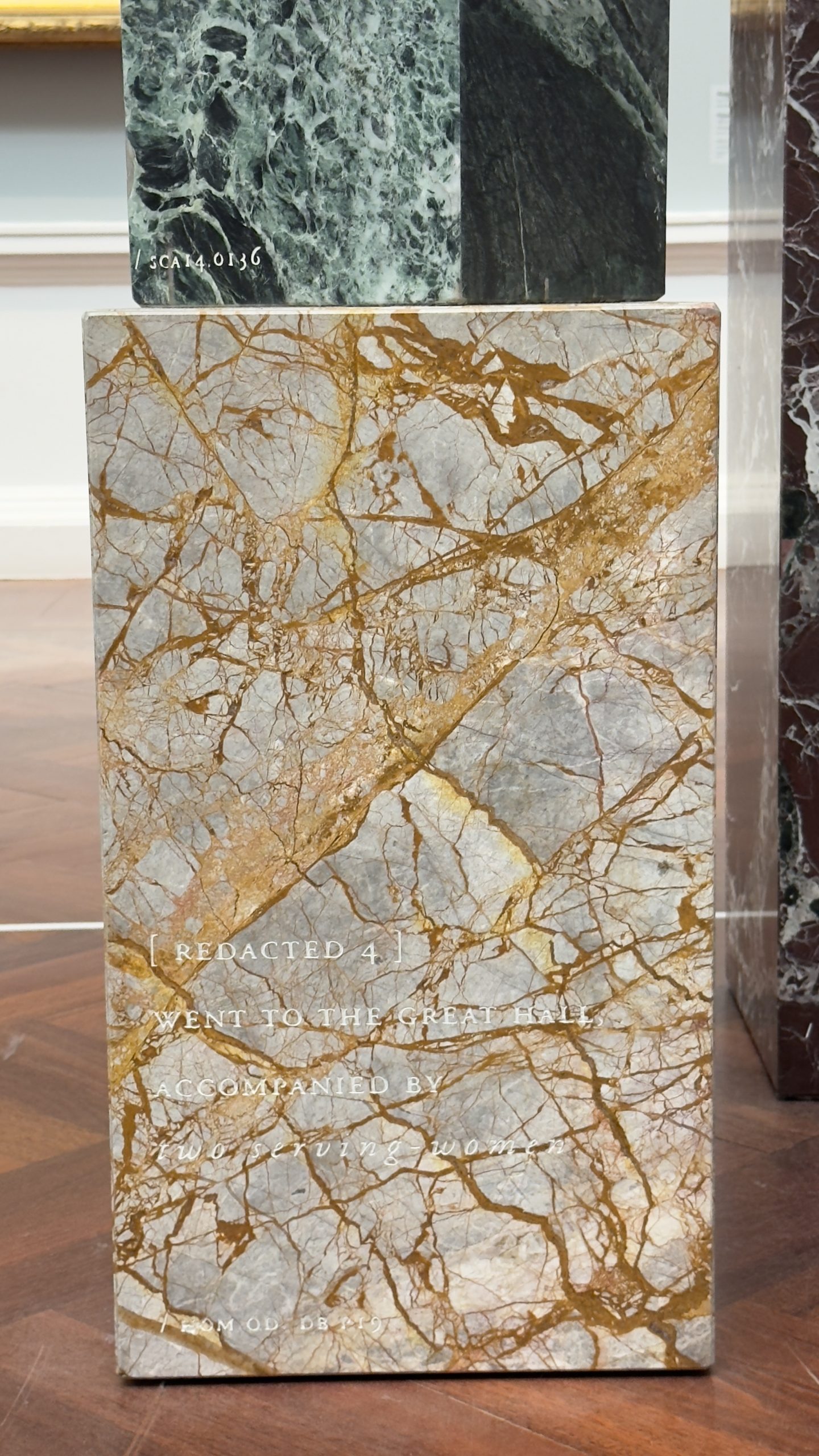
Fig.7. Detail of Stanislava Pinchuk’s ‘The Wine Dark Sea’ at AGSA (2022)
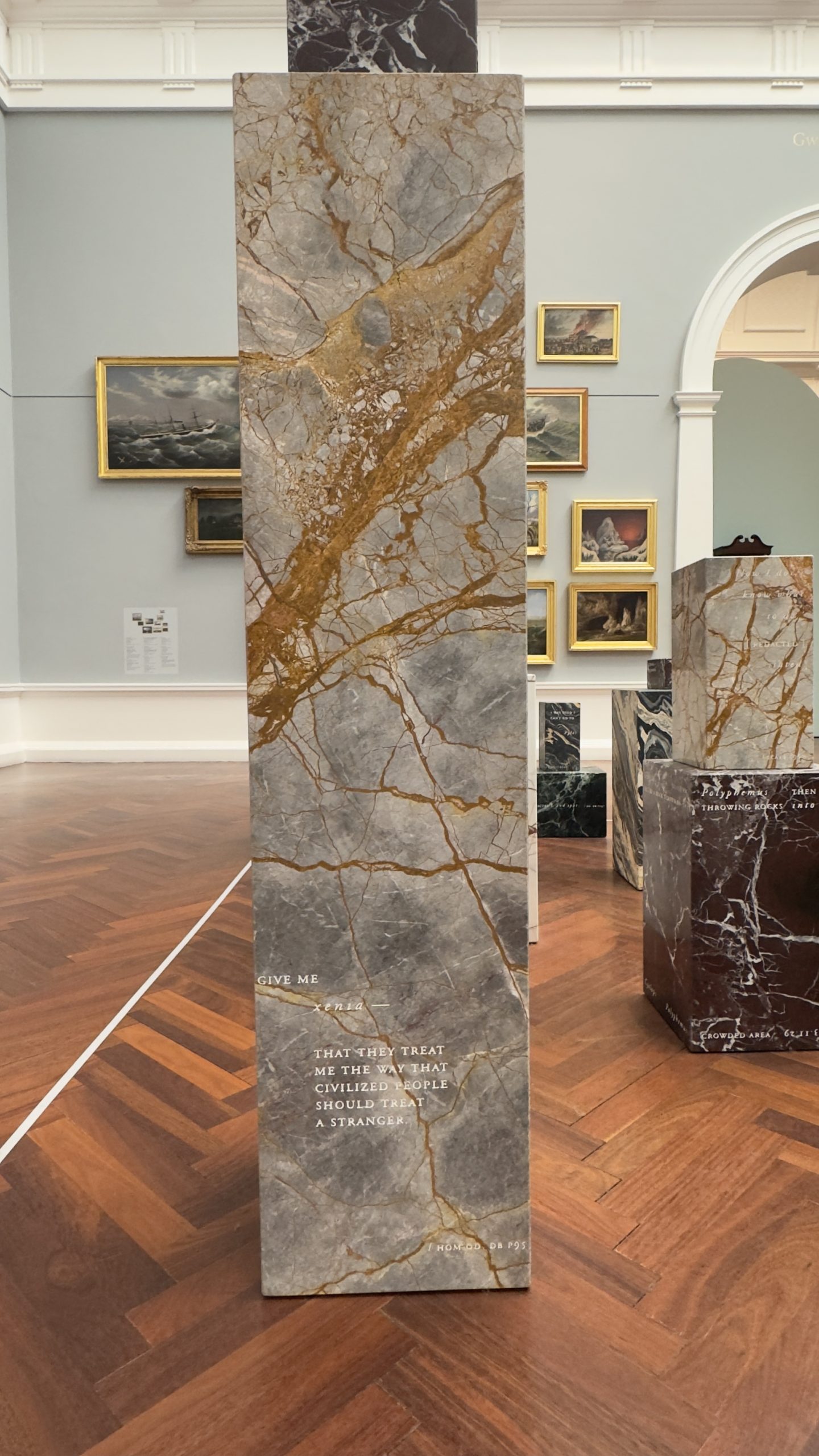
Fig.8. Detail of Stanislava Pinchuk’s ‘The Wine Dark Sea’ at AGSA (2022)


Fig.9. Calais ‘Jungle’ Terrazzo III (2018)

Fig.10. The Red Carpet (2020)

Fig.11. Still from The Theatre of War (2024)
Bibliography
Stansislava Pinchuk (2024) stanislavapinchuk.com:about At: https://stanislavapinchuk.com/about/ (Accessed 19/01/25)
Hunter, K (2024) ‘An odd work that has borne the brunt of my grief’: the serenity and the grit of Stanislava Pinchuk’s The Theatre of War At: https://theconversation.com/an-odd-work-that-has-borne-the-brunt-of-my-grief-the-serenity-and-the-grit-of-stanislava-pinchuks-the-theatre-of-war-222498 (Accessed 19/01/25)
Freemantle Arts Centre (2021) Stanislava Pinchuk unveils first western australian exhibition The Archaeology of Loss At: https://www.fac.org.au/2021/07/stanislava-pinchuk-unveils-first-western-australian-exhibition-the-archaeology-of-loss/ (Accessed 19/01/25)
Heinrich, K. Pinchuk, S (2023) A Ukrainian artist captures the plight of asylum seekers in marble At: https://www.artbasel.com/news/one-work-stanislava-pinchuk-the-wine-dark-sea?lang=en (Accessed 19/01/25)
List of Illustrations
Fig.1. Pinchuk, S (2018) Calais ‘Jungle’ Topographic Data Map II-IV [{in-holes on Paper] At: https://stanislavapinchuk.com/artwork/borders/ (Accessed 19/01/25)
Fig.2. Pinchuk, S (2018) ‘Calais ‘Jungle’ Terrazo V’ [Camp remnants, ash, resin] At: https://www.fac.org.au/2021/07/stanislava-pinchuk-unveils-first-western-australian-exhibition-the-archaeology-of-loss/ (Accessed 19/01/25)
Fig.3. Pinchuk, S (2017) Sarcophagus [Pin Holes on Paper] At: https://stanislavapinchuk.com/artwork/sarcophagus/ (Accessed 19/01/25)
Fig.4. Pinchuk, S (2017) ‘Chornobyl Reactor 4 { Data Map : Topographic Radioactivity }, Concrete Ground Laid Post-1986 II’. [Pin Holes on Paper] At: https://stanislavapinchuk.com/artwork/sarcophagus/ (Accessed 19/01/25)
Fig.5. Head, N (2024) Stanislava Pinchuk’s ‘The Wine Dark Sea’ at AGSA [Photograph, sculpture] In possession of the author: Hastings.
Fig.6. Head, N (2024) Detail of Stanislava Pinchuk’s ‘The Wine Dark Sea’ at AGSA [Photograph, sculpture] In possession of the author: Hastings.
Fig.7. Head, N (2024) Detail of Stanislava Pinchuk’s ‘The Wine Dark Sea’ at AGSA [Photograph, sculpture] In possession of the author: Hastings.
Fig.8. Head, N (2024) Detail of Stanislava Pinchuk’s ‘The Wine Dark Sea’ at AGSA [Photograph, sculpture] In possession of the author: Hastings.
Fig.9. Pinchuk, S (2018) Calais ‘Jungle’ Terrazzo III’ [Camp remnants and ash resin] At: https://stanislavapinchuk.com/artwork/borders/ (Accessed 19/01/25)
Fig.10. Pinchuk, S (2020) The Red Carpet [Ukranian Bessarabian rug on the steps of the Sydney Opera House] At: https://stanislavapinchuk.com/artwork/the-red-carpet/ (Accessed 19/01/25)
Fig.11 Pinchuk, S (2024) Still from the Theatre of War [Three channel video installation] At: https://stanislavapinchuk.com/artwork/the-theatre-of-war/ (Accessed 19/01/25)