
Resin Works
Influences: Stanislava Pinchuk
Whilst some will say there are obvious parallels with Damien Hirst’s work, I didn’t consciously pay heed to his work. It is, though, very difficult for any artist to ignore his influence on contemporary art – the global presence of the artist and his work has seeped into the cultural zeitgeist in such a profound way that awareness of him extends far beyond the art establishment. Because of this, it could be said that many an artist is unconsciously influenced by his work.
With Pinchuk, I was struck by how she utilises both qualitative and quantitative data to evidence the effects of human activity and intervention on landscape, which in turn then reflects on the situation of the people affecting the landscape themselves. Each piece she creates offers a narrative held in or by the landscape that tells of the conflicts, journeys, instability, violations etc of the people that occupy those natural spaces. I have particularly been influenced by her ‘Calais Jungle Terrazzo’s’, created from the last 20kg of objects trampled into the ground during the forced evacuation of the Calais migrant camp. Overlooked, products, discarded wasted, unwanted objects, preserved in resin mixed with ash, that reflect on the lives of the migrants at the camp, their resourcefulness at constructing a life from remnants, but also asks us to remember the prejudice and ideological forces that forced them from their original homes and continues to do so wherever they go.
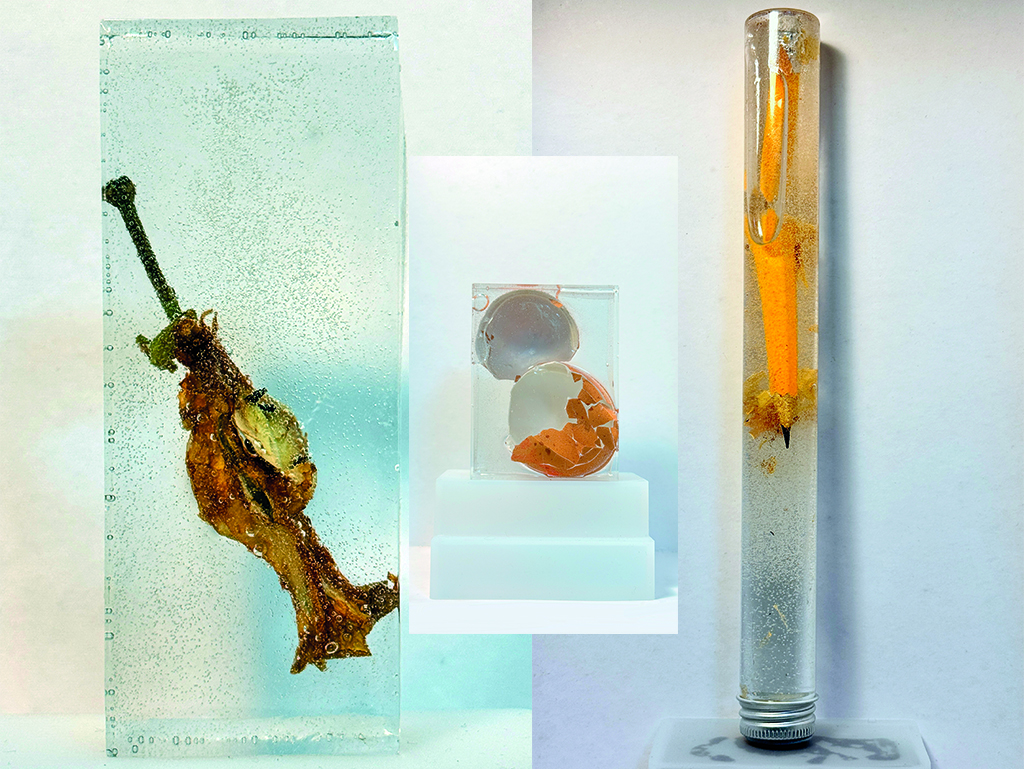
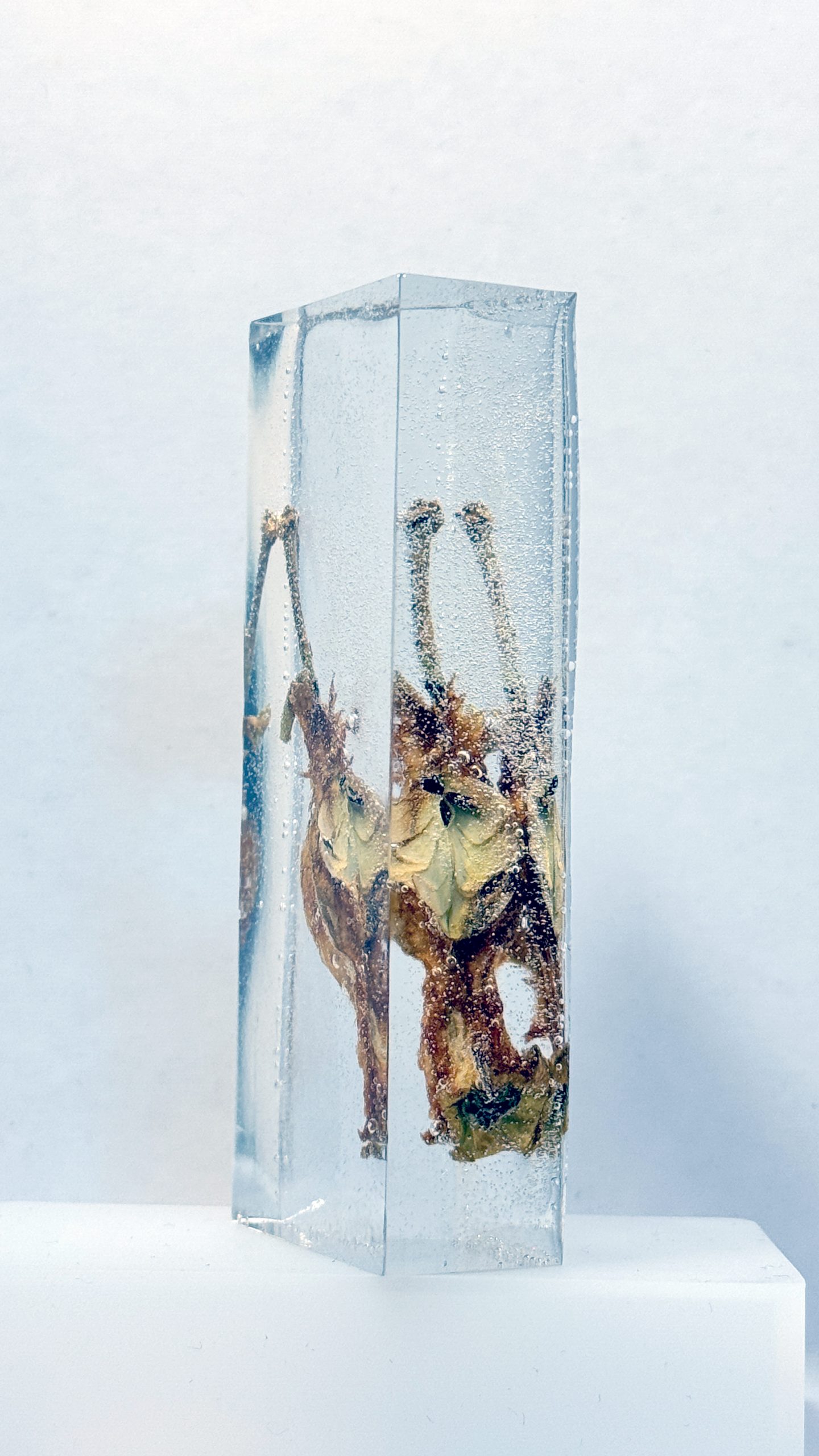
These following resin pieces work on two levels. Initially, my intent was to create pieces to memorialise the small moments of my daily life, the overlooked, the mundane, building on the conceptual direction I explored in UPM 1. But as the visual forms took shape in my mind (and they did so very quickly, without sketching: each is in effect a sketch and a finished piece), I saw the opportunity to create narrative memorials about specific world events/ situations that I hold an opinion on. The narrative for each is discussed briefly below.
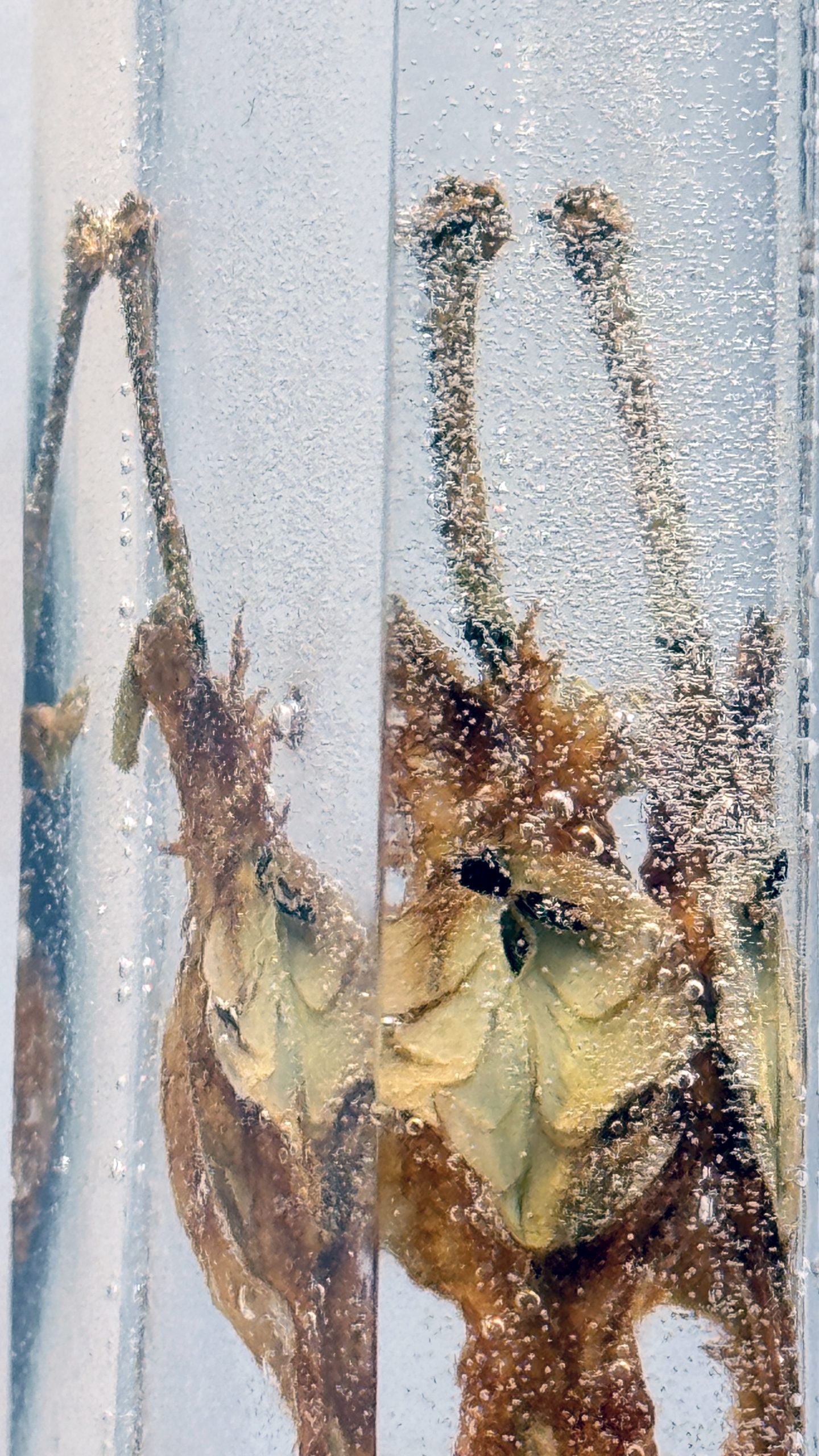
“The Death of Eden”
(Rotting apple core and clear resin: 9.8cm x 4cm x 2cm)
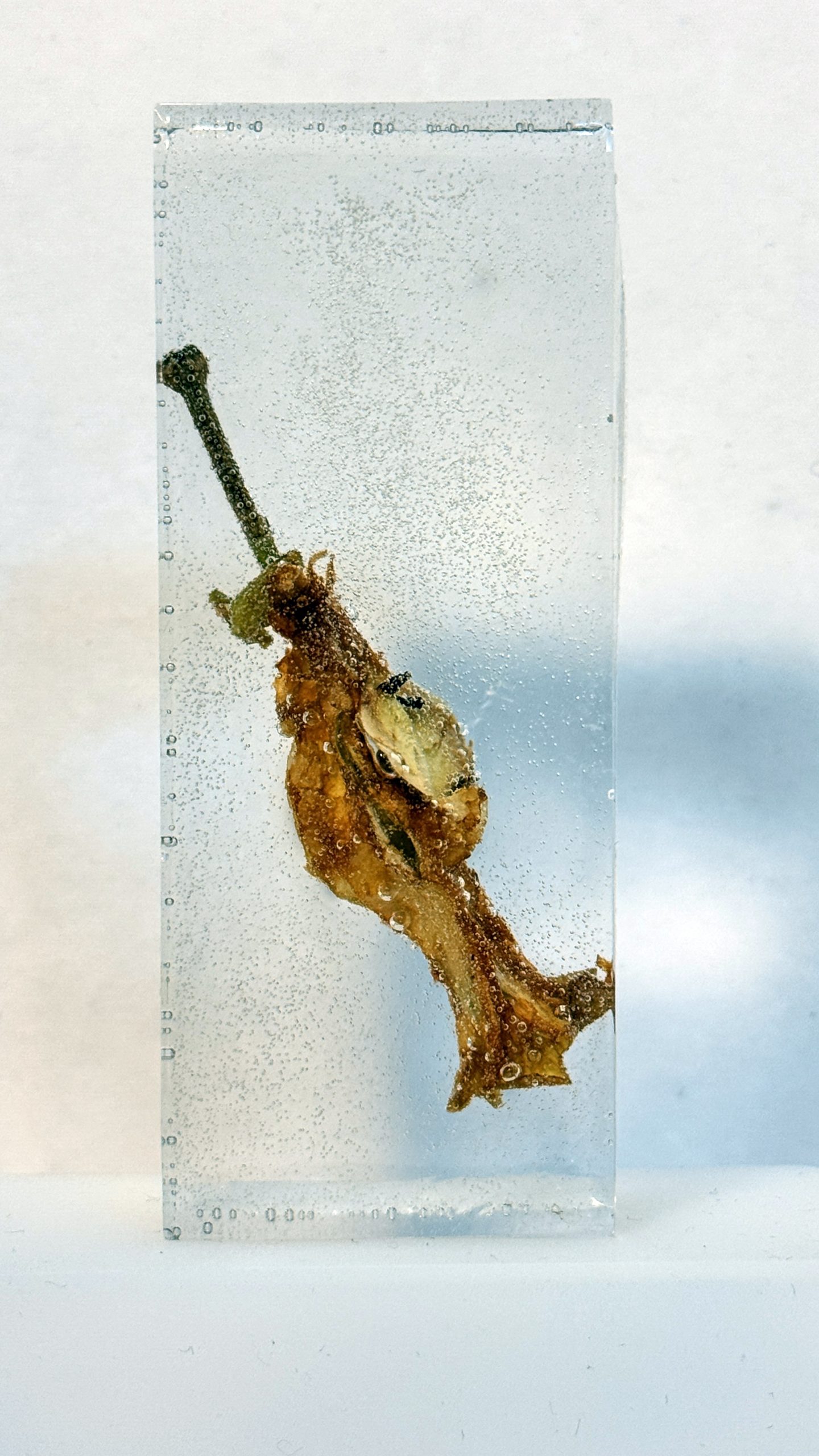
The world is in crisis, in many ways: physical and ideological conflicts, the slow, seemingly inexorable destruction of our natural world, the rape of our natural resources, the extinction of species, our inability to live in harmony with each other and our planet. The mythological and metaphorical garden of Eden is almost no more. This piece is a reflection on this, the symbolism obvious enough, to explain it would patronise the readers intelligence. A memorial to a last vestige of the world, encased in resin, like a prehistoric mosquito in amber.
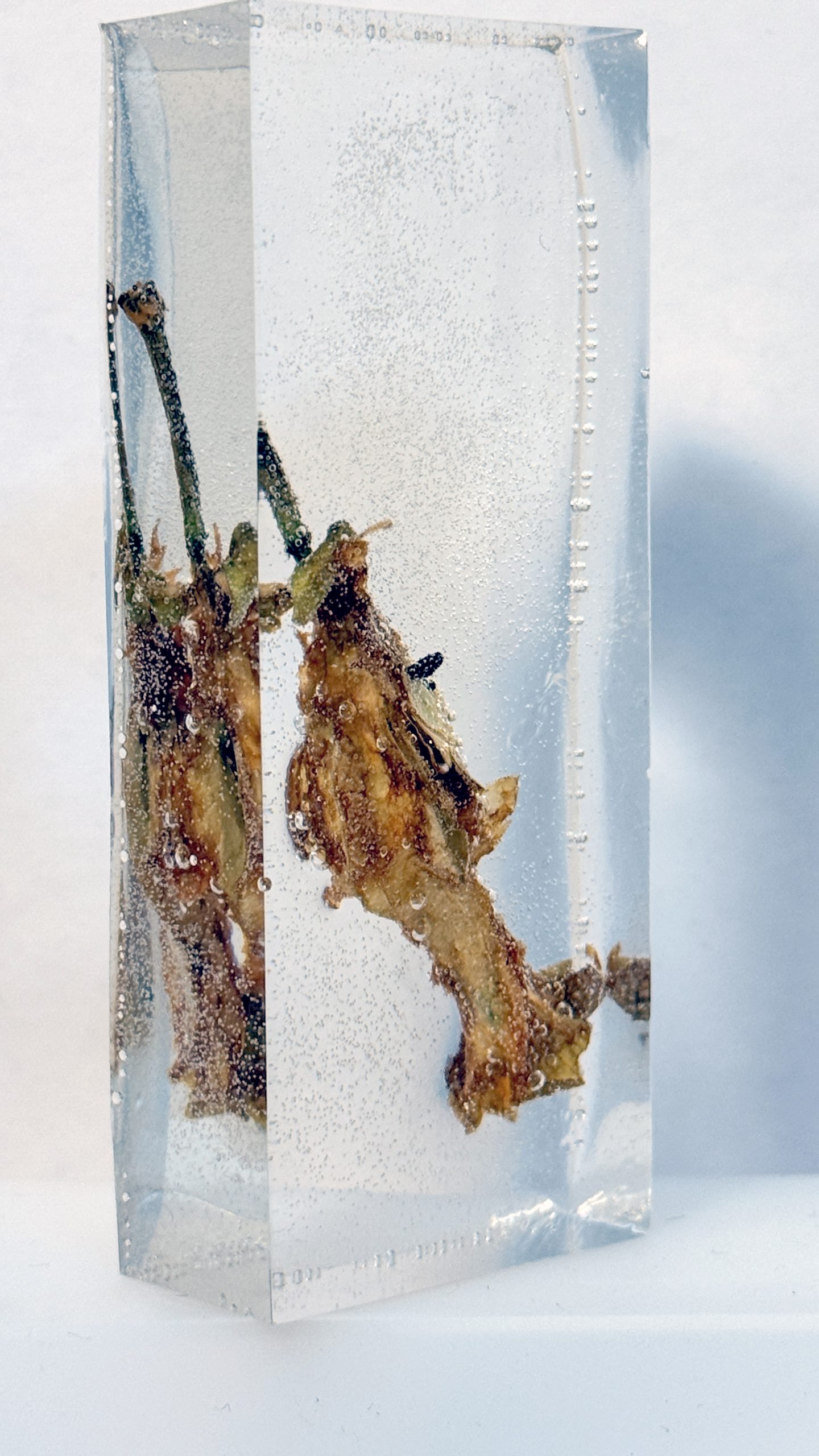
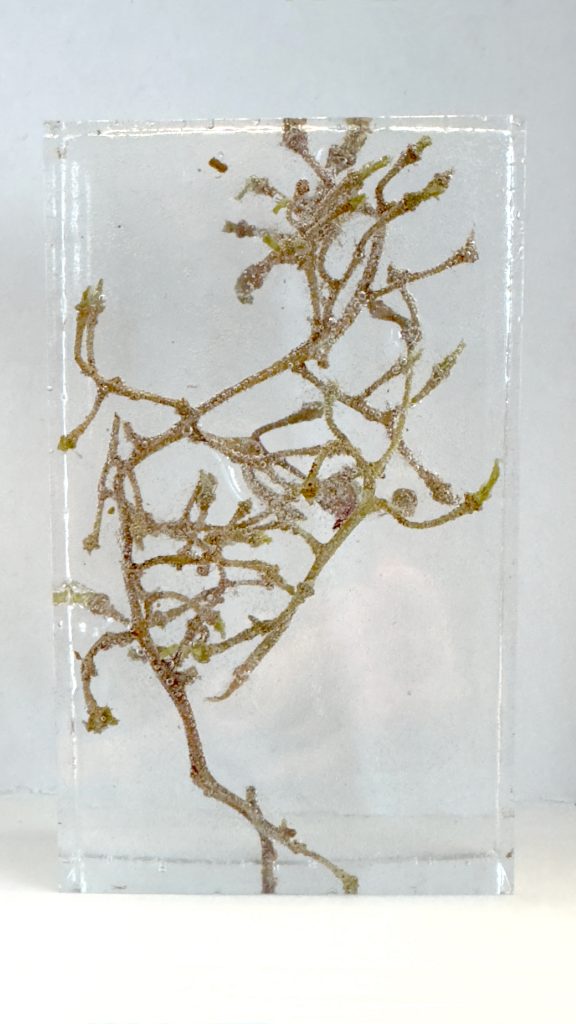
“Bacchus on his Sick Bed”
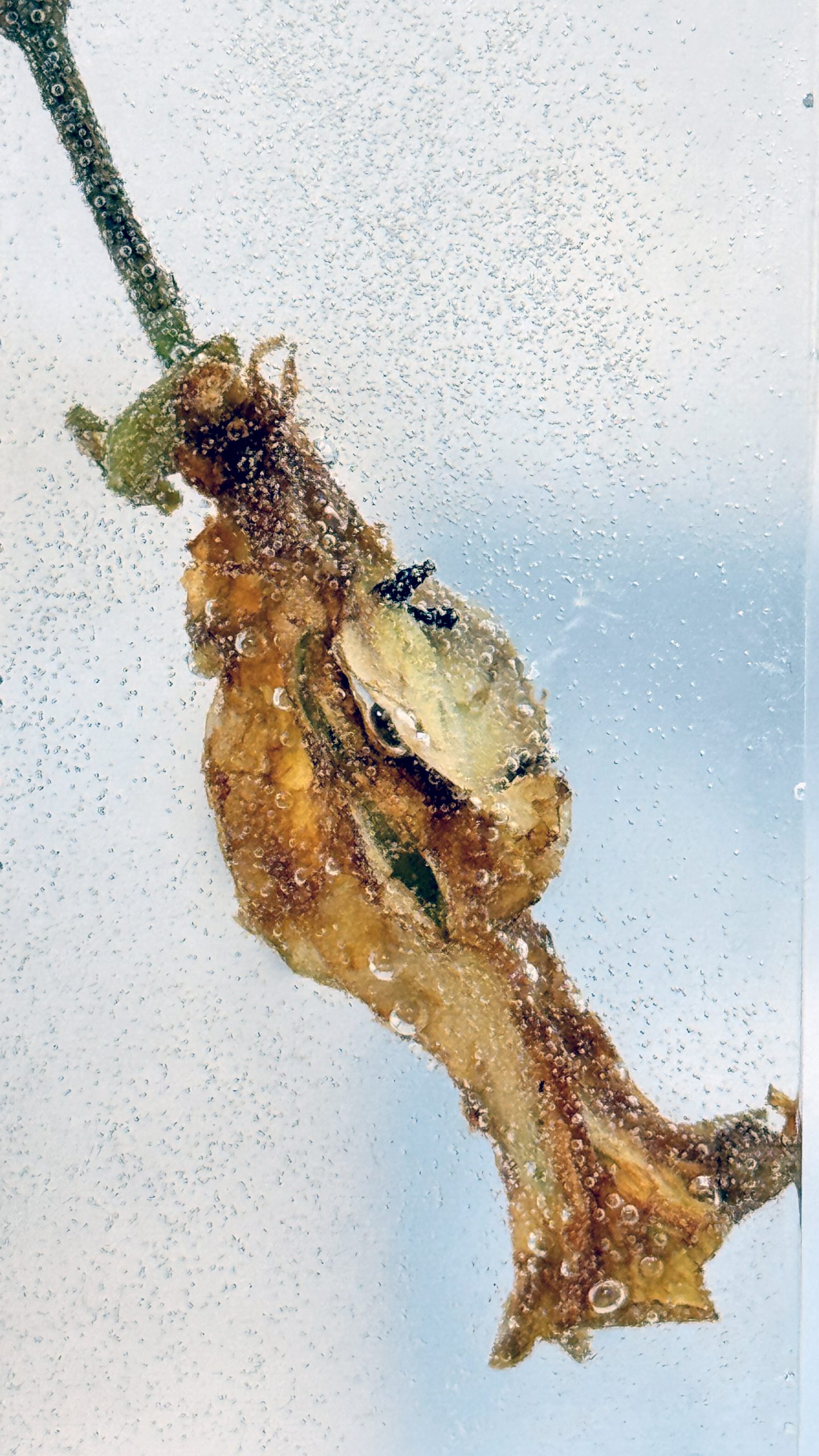
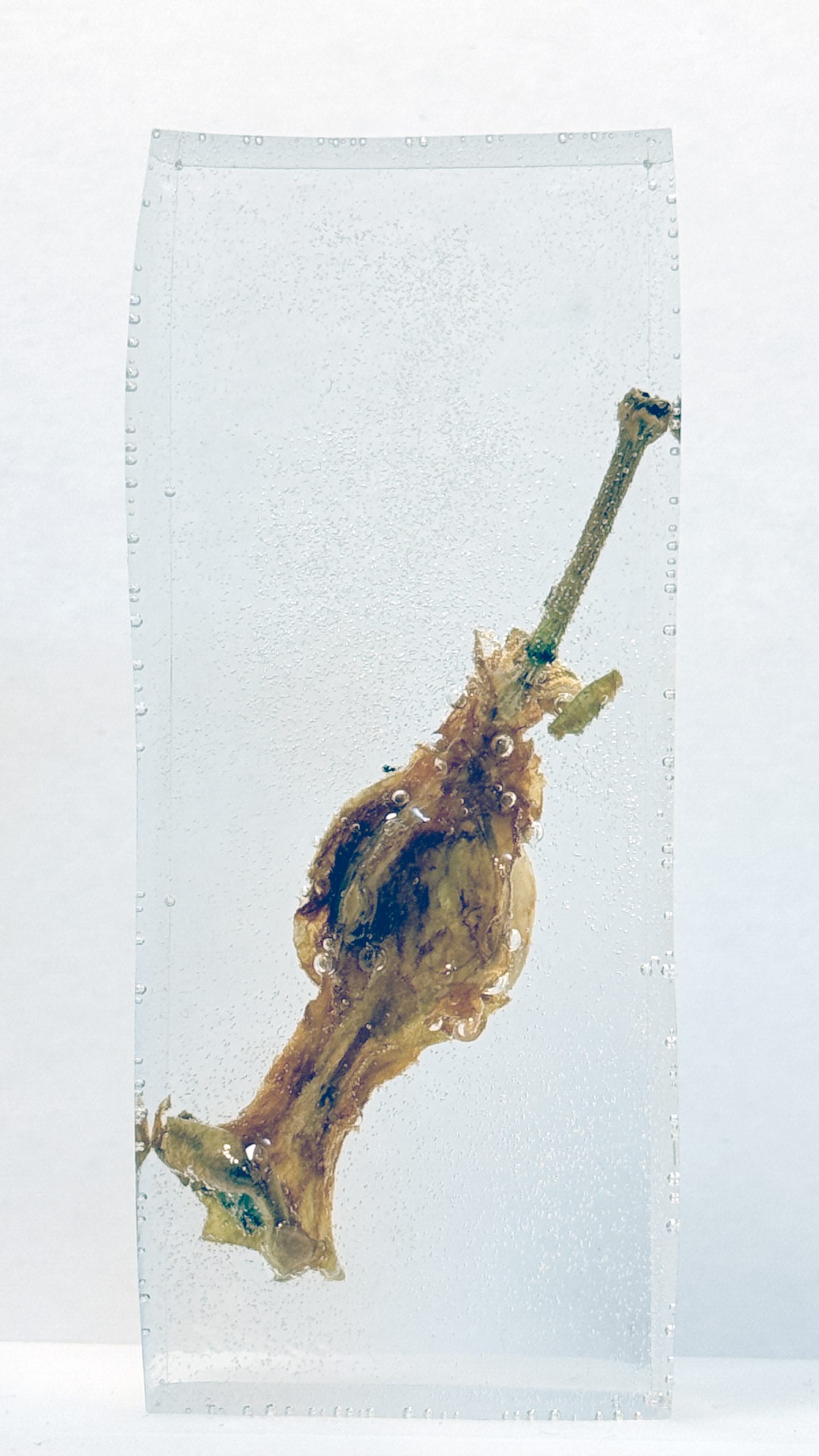
(Grape stalks and clear resin / 6.8cm x 10cm x 1.6cm)
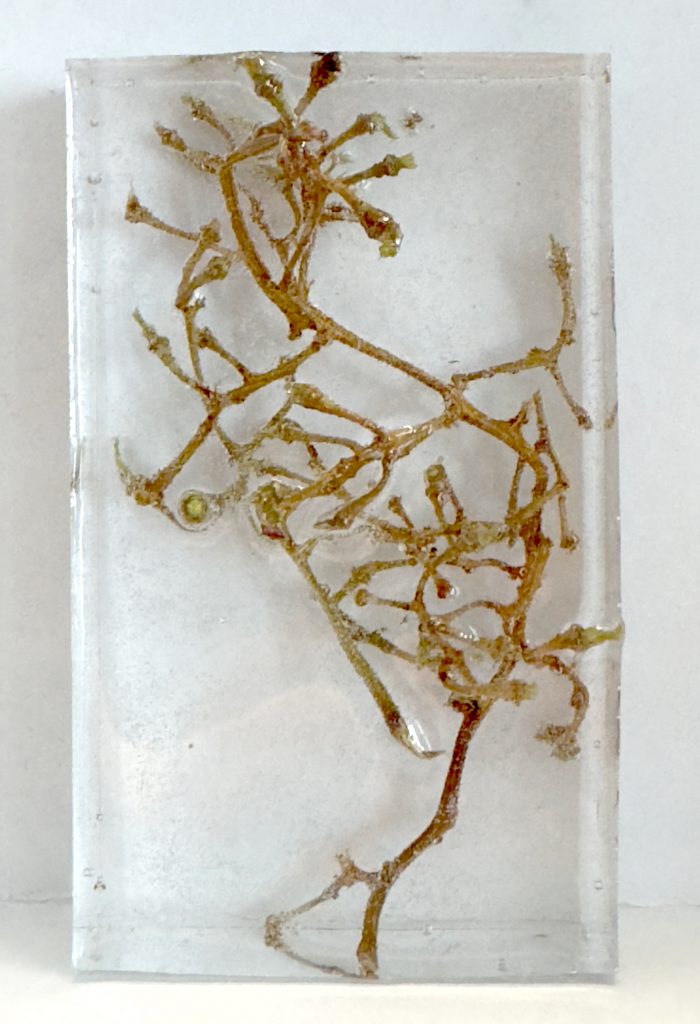
This is a comment on the climate crisis engulfing us all – but ignored by many. Drawing on the myth of Bacchus the Roman God of wine, agriculture, fertility revelry, and festivities, this piece reflects, through the use of the ’empty’ grape stalks, on the climate challenges our world is facing, on how our world is being stripped of it’s resources by the indiscriminate, lustful profligacy of the human race: it’s a suggestion that the party may well be over for mankind. The title is a play on that of Caravaggio’s painting ‘Young Sick Bacchus’.
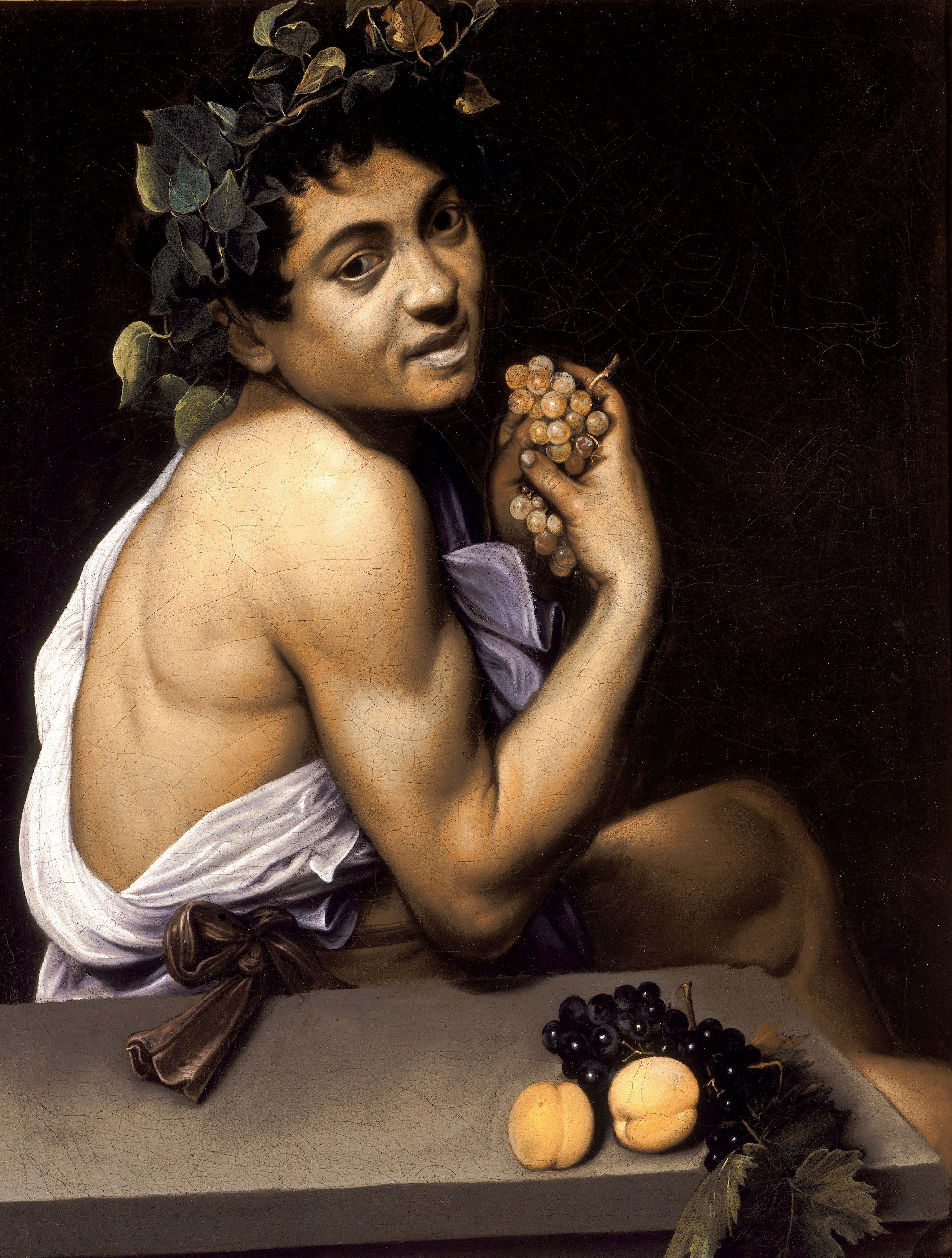
Fig.1. Young Sick Bacchus (c.1593)

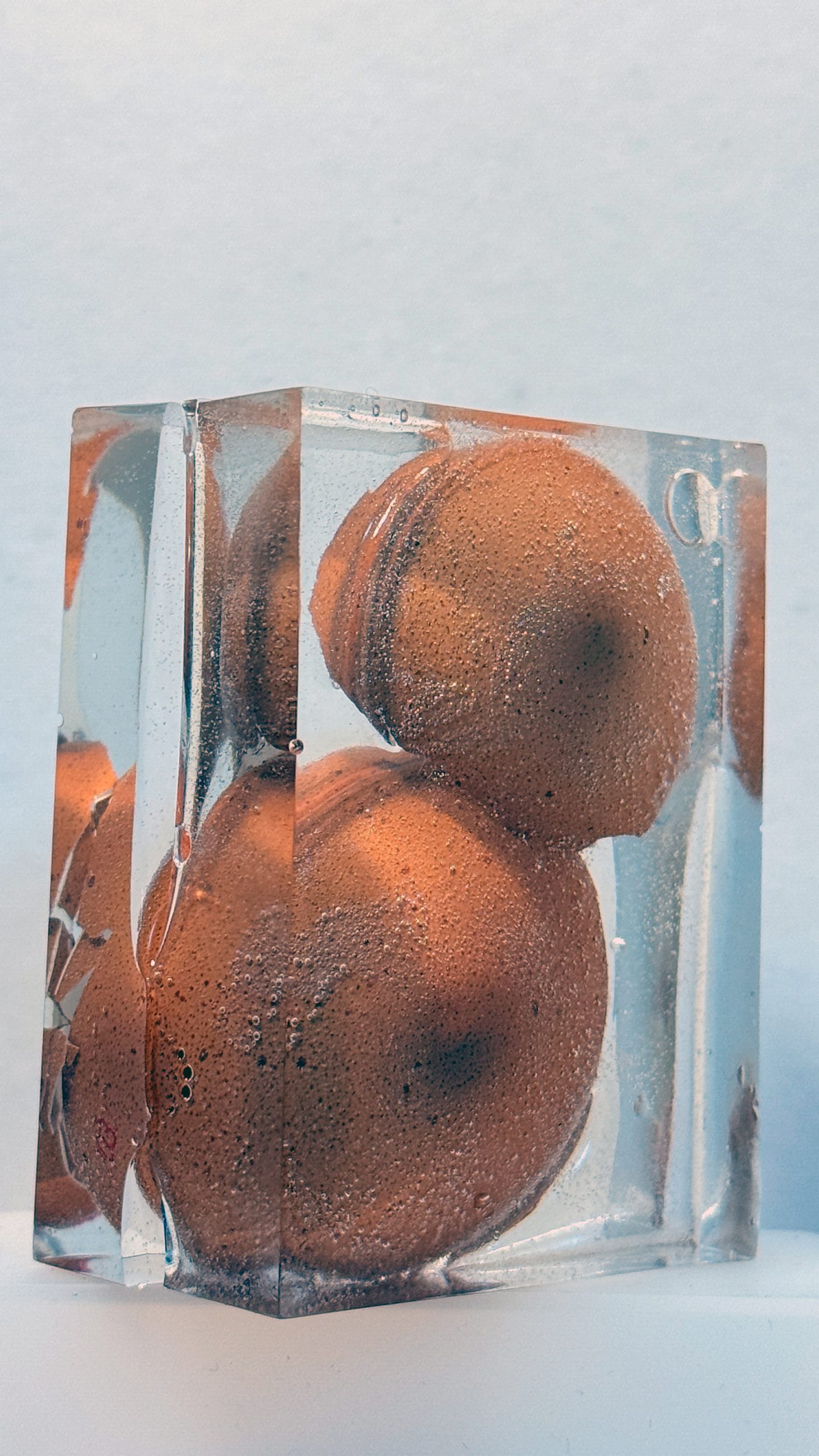
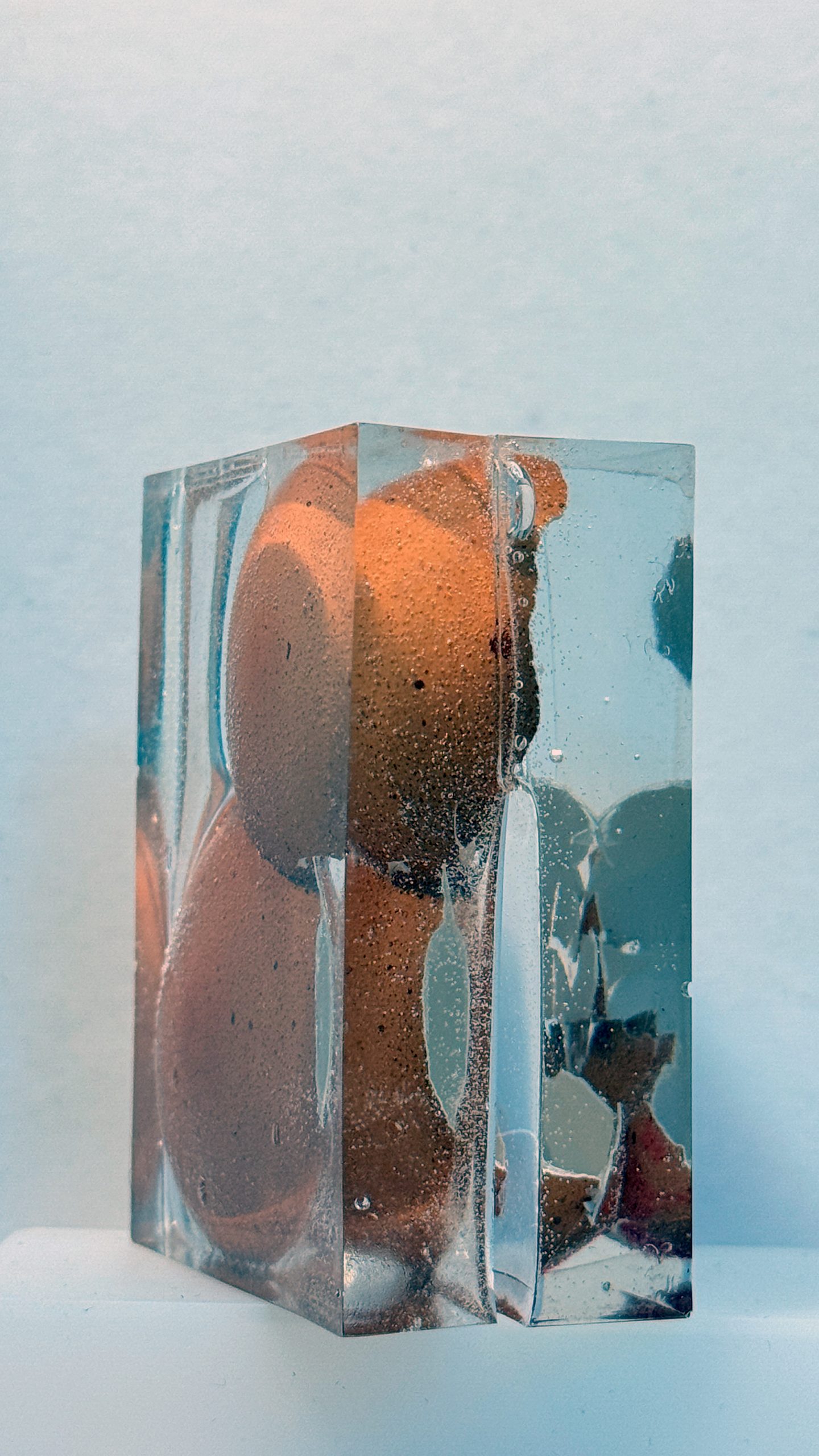
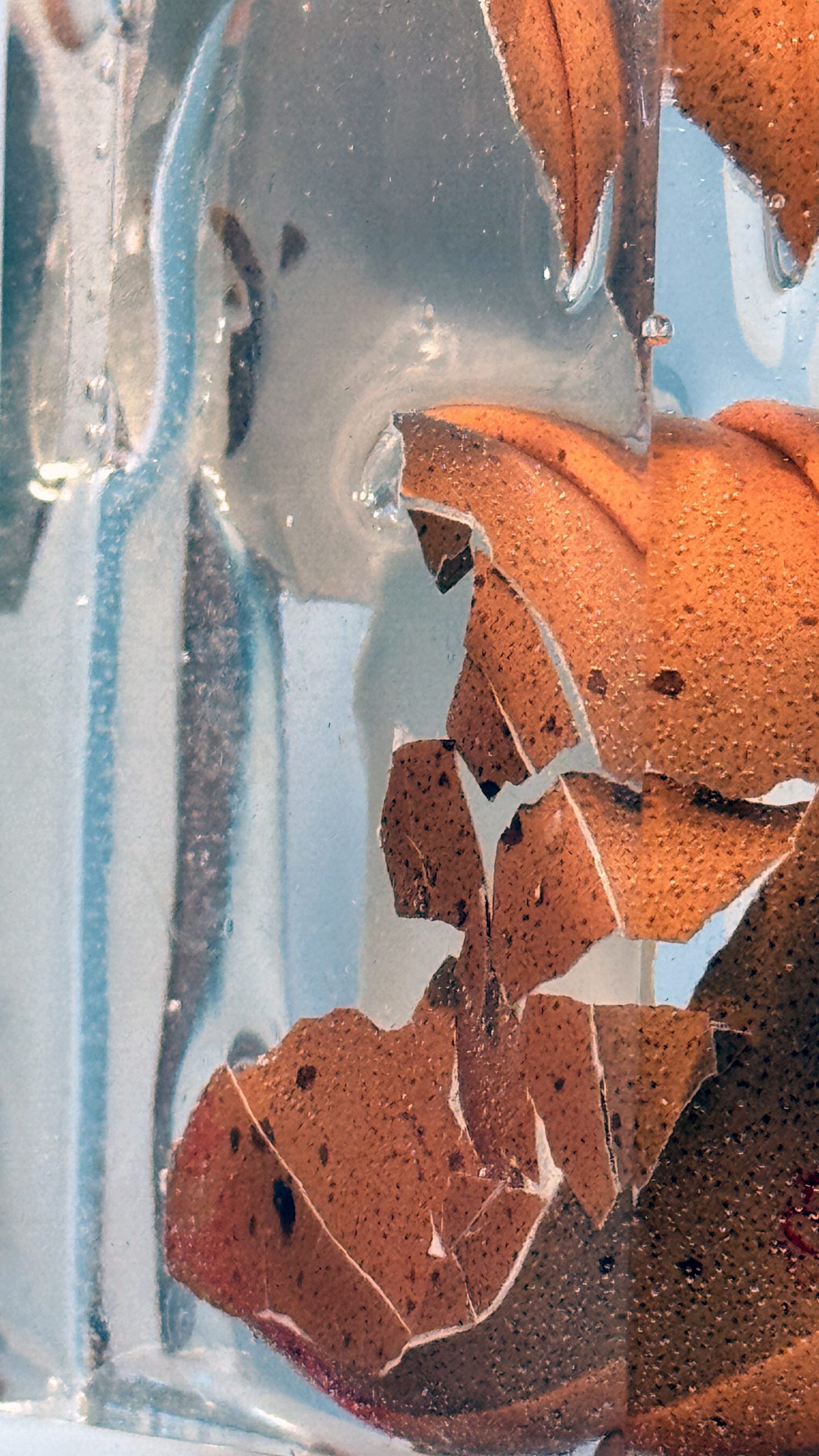
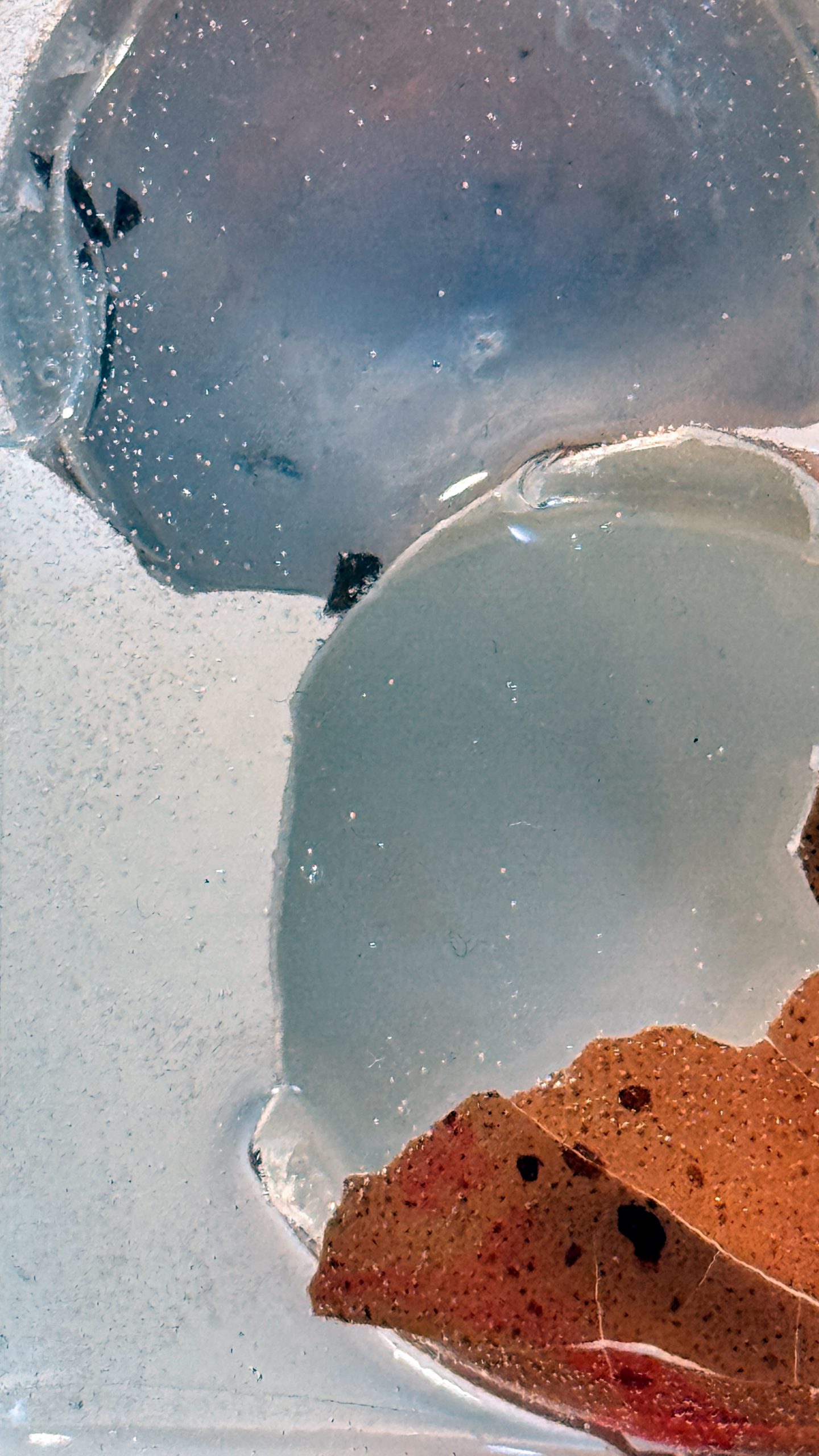
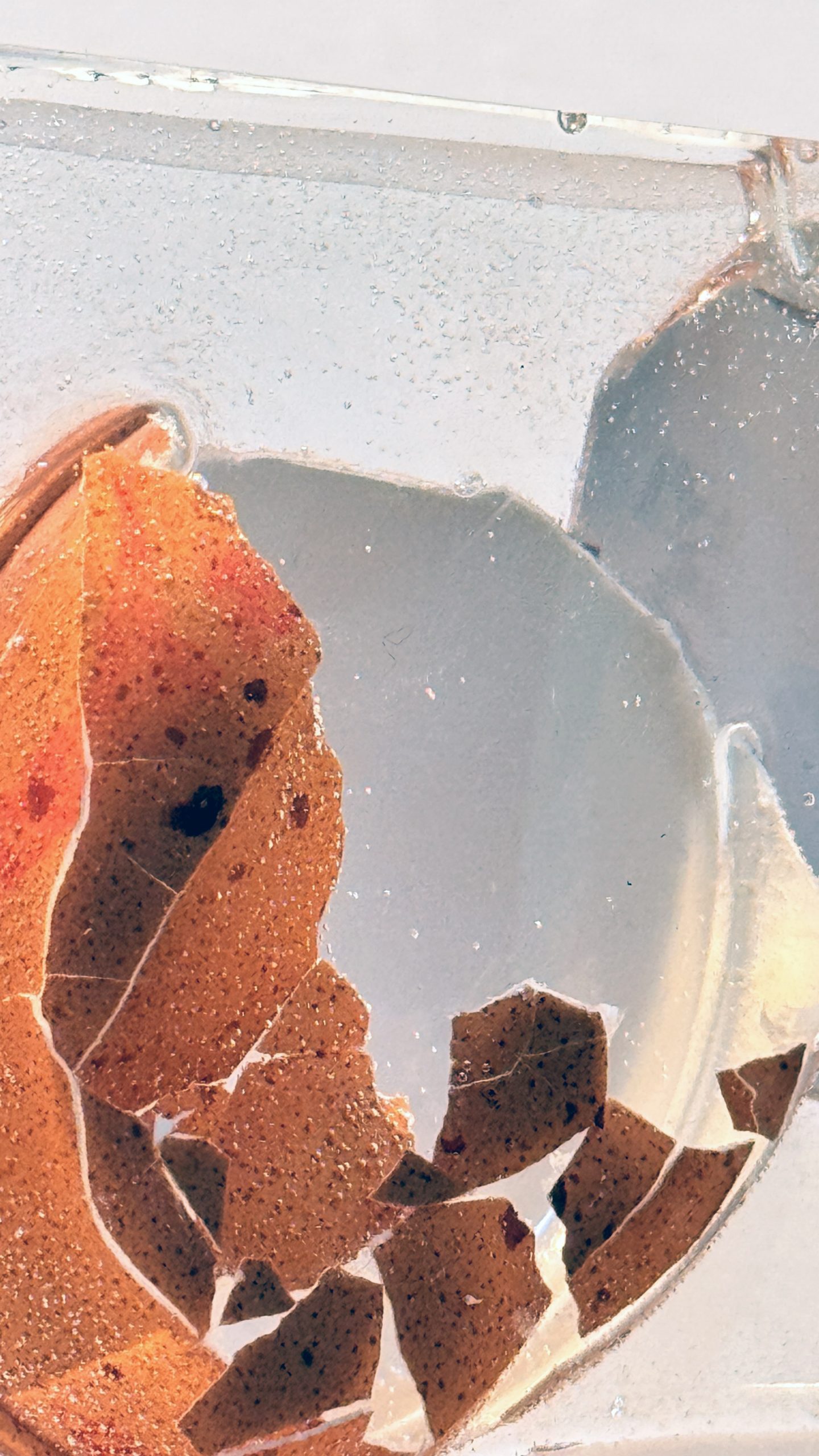
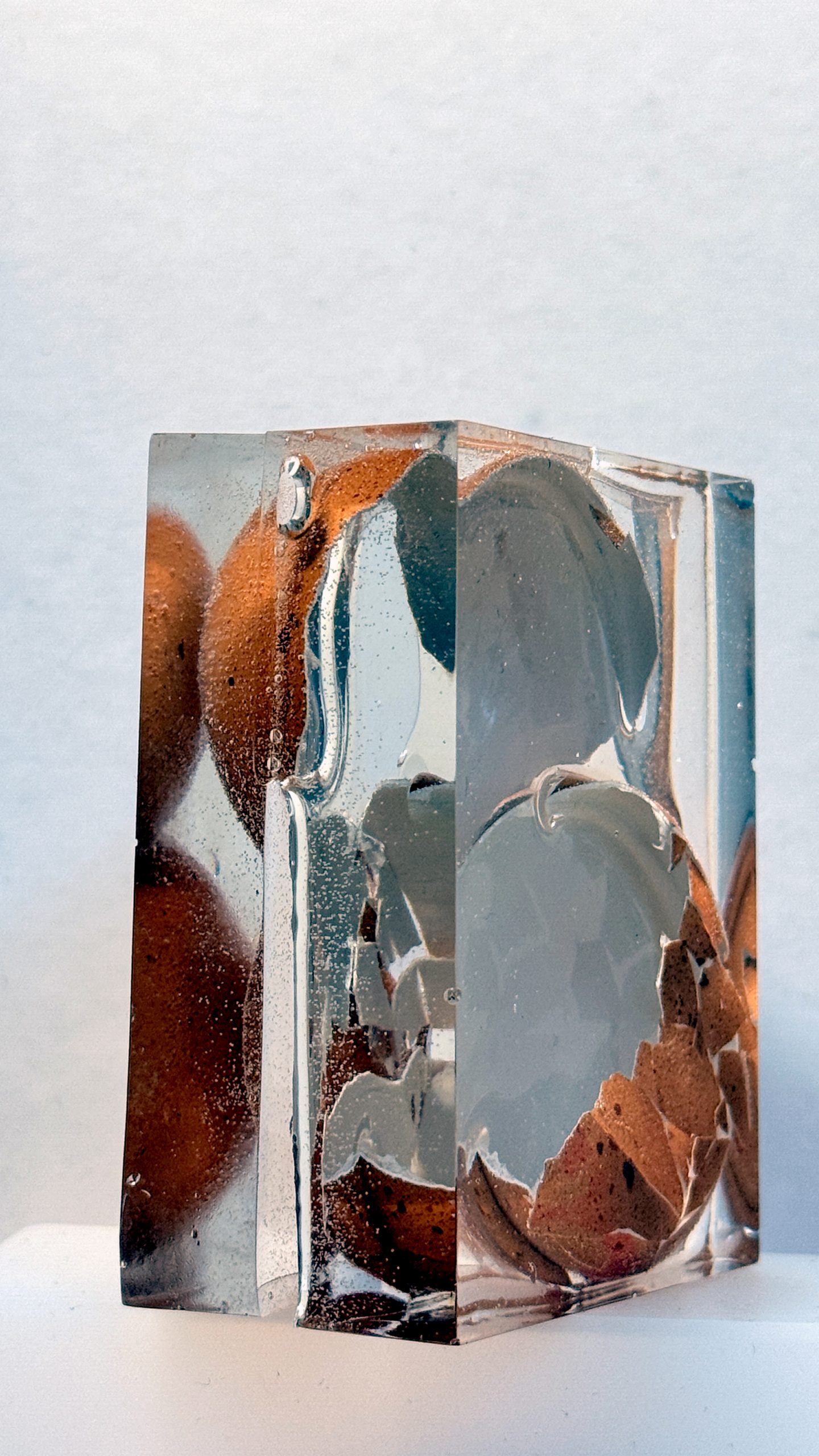
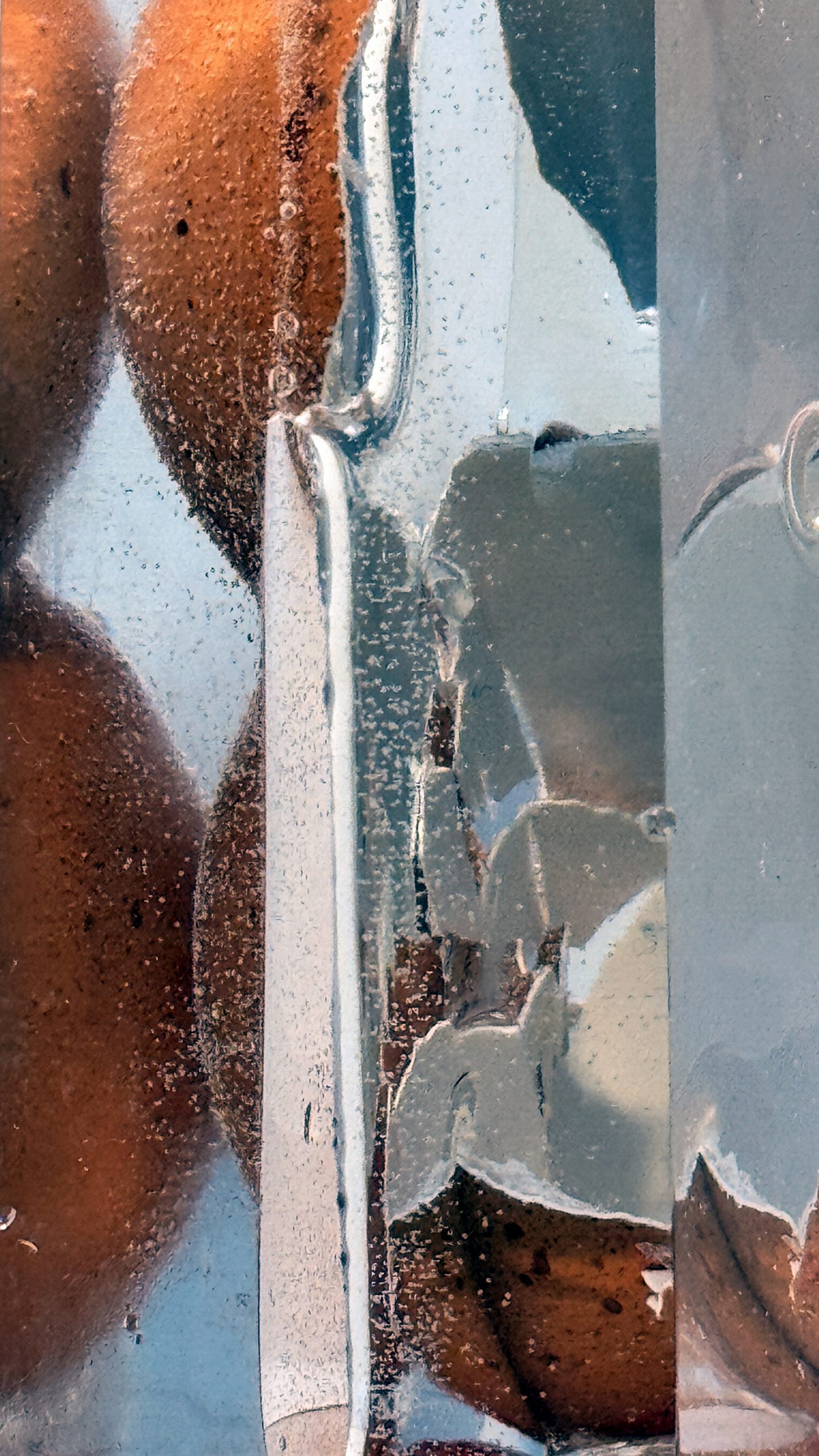
“The Birth of Venus”
(Egg shell and clear resin: 6cm x 8cm x 3.4cm)
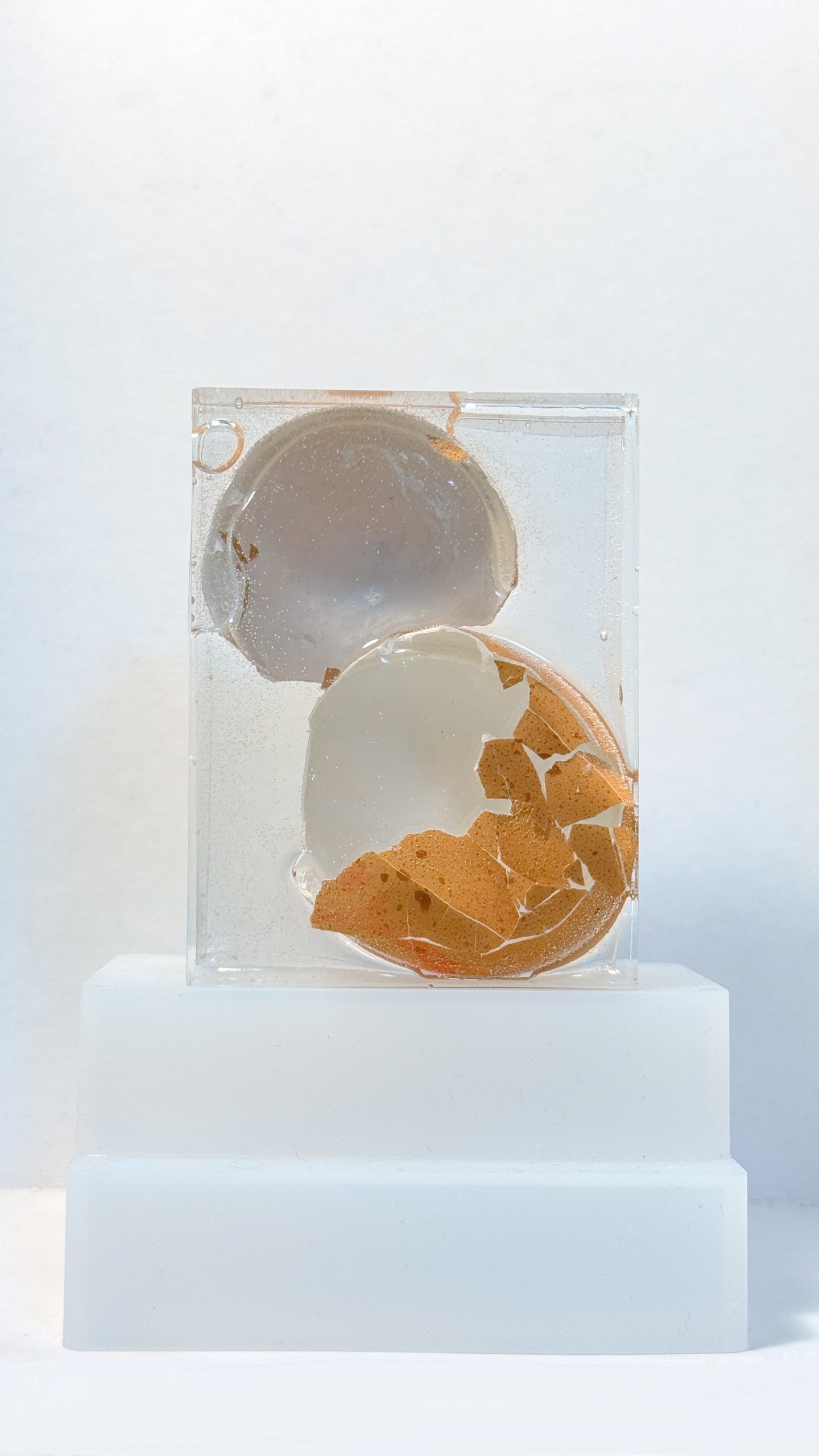
This piece is an attempt at contemporary, conceptual riposte to some of the interpretations of Botticelli’s “The Birth of Venus”. Over the centuries, Botticelli’s work has been subject to continuous reinterpretation, depending on the contextual perspective of the historian or critic: rebirth and change, the intertwining of the physical and spiritual, the Neoplatonic idea of divine love, our conception of the female body.
If viewed in the context of rebirth and change, perhaps my piece could be interpreted as a comment on how the human race’s attempts to change, refresh how it exists and functions as a system of differing societies, are continually broken as we fail to really learn from past experiences? Perhaps it’s a suggestion that rebirth is possible, just painful, difficult? Perhaps it suggests that the idea of Neoplatonic love is a mythical, unreal expectation (the perfect egg is broken), but in memorialising it’s cracked carcass in an amber-like coffin, there is a suggestion that the ‘imperfect’ love we experience in reality, the ‘perfect love’ we need for our growth? Perhaps it counters the unreality of present societies depictions and desires of an ideal body (for all genders), and again, the memorialisation of what we perceive as broken, imperfect, reflects on the true beauty that is inherent in every bodily form? I like to think this piece holds multiple stories, the viewer hears whichever they want.

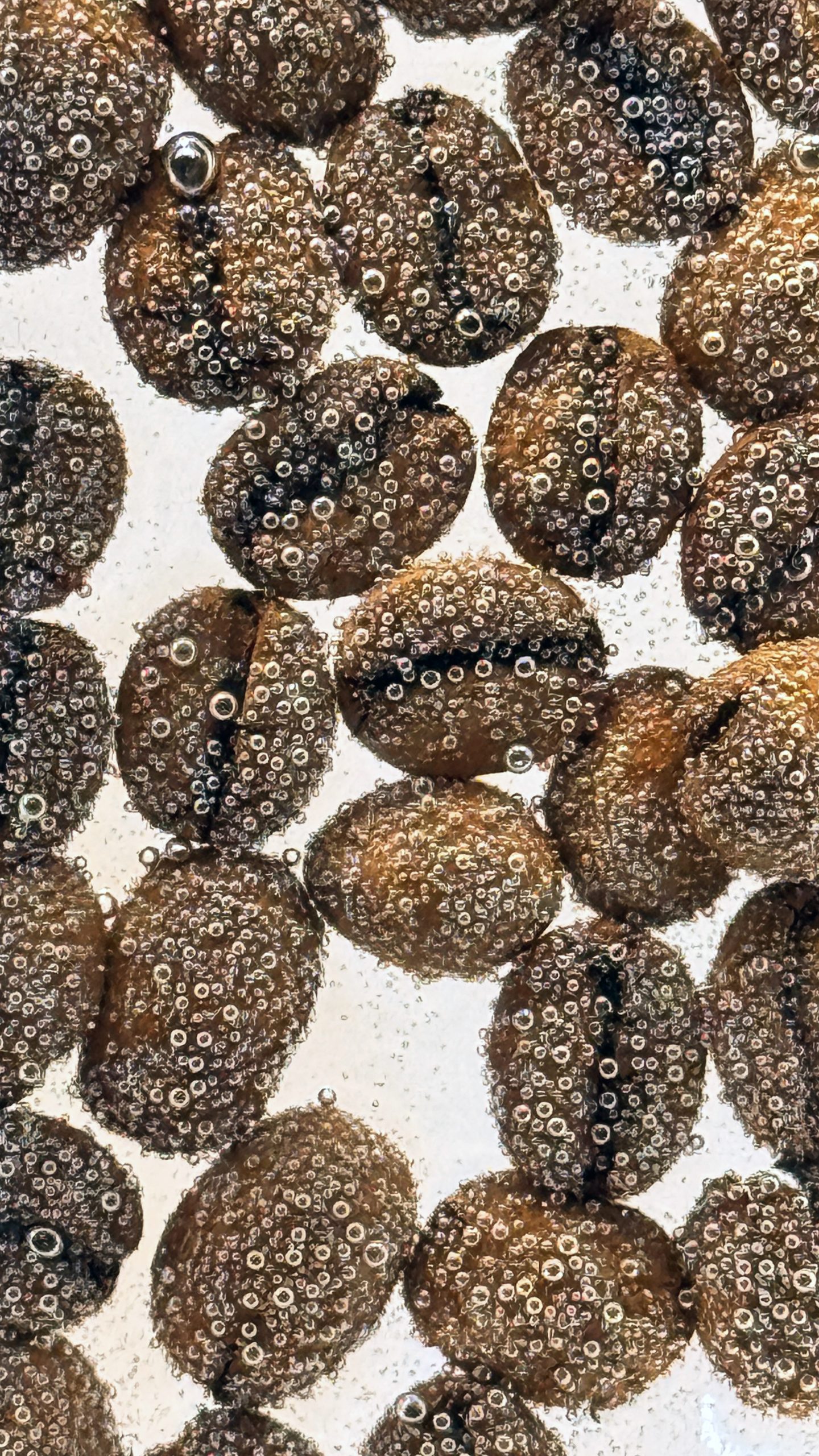
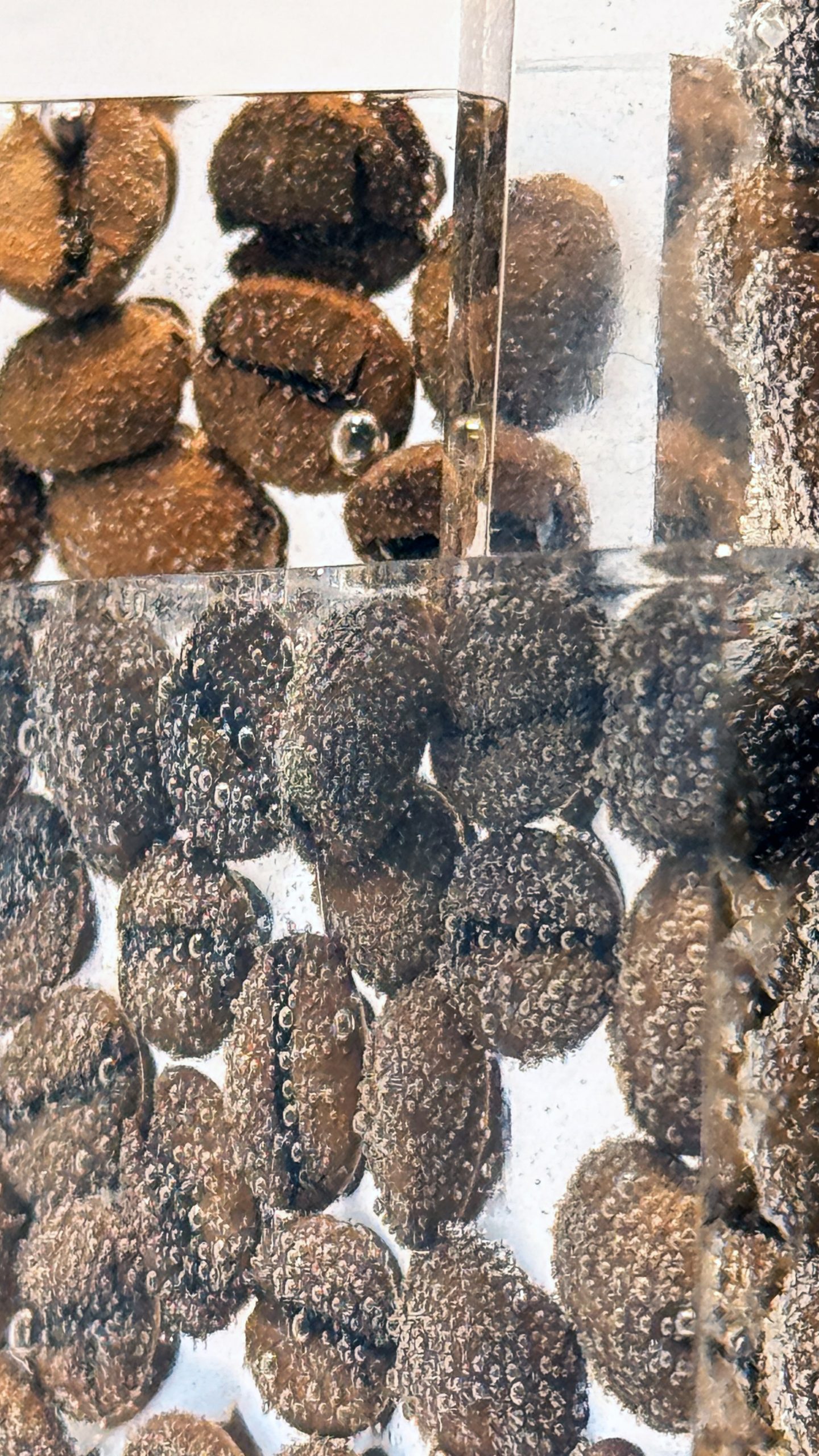
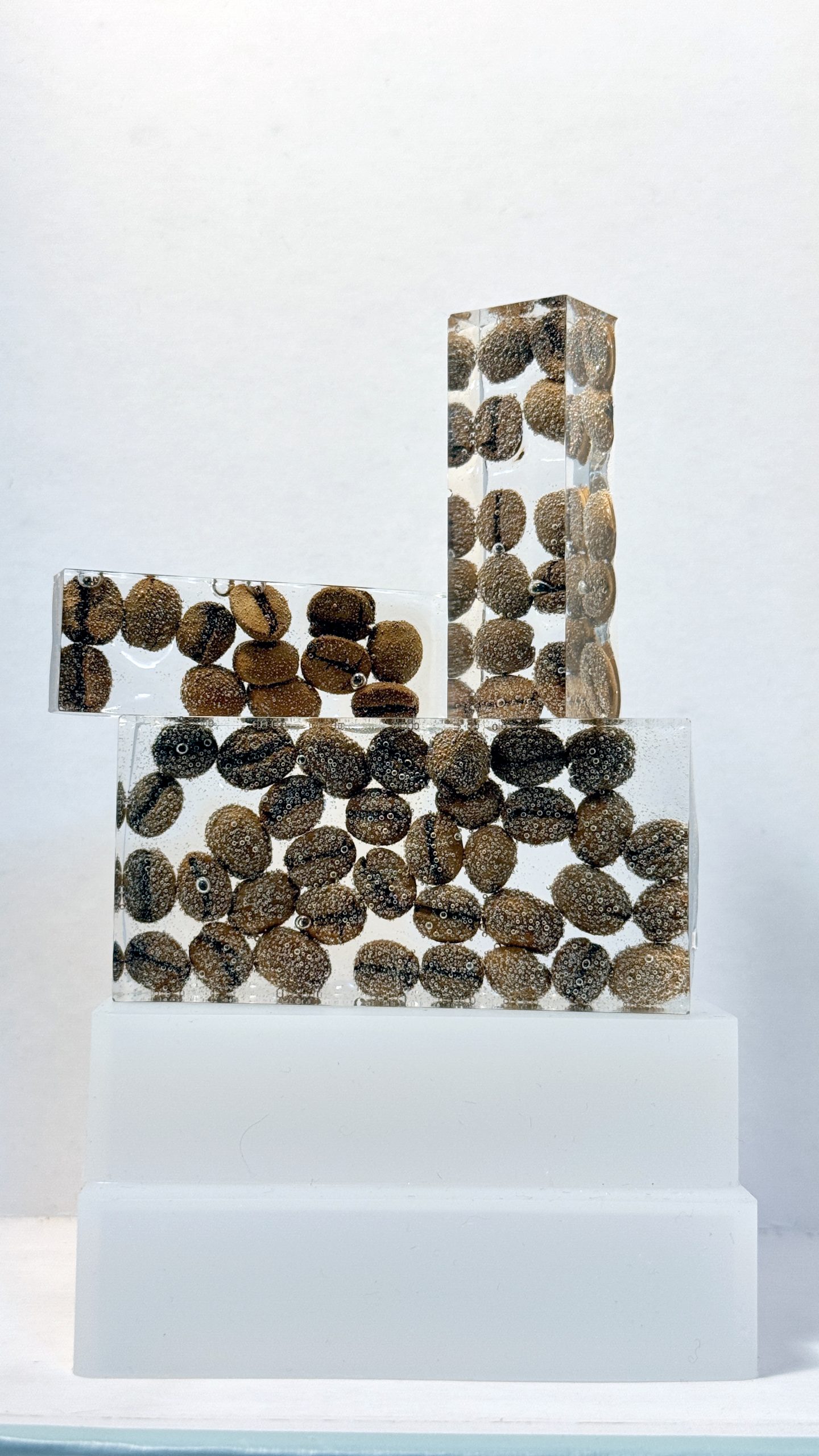
“Addiction”
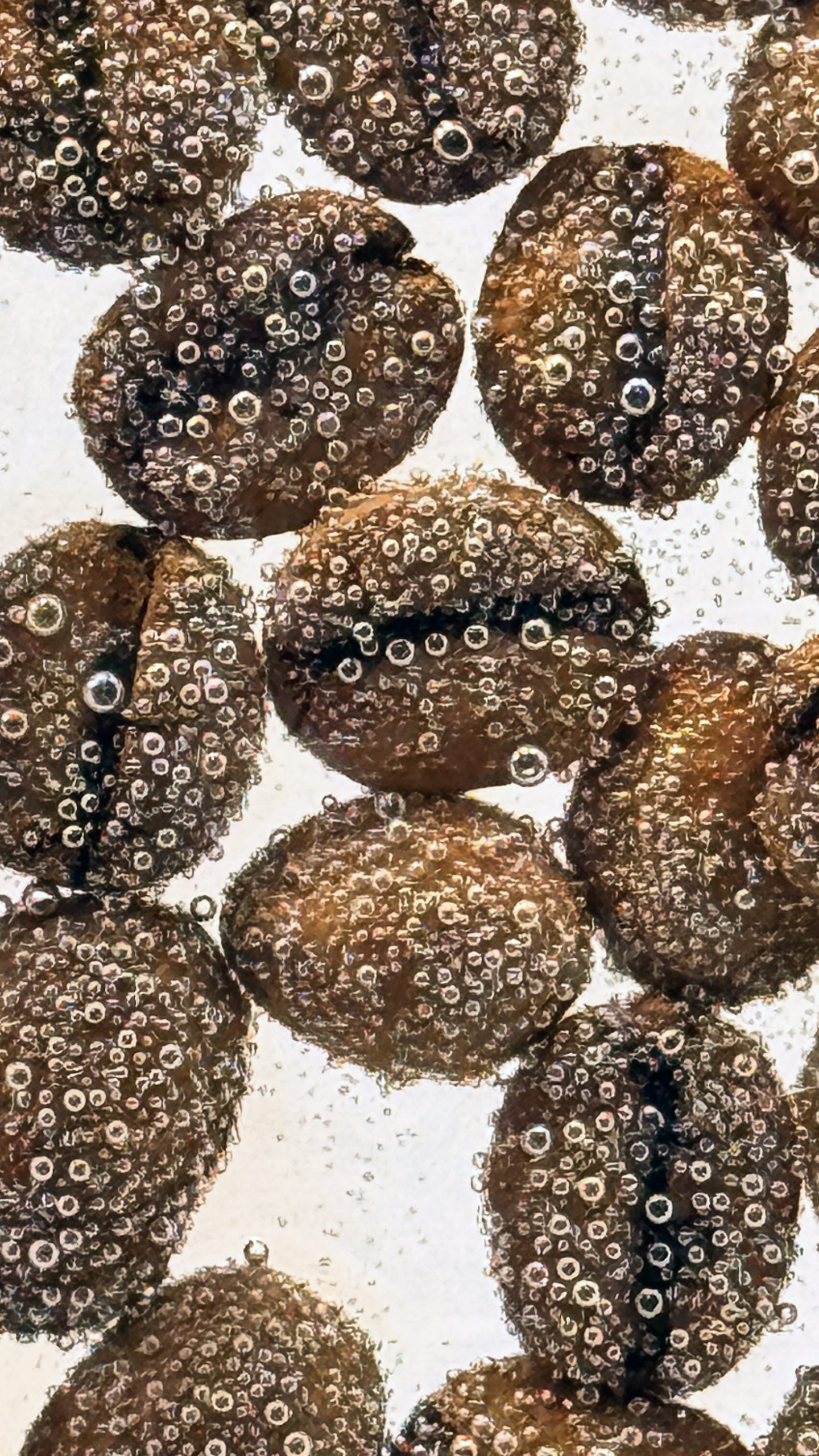
(Coffee beans and clear resin: 4cm x 8cm x 2cm)

This piece is probably, conceptually, the slightest, in that there is an obviousness to it. Coffee can be seen as addictive, the beans are memorialised as a symbol of the addictions plaguing the world – drugs, war, social media, sex, etc.
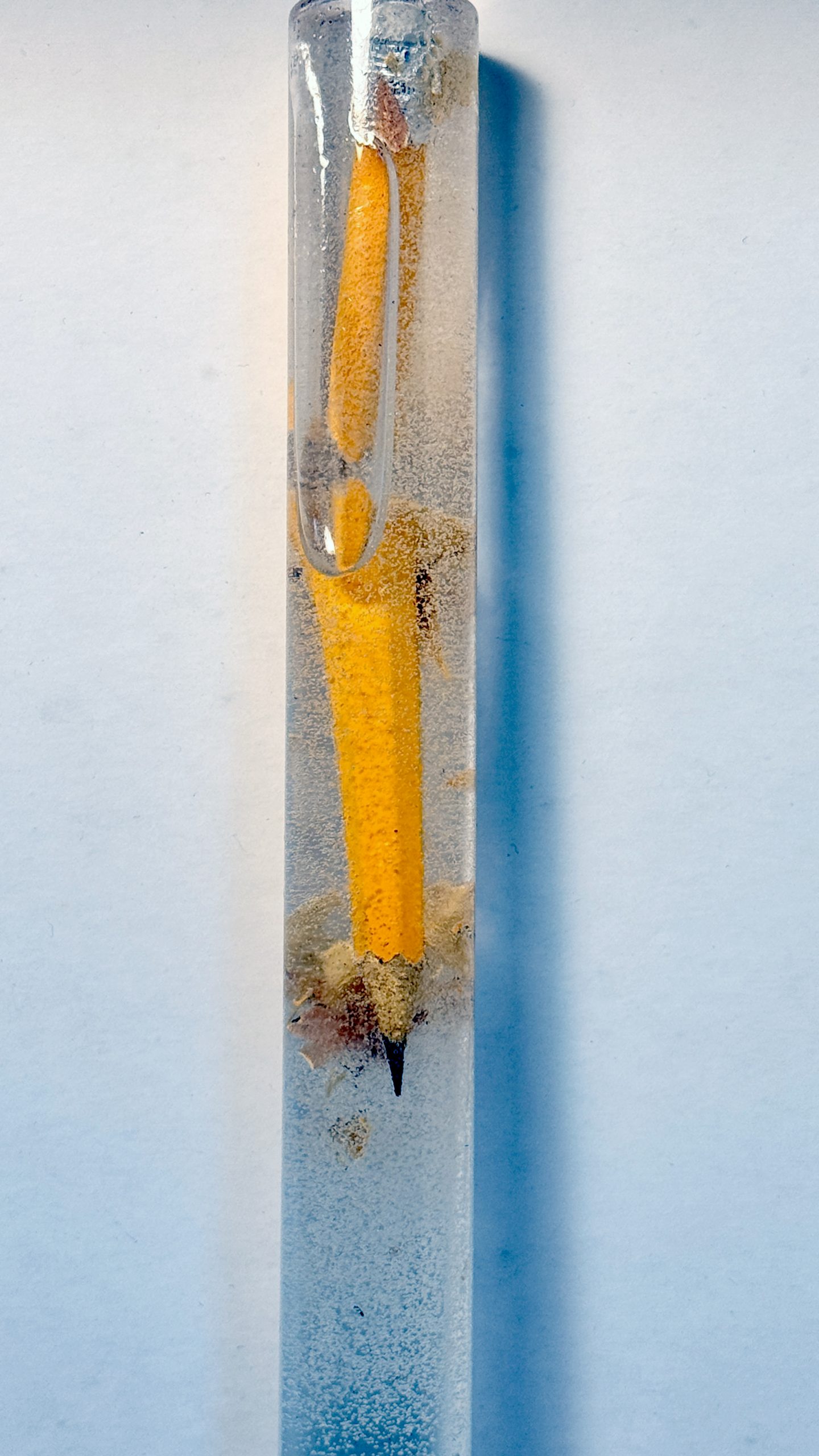
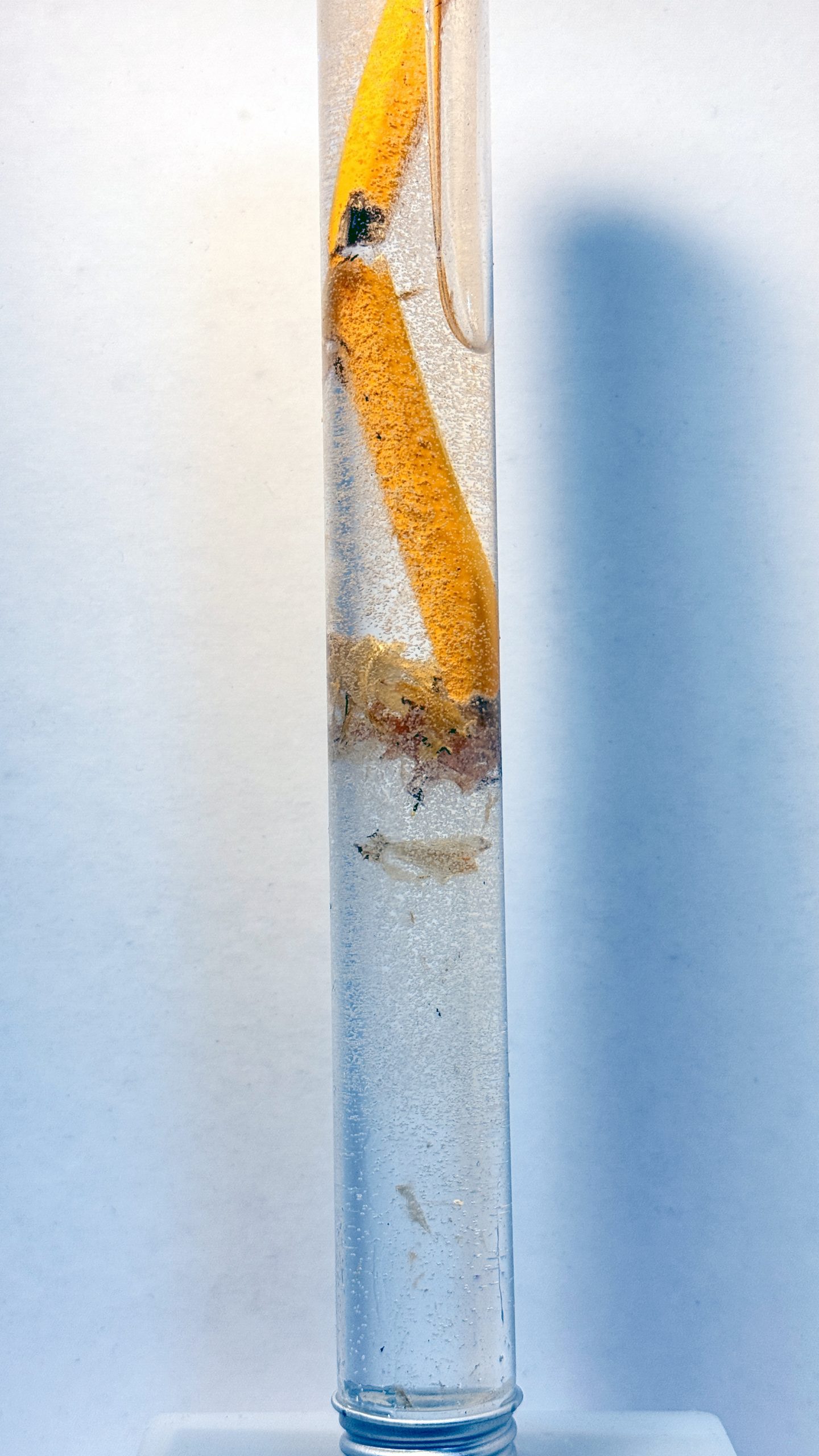
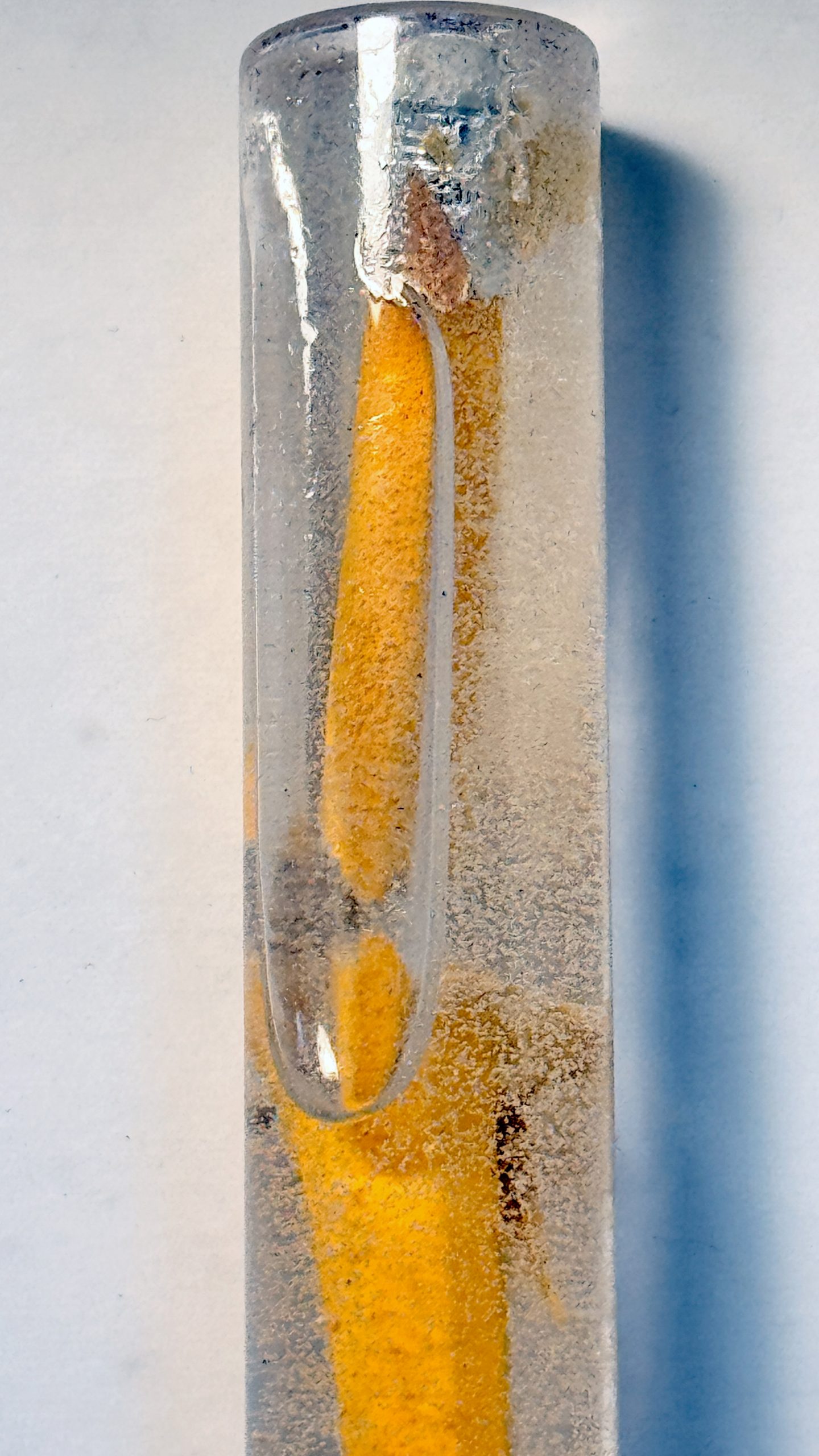
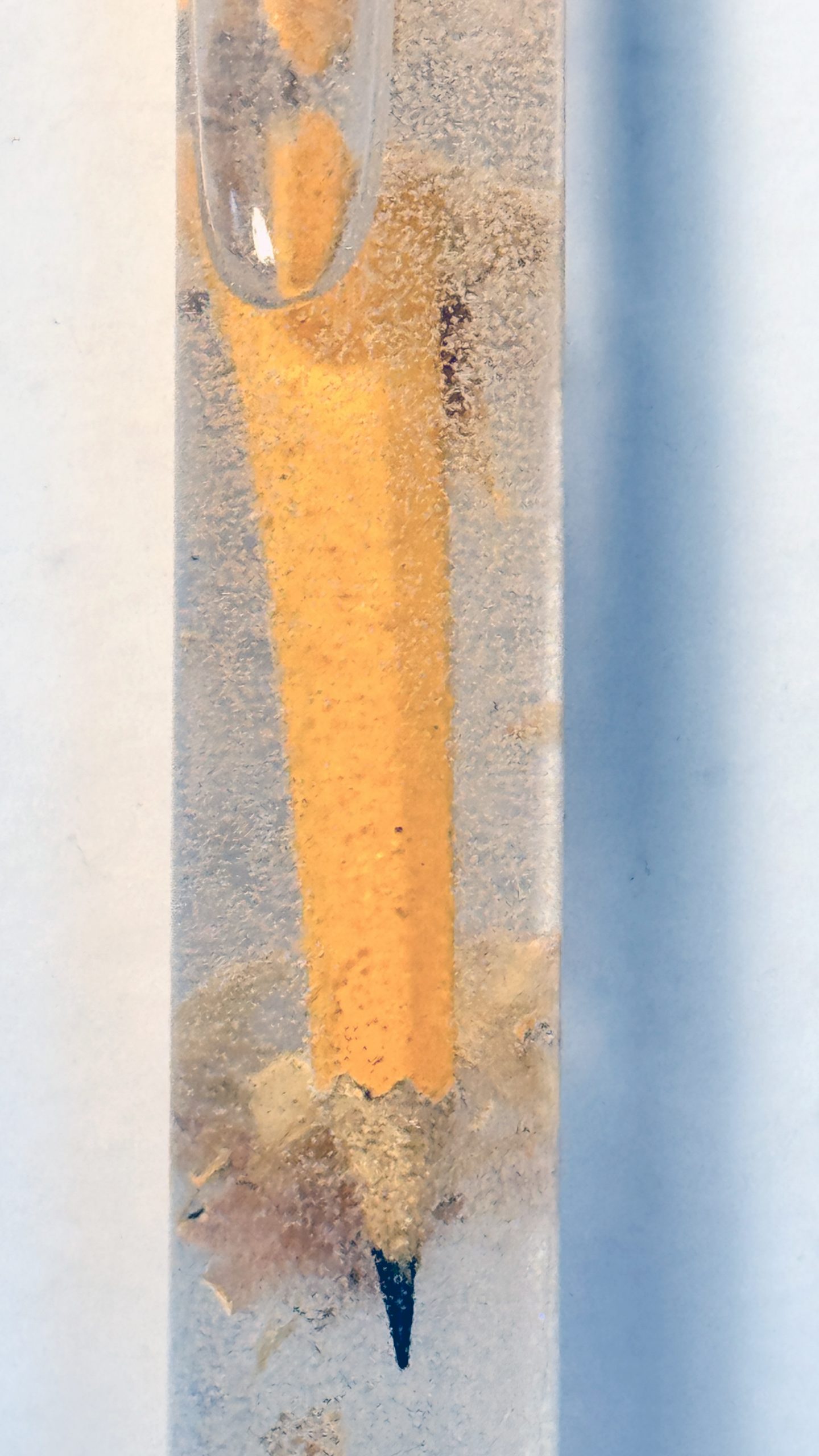
“Requiem for the Truth”
(HB Pencil, pencil shavings, glass tube with metal lid and clear resin: 23.3cm x 3.5cm diameter)
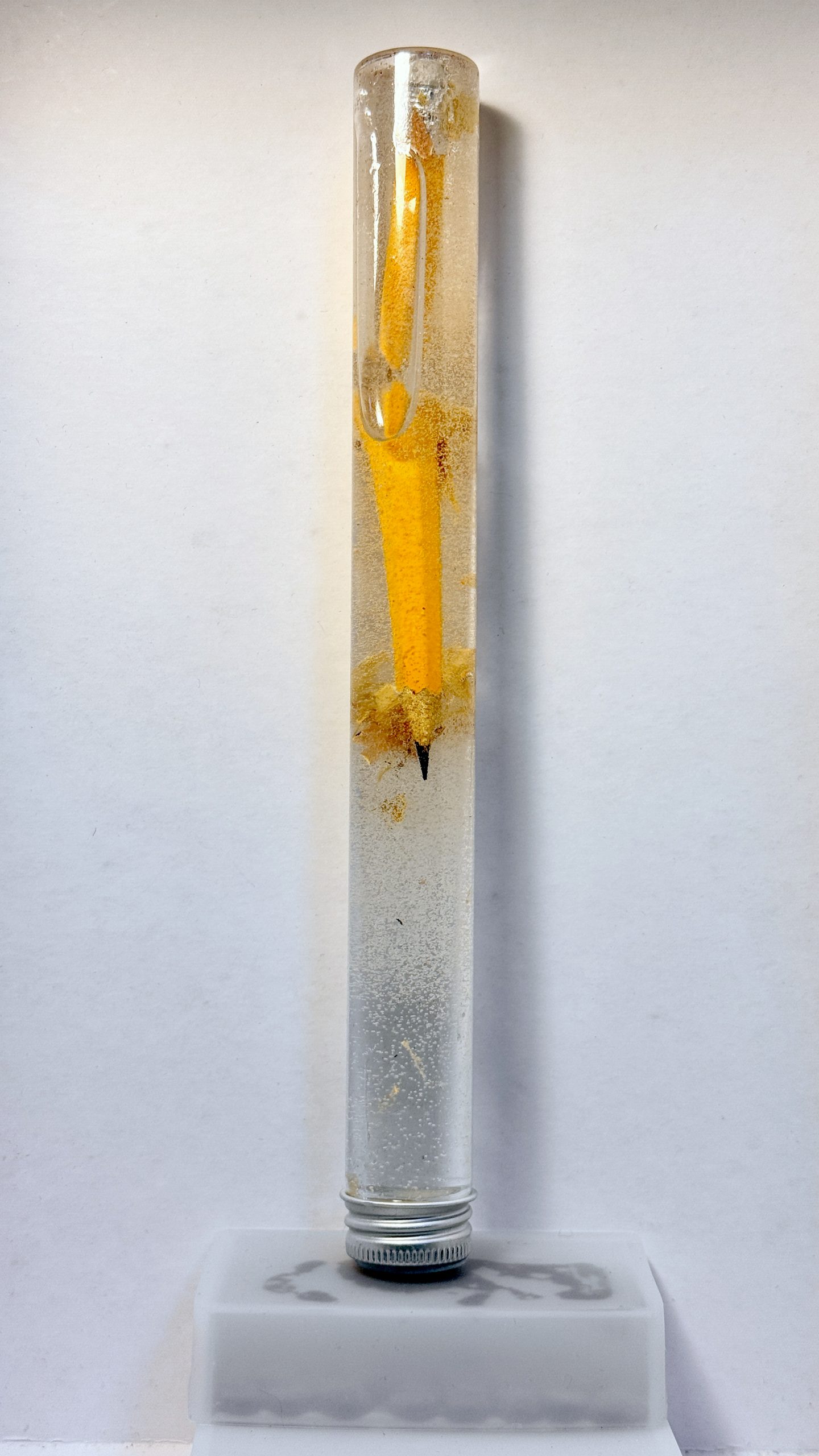
This work reflects on the rise of fake news and AI across the globe, the difficulties of taking objective stances about information when so much of what we are presented with is doubtful in veracity. It is also a reflection on how truth is whatever we decide it to be.
Information, knowledge, learning – truth – is disseminated by the written word, and by using a pencil in this piece I am referencing the traditional act of writing on a physical, real surface. By using a broken pencil, I am signifying the ‘death’ of writing as a physical act, as well as the passing of the evidenced facts and knowledge that it used to record on paper. It laterally references the pencil’s increasing disuse in favour of electronic forms of information creation, forms that allow the manipulation of what is presented to the reader or viewer. It must also be remembered that the pencil is an artistic implement, a foundational tool of all artistic expression, but one whose hegemony is continually being challenged in contemporary art
Digital Work
“Thinking”
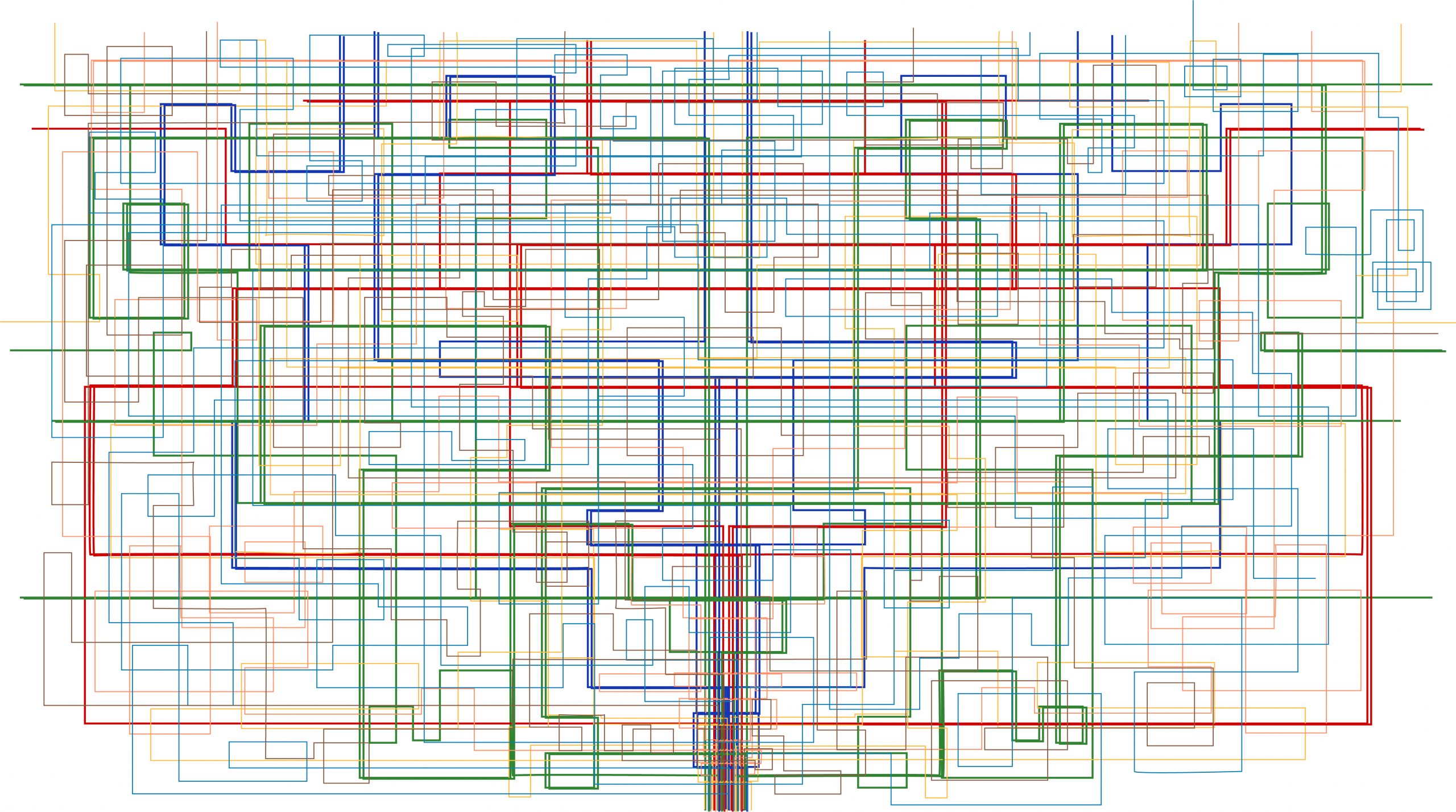
(Adobe Illustrator drawing: 52.15cm x 29.08cm at 300dpi)
I am beginning to see ways of representing how I am as a person, not just my physicality, but also my interior world.
At a recent therapy session, how I think surfaced. My thinking is very much influenced by my need and desire for physical and emotional safety and surety in everything I do and say. It is a very anxious, busy, stressful way of thinking: in a way, I am playing a game of chess in my head, looking ahead, trying to identify every possible outcome at the end of every possible journey. I want to know the possibilities, especially the negative, painful ones, so I can prepare myself for every eventuality. This applies to all areas of my life, including to my creative process where I will often thinking my way out of starting a piece of work.
This piece is an attempt at representing how I think, that anxious, energy-sapping, stressful quest to identify every possible outcome. It tries to show how my thoughts ‘jink’ all over the place, often getting distracted, how I struggle to stay focused, the stress that I experience, the tiredness that ensues. It’s not a dark place – on the whole. It’s full of information, ideas, data, knowledge – hence the colours. But there are times that the welter of thinking that goes on in my head does lead to exhaustion, and burnout.
List of Illustrations
Fig.1. Carravagio, M (c.1593) Young Sick Bacchus [Oil on Canvas] At: https://upload.wikimedia.org/wikipedia/commons/8/85/Young_Sick_Bacchus-Caravaggio_%281593%29.jpg (Accessed 02/03/25)